Polish meat pierogi: a filling of boiled pork and beef, a dough that doesn't tear
Classic meat pierogi, the kind made after a Sunday broth: meat simmered with vegetables, ground with fried onion, seasoned with marjoram and moistened with stock so the filling is juicy, not crumbly. A hot-water dough with a little oil, elastic and thin, that doesn't split in the pot. Fifty pieces, half for the freezer.

Your own work in that: 1 h 40 min.
- Meat simmering 90 min
- Filling 20 min
- Dough 10 min
- Dough resting 20 min
- Shaping 45 min
- Cooking 25 min
Step by step
0 / 8 done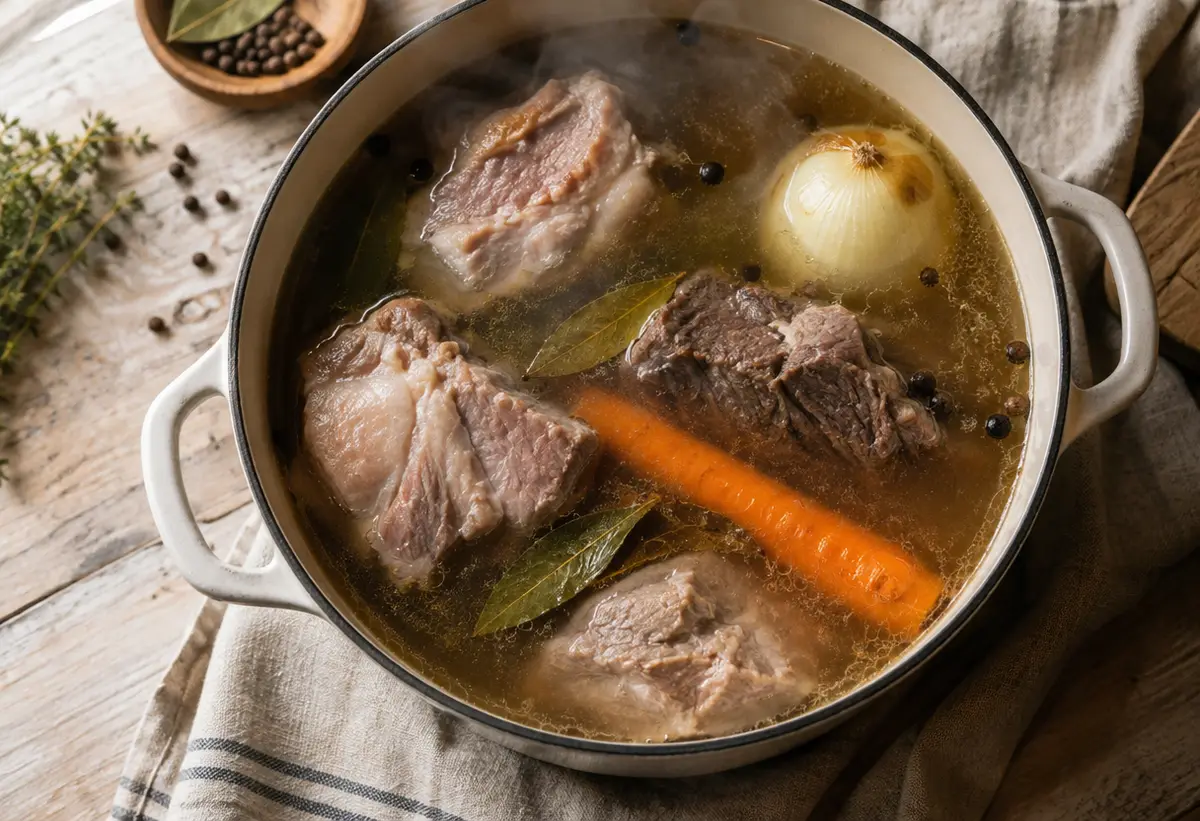
Simmer the meat
Cover the meat with 1.5 l water, add the carrot, one onion, the bay leaves, allspice and a teaspoon of salt. Simmer gently 90 minutes, until tender. Lift out; keep the stock. You can use the meat from a Sunday broth instead: about 550–600 g of cooked, boneless meat is the same amount.
Ingredients: 500 g pork shoulder · 300 g beef, e.g. shin or chuck · 1 pcs carrot · 3 pcs onions · 2 pcs bay leaves · 4 pcs allspice berries · 40 g butter · 1 tsp dried marjoram · 2 tsp salt · 1 tsp black pepper
TipA filling from boiled meat is delicate and traditional. Raw meat, fried before grinding, gives a denser, more robust filling.
An hour and a half with vegetables; the stock stays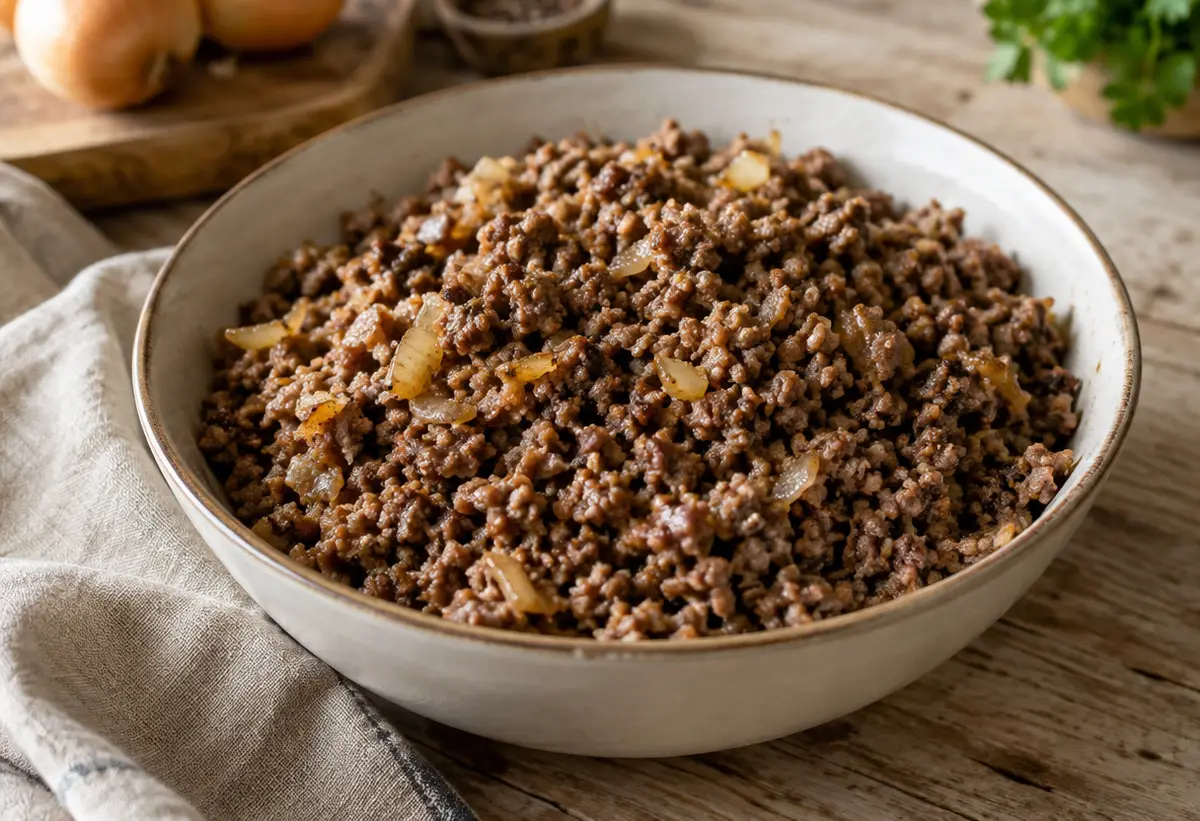
Grind with the onion
Dice two onions and soften in the butter 8 minutes, until golden. Pass the meat and onion through a mincer on the medium plate (or pulse finely in a food processor).
Meat and golden onion through the mincer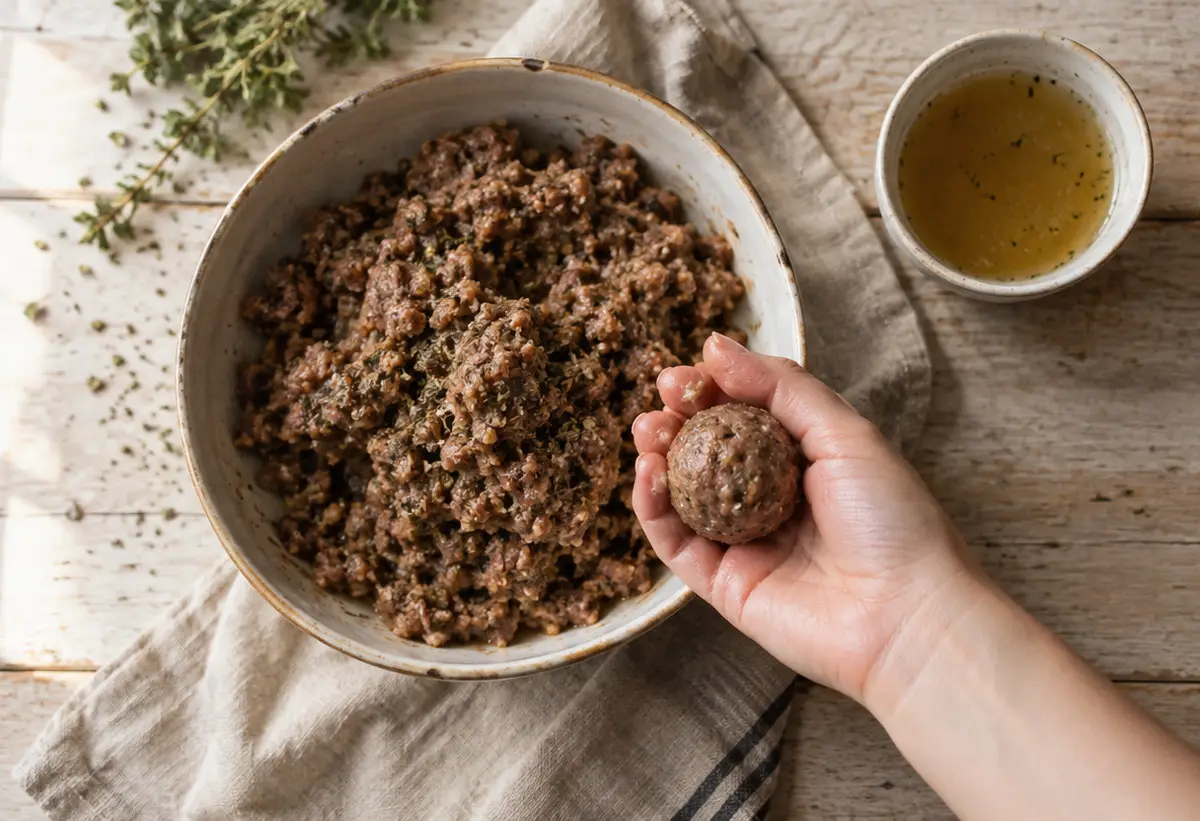
Season and moisten the filling
Add the marjoram crushed between your palms, salt, pepper and 4–6 tablespoons of stock, one at a time, until the filling is moist and forms a ball that neither crumbles nor drips. Taste: it should be boldly seasoned; the dough tones it down.
TipA dry filling is the commonest fault of meat pierogi. Stock (or a tablespoon of butter) is the difference between a filling that crumbles and a juicy one.
Marjoram, pepper, stock spoon by spoon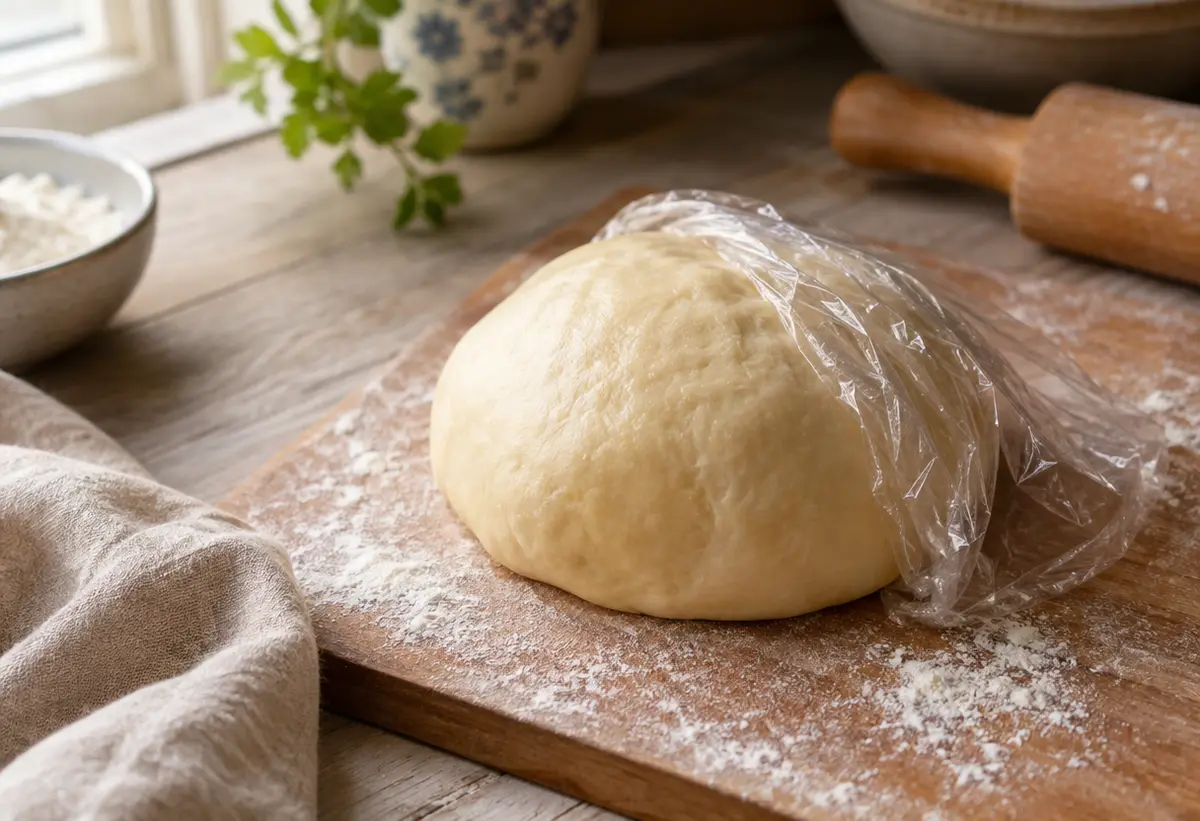
Knead the dough
Put the flour and salt in a bowl, pour in the hot water with the oil and mix with a spoon, then knead by hand 6–8 minutes, until smooth, soft and elastic. Wrap in film and rest 20 minutes.
Ingredients: 500 g plain flour · 250 ml water · 2 tbsp oil · 1 tsp salt
TipHot water partly gelatinises the starch: the dough is soft, elastic, doesn't dry out and doesn't crack. Cold water gives a firmer dough.
Smooth and soft, resting under film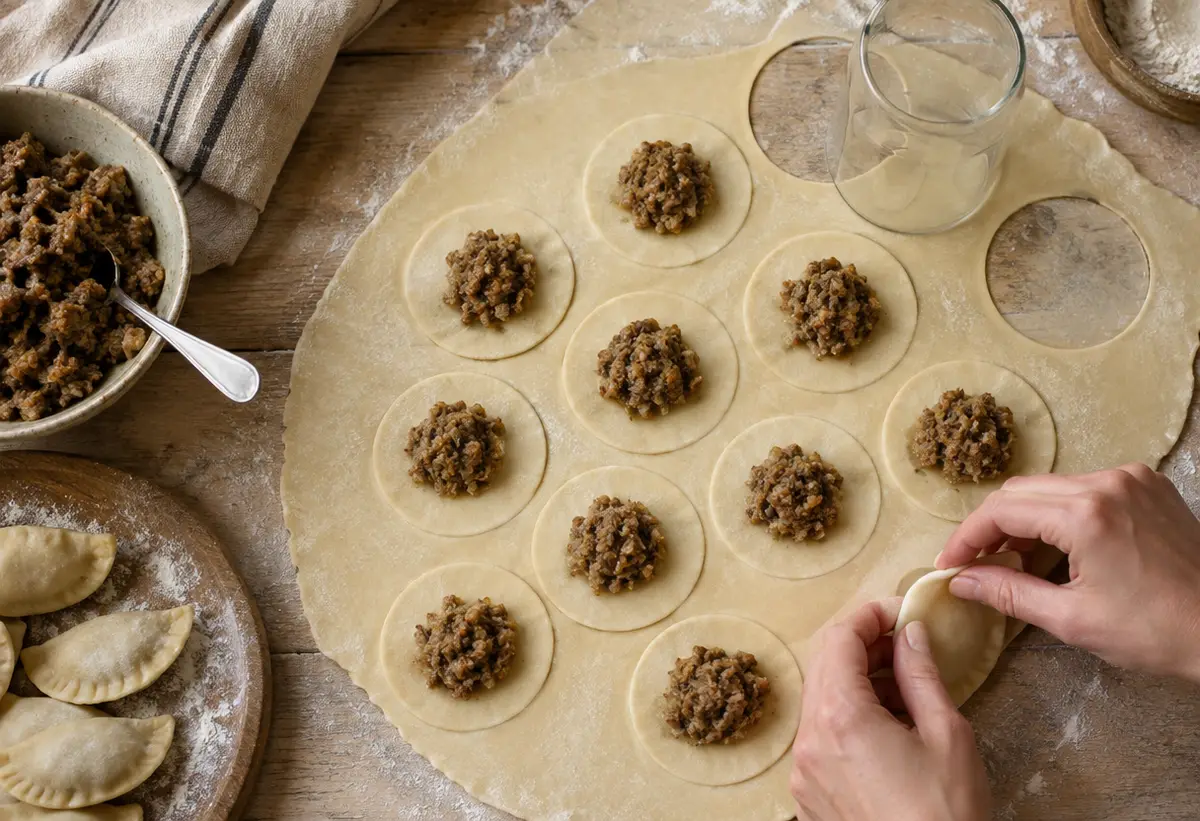
Roll and cut
Divide the dough in 4; work with one piece, keep the rest under a bowl. Roll to 2 mm on a lightly floured counter, cut 7 cm circles with a glass. Put a teaspoon of filling on each.
Two millimetres, 7 cm circles, a teaspoon of filling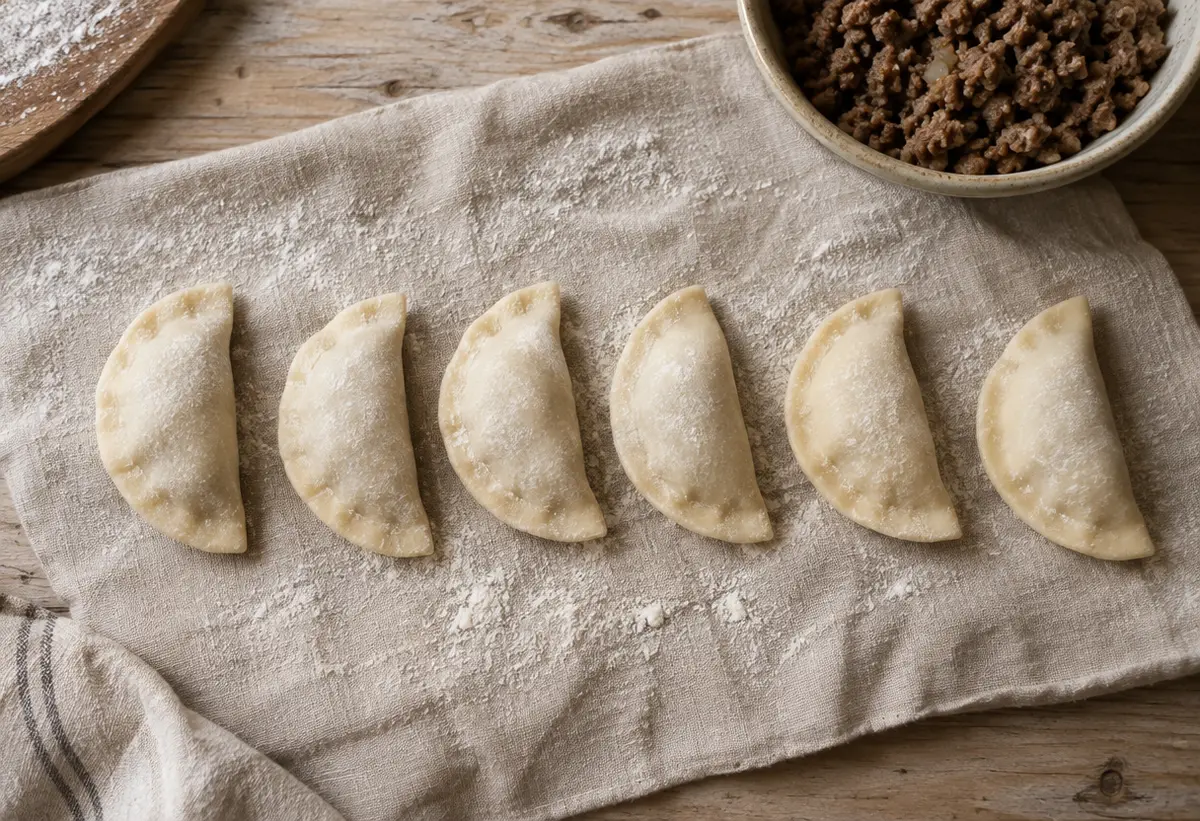
Seal
Fold each circle in half and pinch the edge firmly, from the middle out to the corners, pressing out the air. If the dough won't stick, moisten the edge with water. Lay on a floured cloth, not touching.
Middle to corners, no air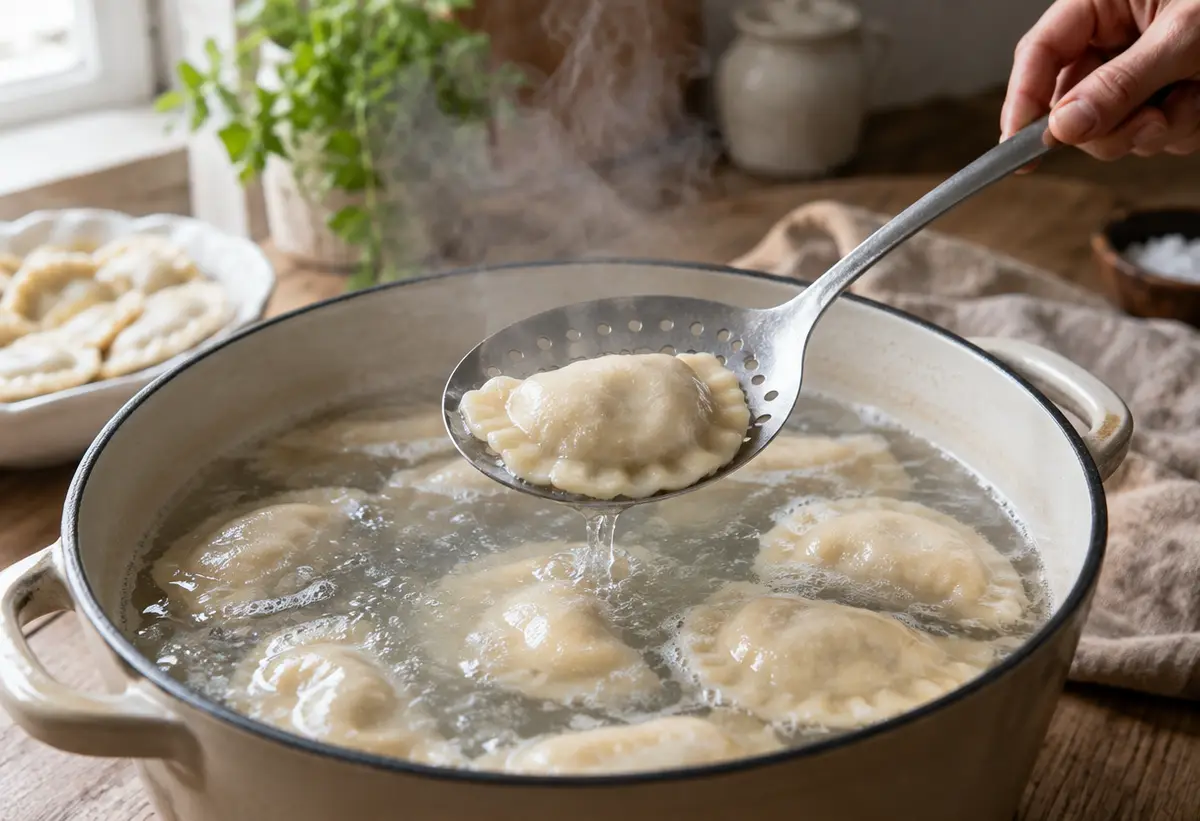
Cook in batches
Bring a large pot of salted water to the boil. Drop in 12–15 pierogi at a time, stir once so they don't stick to the bottom. When they float, cook another 3 minutes. Lift out with a slotted spoon.
They float, then three minutes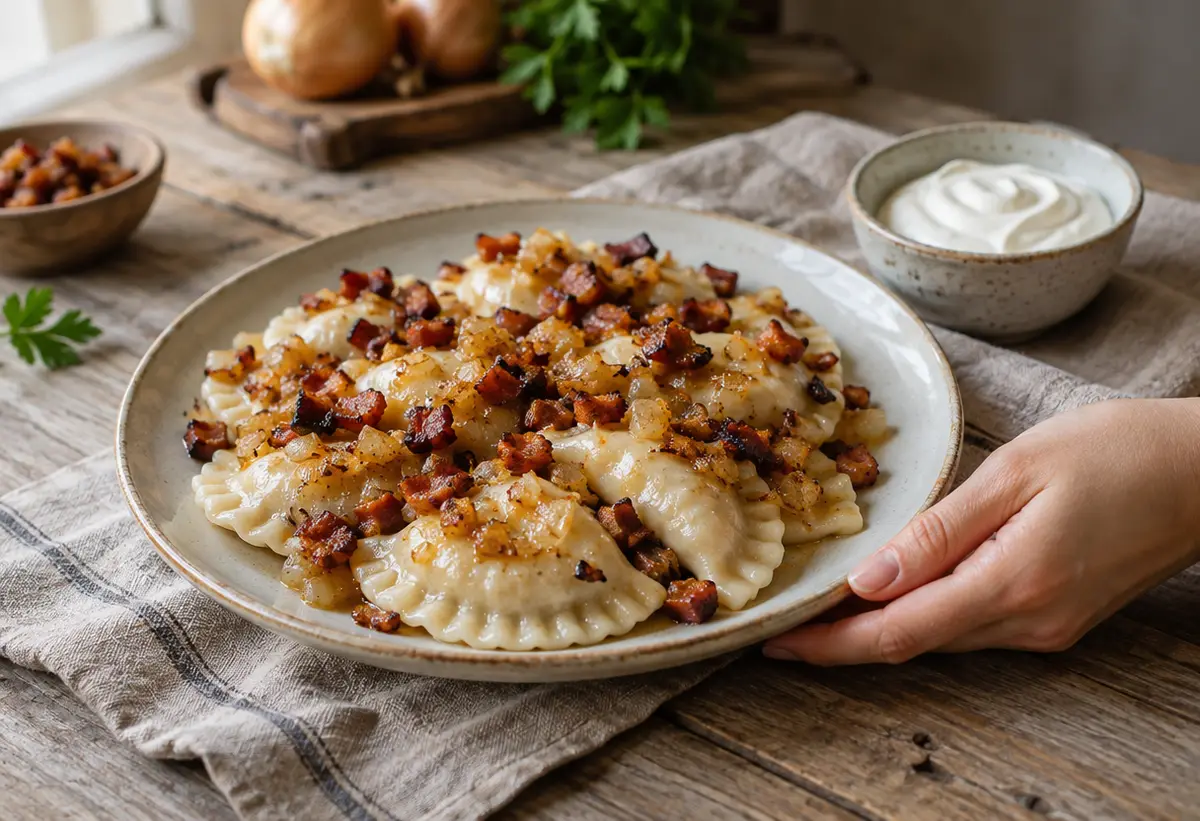
Serve with fried onion
Fry the diced onion and diced bacon until golden. Spoon over the pierogi, sour cream on the side. Freeze the rest raw on a tray, then bag them; cook from frozen a minute longer.
Ingredients: 2 pcs onions · 100 g smoked bacon · 150 g sour cream, 18 %
Onion with bacon, sour cream
Before you start
Pan-fried
Fry yesterday's boiled pierogi in butter 3 minutes a side: crisp edges, for many better than fresh.
With sauerkraut
200 g stewed, finely chopped sauerkraut in the filling: meat and cabbage pierogi, more robust and slightly sour.
They come apart
Too much filling, flour on the edge, or air inside. Less filling, a clean edge, press out the air and pinch firmly.
Nutrition
per 100 gStep photos are computer-generated from the recipe.


