Polish roast duck with apples: crackling skin, juicy meat, pan gravy
The classic Polish roast for the holidays and Sundays, which works the first time if you do three things: rub the duck with salt and marjoram the day before, prick the skin so the fat renders out, and roast it slowly, turning the heat up at the end. The apples inside taste of duck, the duck of apples, and the juices in the tin make a gravy no jar can replace.

Your own work in that: 30 min.
- Duck salting 720 min
- Stuffing 20 min
- Roasting 150 min
- Crisping the skin 15 min
- Resting 20 min
- Gravy 10 min
Step by step
0 / 8 done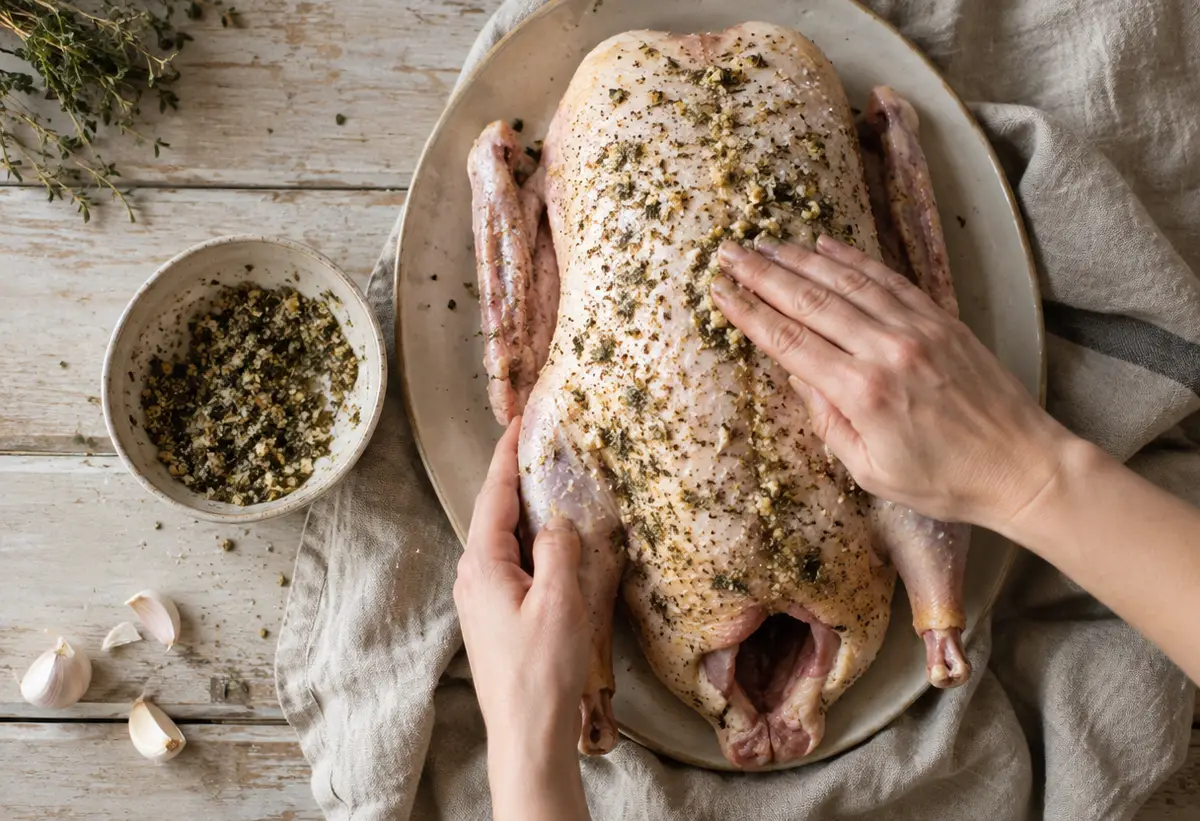
The day before: rub the duck
Don't rinse the duck (splashing water spreads bacteria around the kitchen); instead dry it thoroughly with paper towel, inside too, and trim the excess fat at the tail and neck. Crush the garlic and mix with the salt, the marjoram crushed between your palms, and the pepper. Rub the duck inside and out, set it breast up on a plate and refrigerate uncovered for at least 12 hours, ideally 24.
Ingredients: 2200 g duck · 1½ tbsp salt · 3 tbsp dried marjoram · 4 cloves garlic · 1 tsp black pepper · 5 pcs apples · 1 tbsp honey
TipOvernight the salt penetrates the meat and seasons it to the bone, and the uncovered skin dries in the fridge: dry skin is the only road to crackling skin.
Salt, marjoram, garlic, a night uncovered in the fridge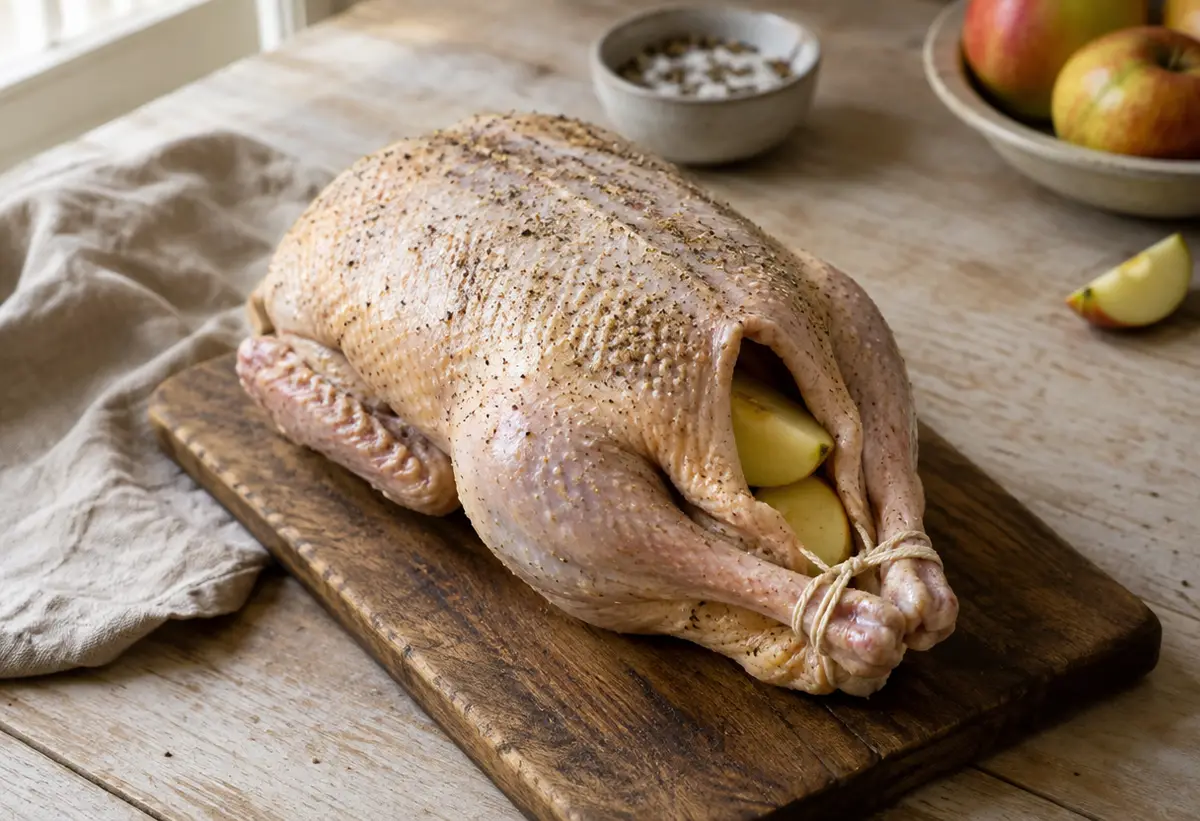
Stuff with apples
Take the duck out of the fridge an hour before roasting. Quarter three apples, cut out the cores and put them inside the duck, not too tightly. Tie the legs with string, tuck the wings under the back. Quarter the other two apples and set aside.
Apple quarters inside, legs tied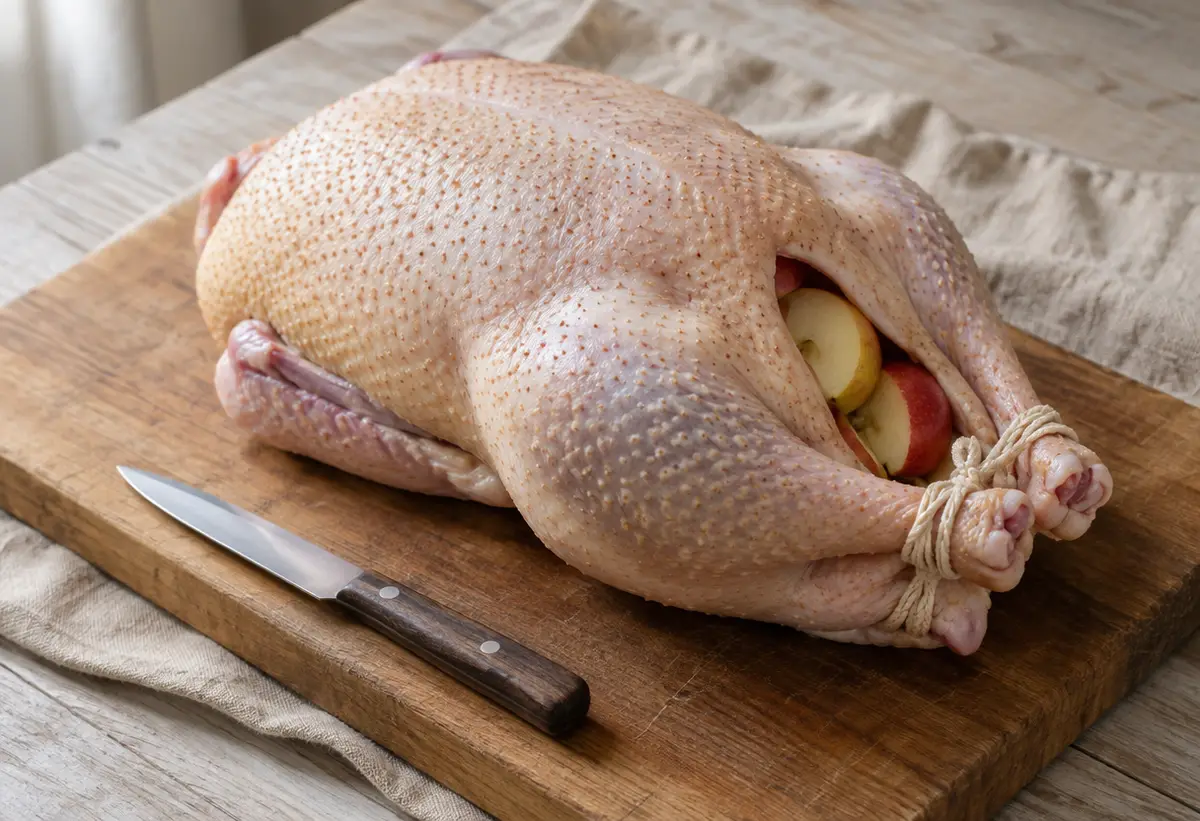
Prick the skin
With the tip of a knife or a toothpick, prick the skin densely over the breast and around the legs, skin only, not the meat. The pricks let the thick layer of fat under the skin render out; without them the duck is greasy and the skin rubbery. Heat the oven to 180 °C.
TipHold the knife at a shallow angle, almost flat: you pierce skin and fat without touching the meat. Pierced meat loses its juice.
Densely, shallowly, through the skin only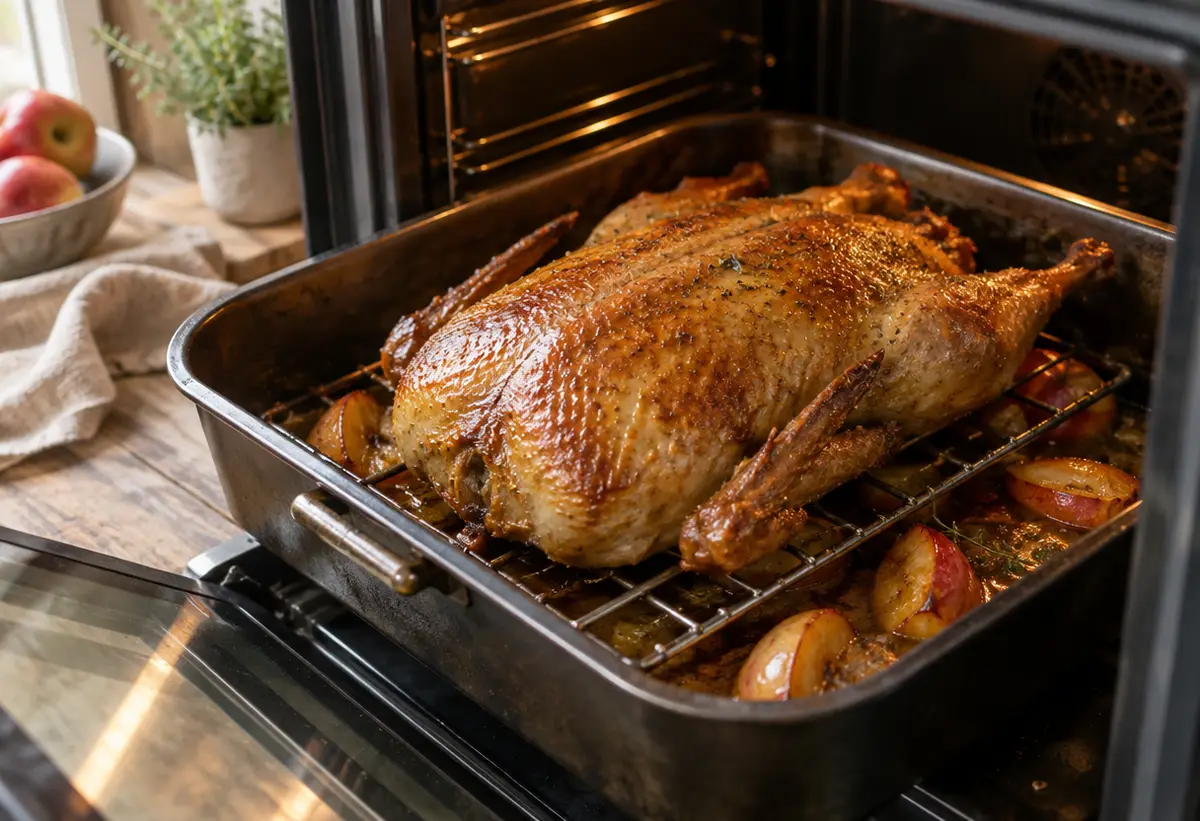
Roast slowly and baste
Set the duck breast up on a rack in a roasting tin (or on a bed of onion quarters), pour half a cup of water into the bottom. Roast at 180 °C for about 2½ hours: count an hour per kilo plus 20 minutes. Every 30 minutes baste with the rendered fat from the tin. After an hour add the reserved apples to the tin.
An hour per kilo plus 20 minutes, basting every half hour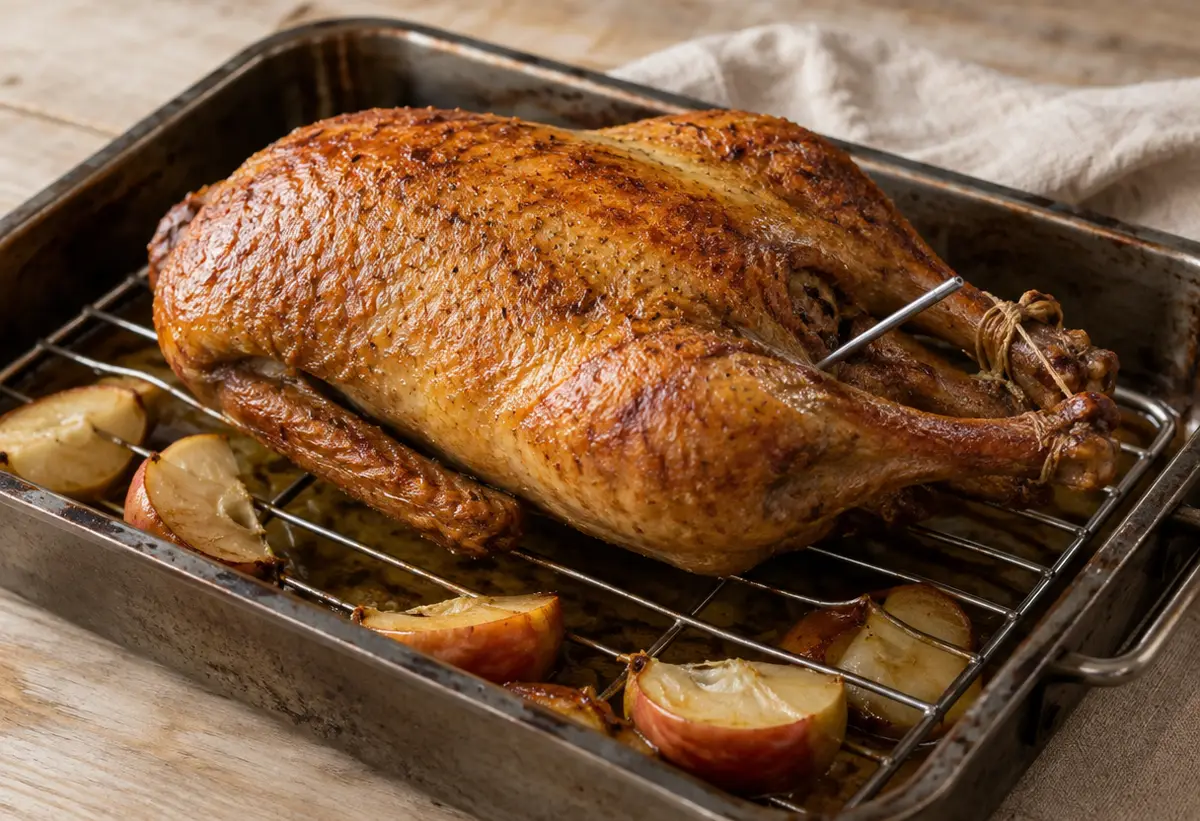
Check the temperature and crisp the skin
Push a thermometer into the thickest part of the thigh without touching bone: a done duck reads 80–82 °C, and the juice from a pricked thigh runs clear, not pink. Then raise the oven to 220 °C, brush the skin with the honey loosened in a spoon of hot fat and roast another 15 minutes, until deep gold and crackling. Watch it: honey burns easily.
TipDuck isn't chicken breast: the legs need a high internal temperature for the connective tissue to soften. At 65 °C they are tough and pink at the bone.
80 °C in the thigh, then 220 °C for the skin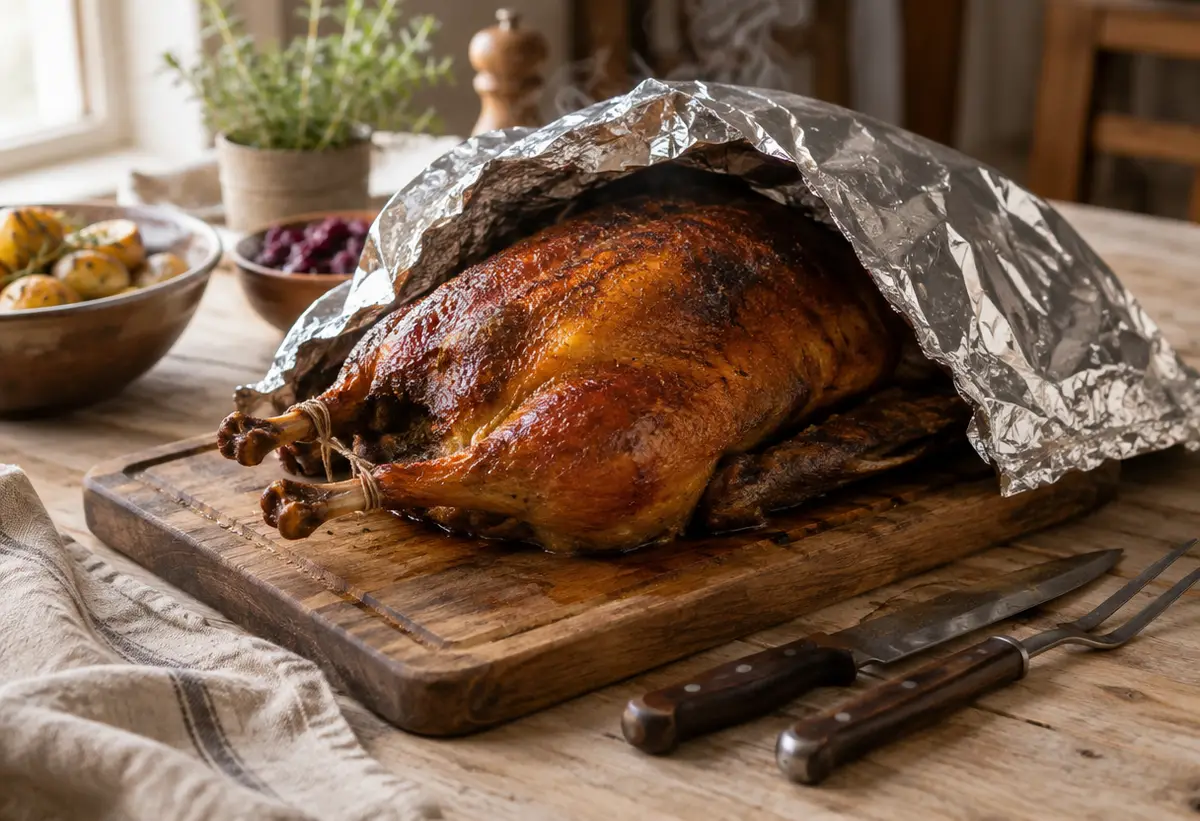
Rest
Lift the duck onto a board, cover loosely with foil and leave 20 minutes. The meat rests and loses less juice when carved; carved at once, the duck leaks it onto the board.
Twenty minutes under foil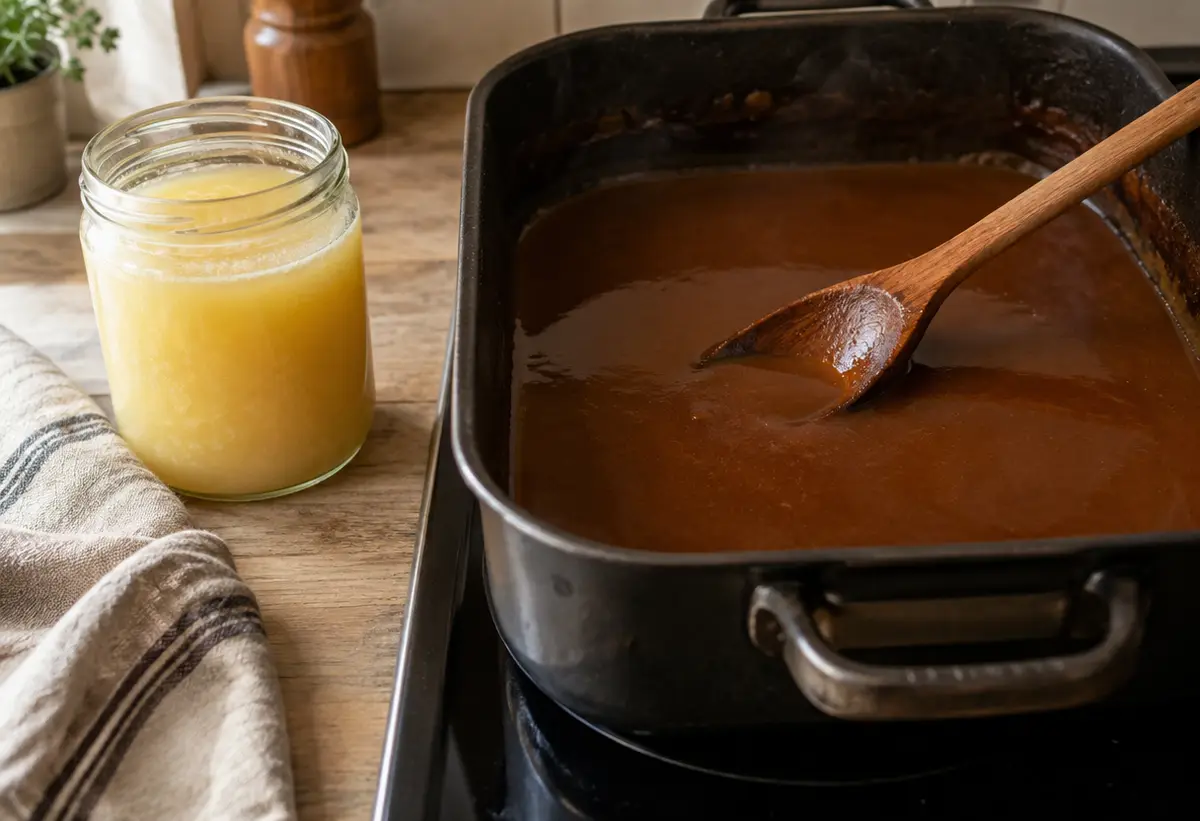
Make the pan gravy
Pour the fat from the tin into a jar, leaving 2 spoons and the dark juices. Set the tin over a burner, add the flour, stir a minute, pour in the stock and scrape up the browned juices from the bottom. Simmer 5 minutes, add the mustard and lemon juice, season with salt and pepper. Strain if you want it smooth.
Ingredients: 300 ml chicken stock or water · 1 tbsp plain flour · 1 tsp mustard · ½ pcs lemon, juice
TipThe poured-off duck fat is treasure: strain it through a sieve, leaving the pan juices behind, and in a sealed jar in the fridge it keeps for several weeks. Potatoes roasted in it are exceptionally good.
Pan juices, flour, stock, mustard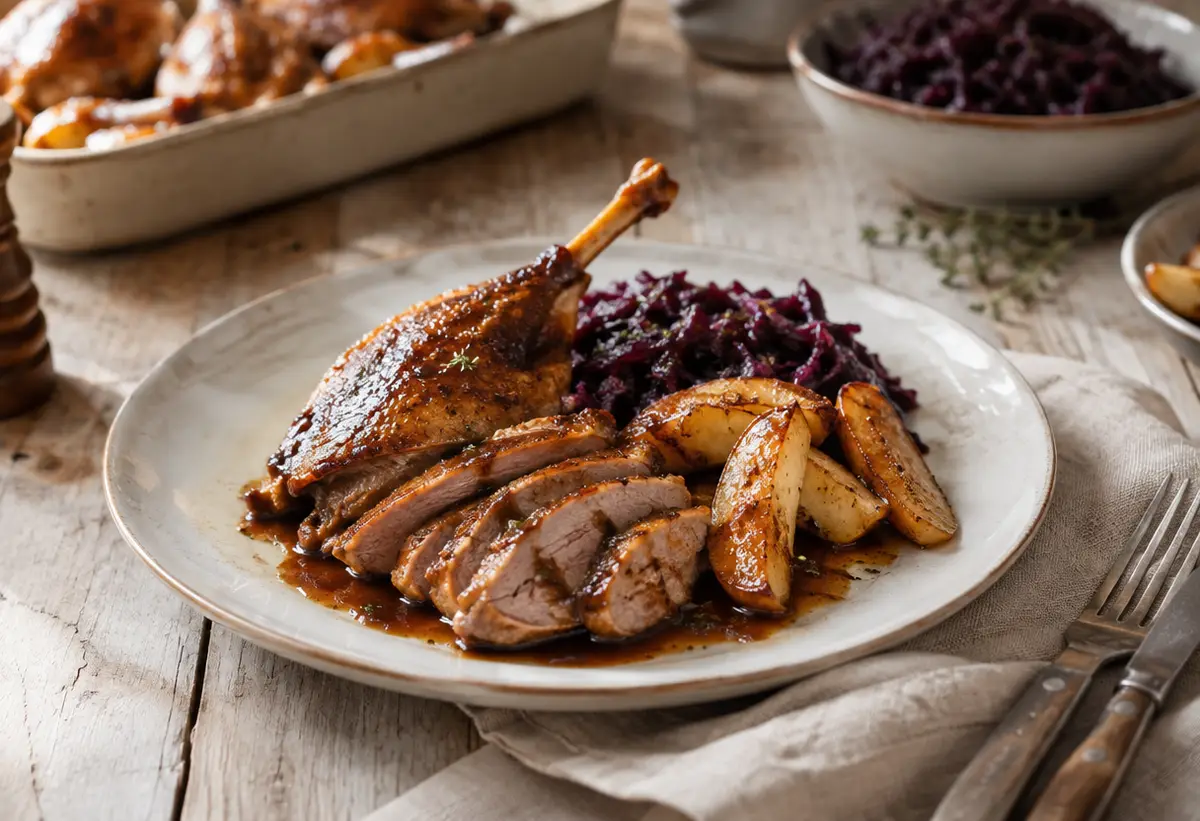
Carve and serve
Cut off the legs at the joint, cut the breast away from the breastbone and slice across the grain. Serve with the apples from the tin and the cavity, the gravy, red cabbage or Silesian potato dumplings. Leftover meat goes into pierogi or sandwiches the next day.
Legs, sliced breast, apples, gravy, cabbage
Before you start
With orange and cranberries
Orange quarters with the peel inside instead of some of the apples, a handful of cranberries and a spoon of preserve in the gravy. The festive sweet-and-sour version.
The skin won't crisp
The duck wasn't dried overnight, or it sat without a rack and roasted in its own fat. A rack under the duck and a night uncovered in the fridge solve both problems.
A frozen duck
Thaw 2 days in the fridge, never in warm water. After thawing dry it exceptionally well, inside too: frozen birds hold more water in the skin.
Nutrition
per 100 gStep photos are computer-generated from the recipe.


