Polish roast pork loin: juicy, with garlic and marjoram, for dinner and for sandwiches
Pork loin rubbed with garlic, marjoram and mustard, marinated overnight, seared in a pan and roasted at 180 °C to 65 °C in the centre, not a degree more. It is the thermometer, not the clock, that decides whether the loin is juicy or dry as a boot. Hot with gravy from the roasting dish, or cold in thin slices instead of shop-bought cold cuts.

Your own work in that: 15 min.
- Marinating 720 min
- Searing 15 min
- Roasting 60 min
- Resting 15 min
Step by step
0 / 7 done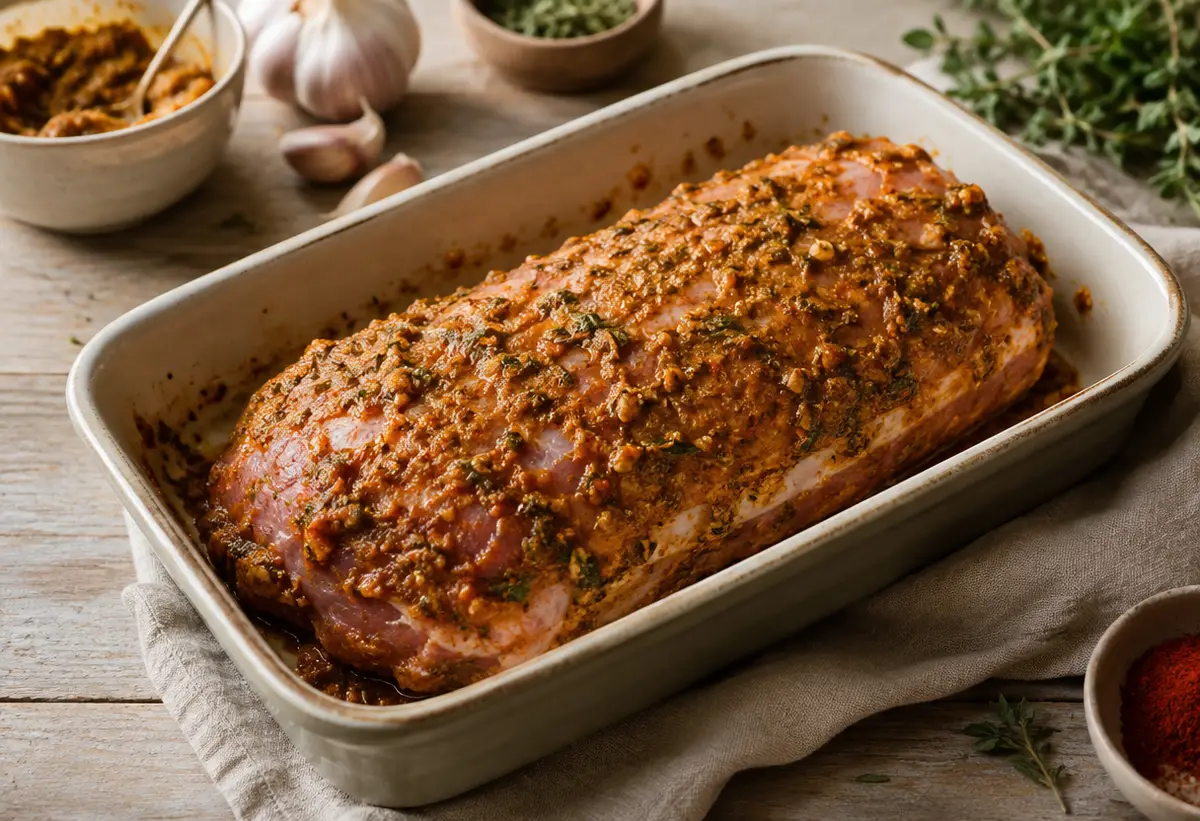
Rub the loin
Pat the loin dry; don't remove the thin fat cap, it protects the meat and renders as it roasts. Crush the garlic and mix with the marjoram crushed between your palms, the mustard, 2 tablespoons of the oil, salt, pepper and paprika into a paste. Rub it thoroughly over the loin on all sides.
Ingredients: 1200 g boneless pork loin · 4 cloves garlic · 2 tbsp dried marjoram · 2 tbsp medium-hot mustard · 3 tbsp oil · 1½ tsp salt · 1 tsp black pepper · 1 tsp sweet paprika
A paste of garlic, marjoram and mustard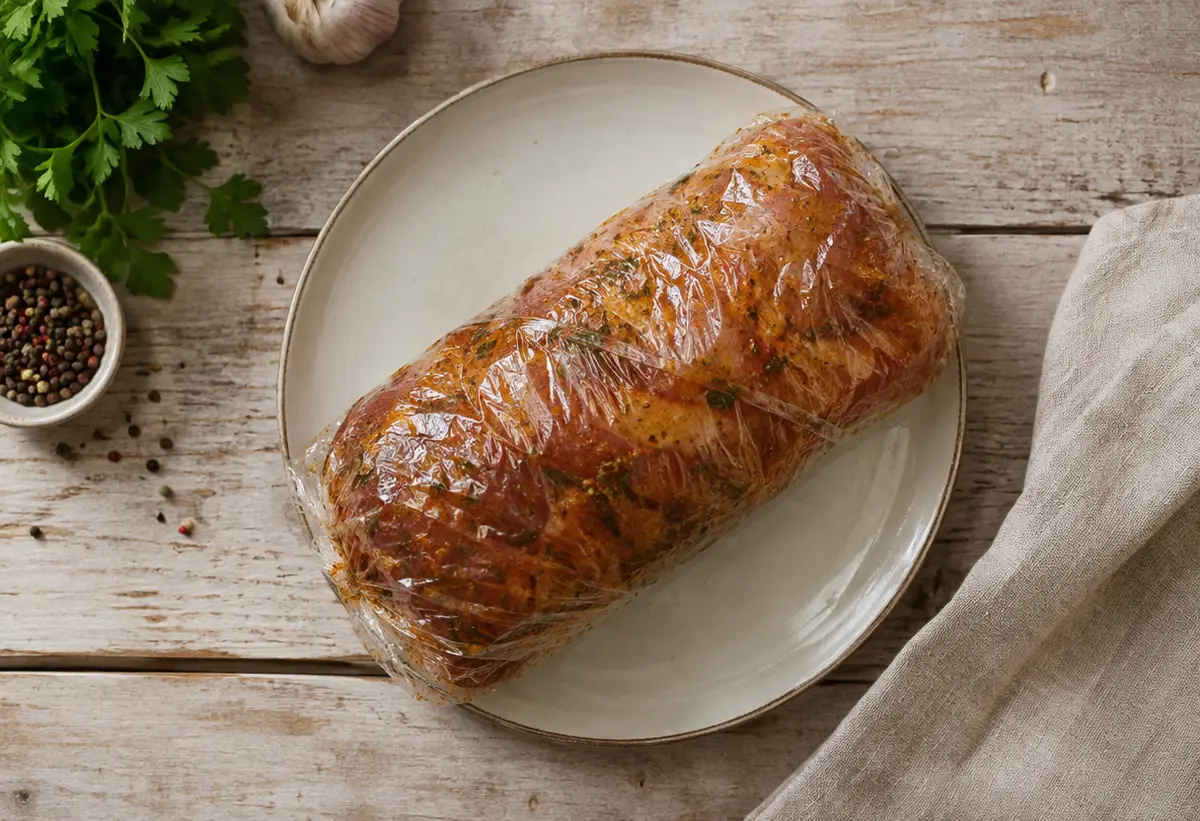
Marinate overnight
Wrap the meat tightly in film and refrigerate 12 hours, 4 at minimum. Take it out of the fridge an hour before roasting to take the chill off: very cold in the middle, it roasts unevenly.
TipThe salt in the marinade works like a dry brine: it penetrates the meat and helps hold the juices in. That is why a night in the fridge gives a juicier loin than roasting straight away.
Tightly in film, a night in the fridge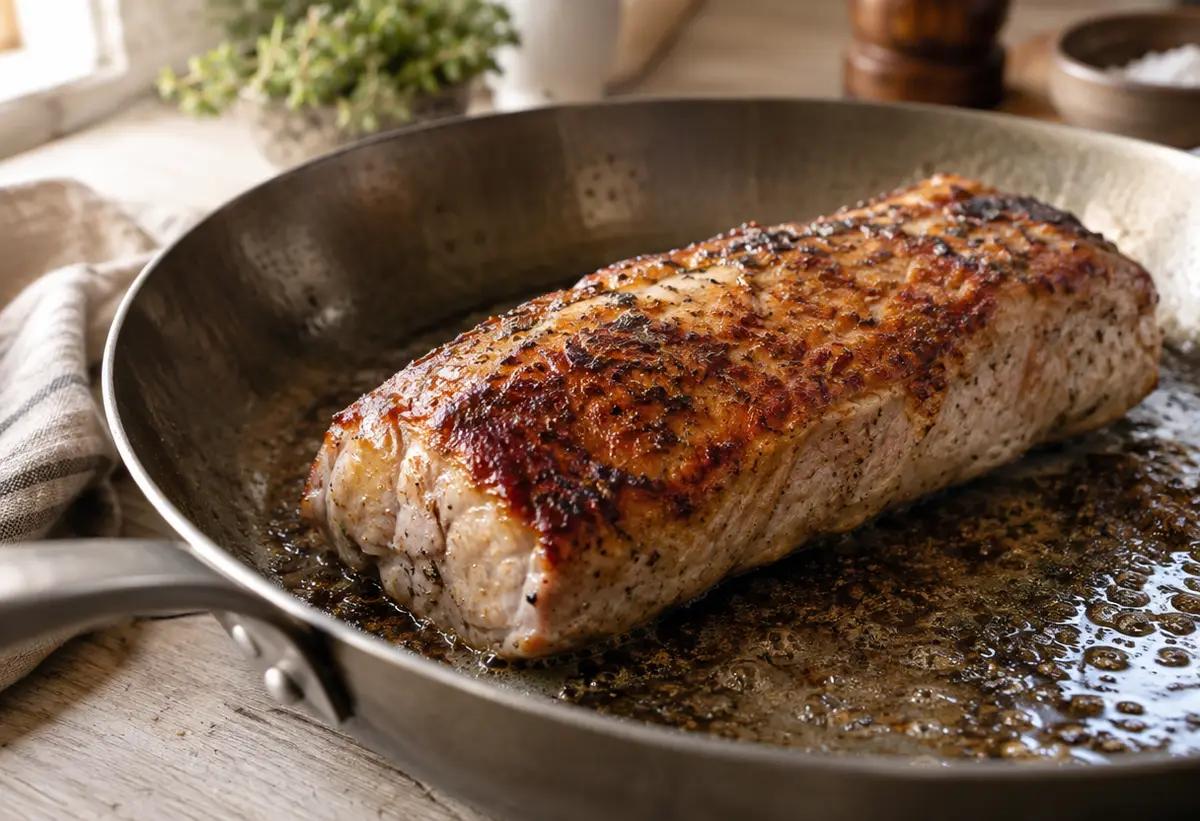
Sear
Heat the oven to 180 °C. Heat the remaining tablespoon of oil in a large pan over high heat and sear the loin on all sides, 2 minutes a side, to a dark golden crust; about 8 minutes in all. The crust doesn't 'seal in the juices', but it gives a flavour that roasting alone won't.
Two minutes a side, high heat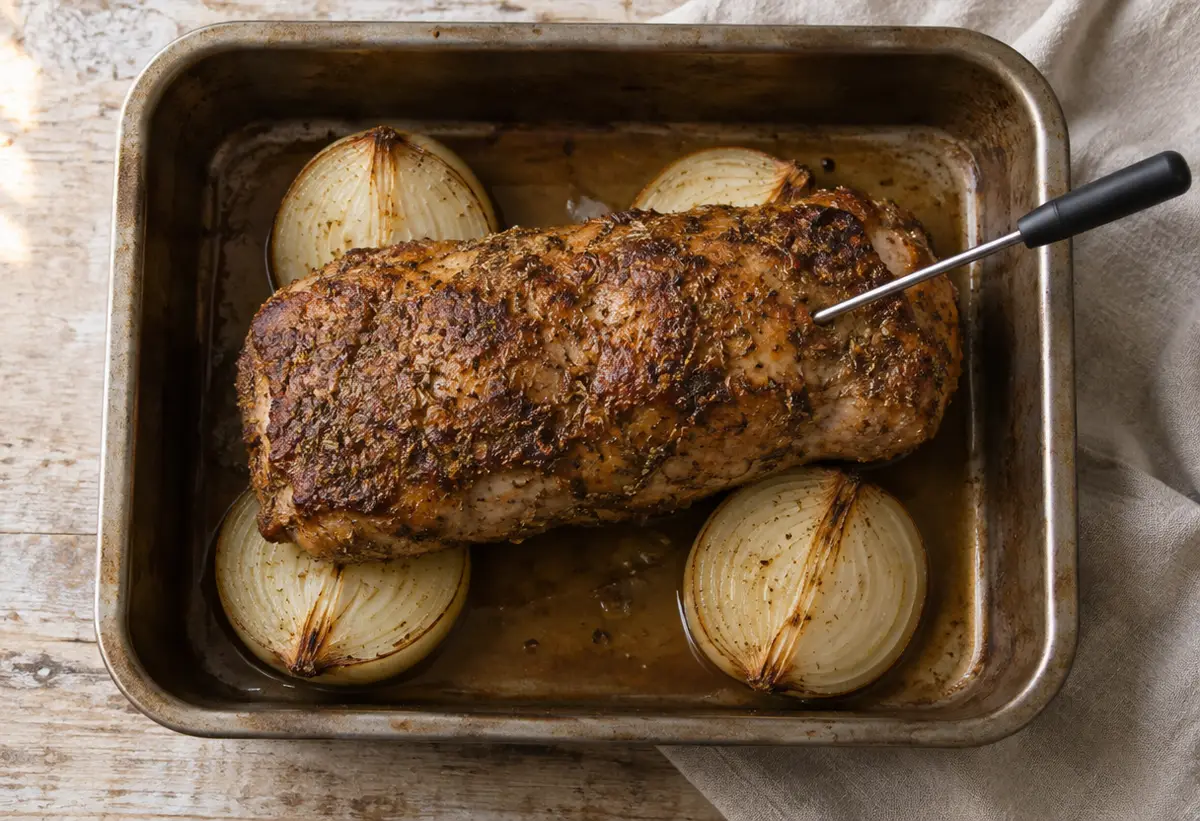
Roast with a thermometer
Halve the onions. Put the loin in a roasting dish on the onion halves and pour 150 ml of water into the bottom. Insert a thermometer into the thickest part, to the centre. Roast at 180 °C for about 55–65 minutes, until the thermometer reads 65 °C. Without a thermometer: 50 minutes per kilo, and the juices run clear, not pink, when pierced.
Ingredients: 2 pcs onions · 250 ml water · 20 g butter · 1 tbsp plain flour
Tip65 °C in the centre gives a loin that is faintly pink, moist and perfectly safe. At 75 °C, the way it used to be roasted, it is already grey and dry. A cheap thermometer pays for itself on the first roast.
On onion, with water, thermometer in the centre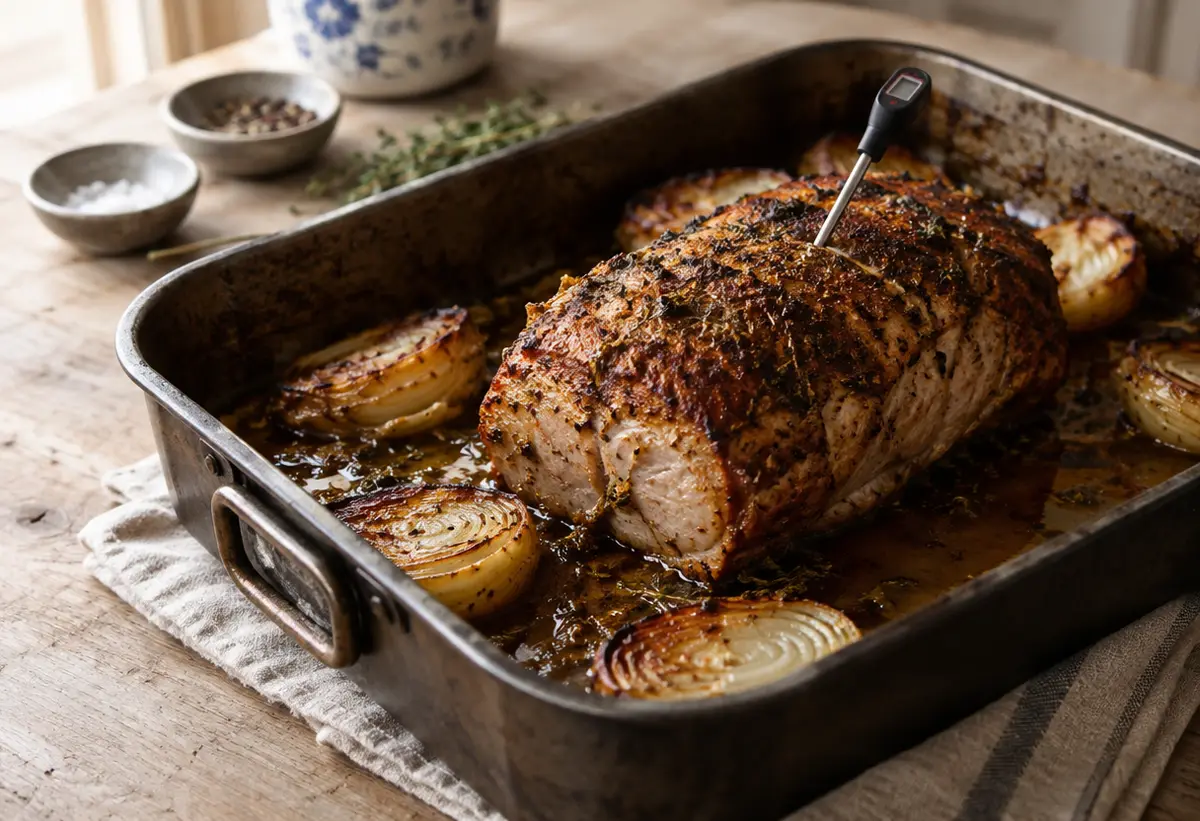
Check the temperature
When the thermometer reads 65 °C, take the loin out at once. During resting the core temperature rises another 3–5 degrees.
Sixty-five degrees: out it comes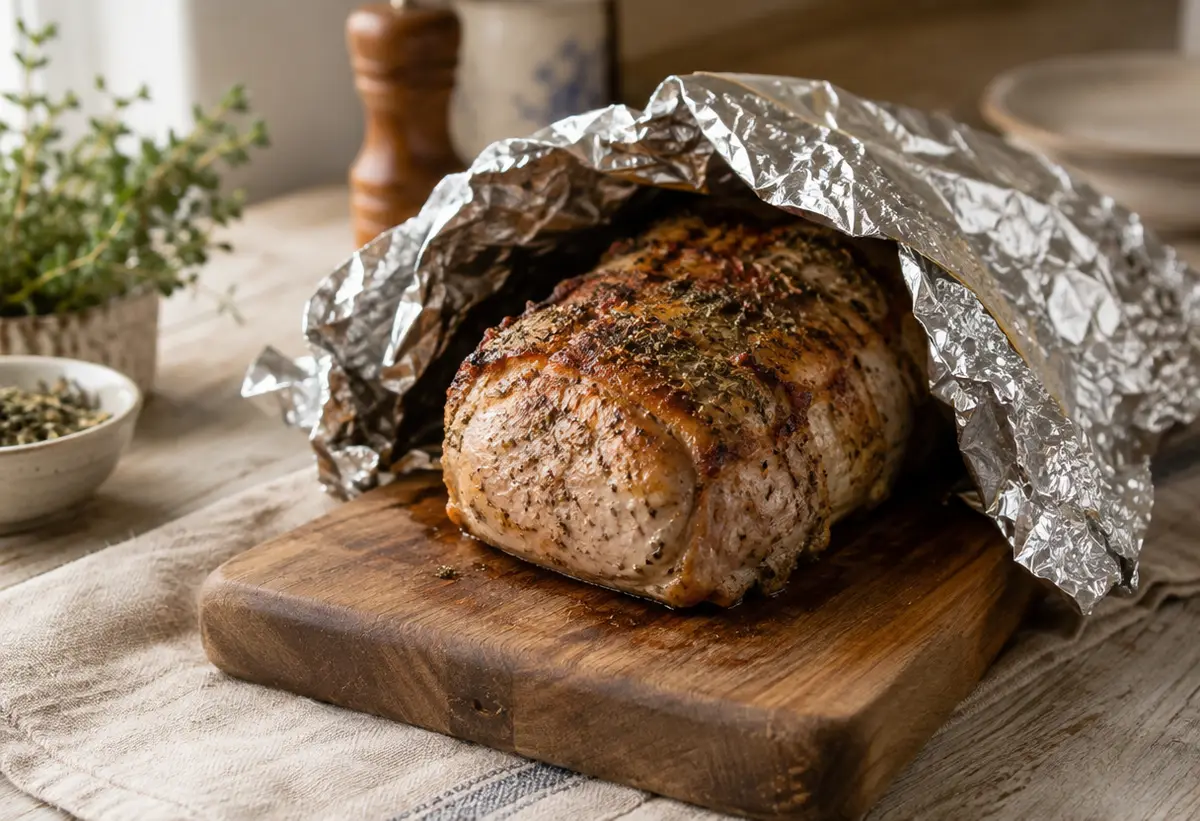
Rest under foil
Move the loin to a board, tent loosely with foil and leave 15 minutes. The juices that gathered in the centre in the oven spread back through the meat. Carved at once, it lets them all out onto the board.
A quarter hour under foil, the juices return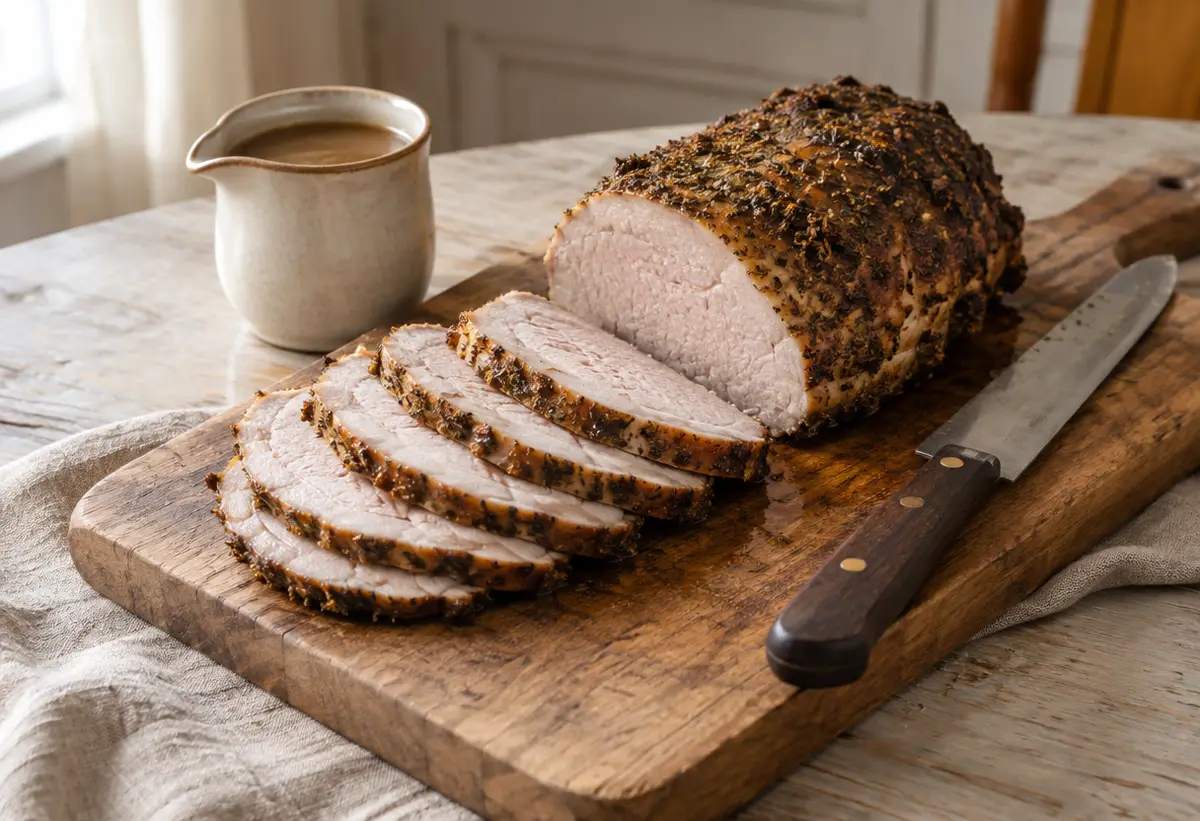
Make the gravy and carve
Pour the remaining 100 ml of water into the roasting dish with the onion and juices, scrape the bottom, strain into a small pan. Bring to the boil with the butter, thicken with the flour mixed into 3 tablespoons of cold water, cook 2 minutes. Carve the loin: thicker slices, 1 cm, for serving hot; paper-thin like cold cuts for sandwiches, best cold the next day.
Gravy from the dish, slices thin or thick
Before you start
With prunes
Cut a pocket along the loin and fill with 100 g prunes, secure with toothpicks. The Christmas classic, a sweet-sour contrast.
Low and slow
After searing, roast at 120 °C for about 2 hours to 65 °C in the centre: evenly pink edge to edge, the juiciest version.
It came out dry
Too long in the oven, almost certainly. Next time a thermometer and 65 °C, not minutes; and leave the fat cap on.
Nutrition
per 100 gStep photos are computer-generated from the recipe.


