Tray-roasted vegetables: each one cut to its own cooking time, 220 °C and a single layer
Carrot, parsley root, potatoes, beetroot and red onion roasted together on one tray, with whole garlic cloves left in their skins. The whole recipe comes down to three decisions: cut each vegetable to suit its cooking time, spread them in a single layer with gaps, and use a genuinely high heat. Then they caramelise instead of steaming. A white garlic yogurt sauce alongside.

Your own work in that: 20 min.
- Cutting 20 min
- Roasting 45 min
Step by step
0 / 5 done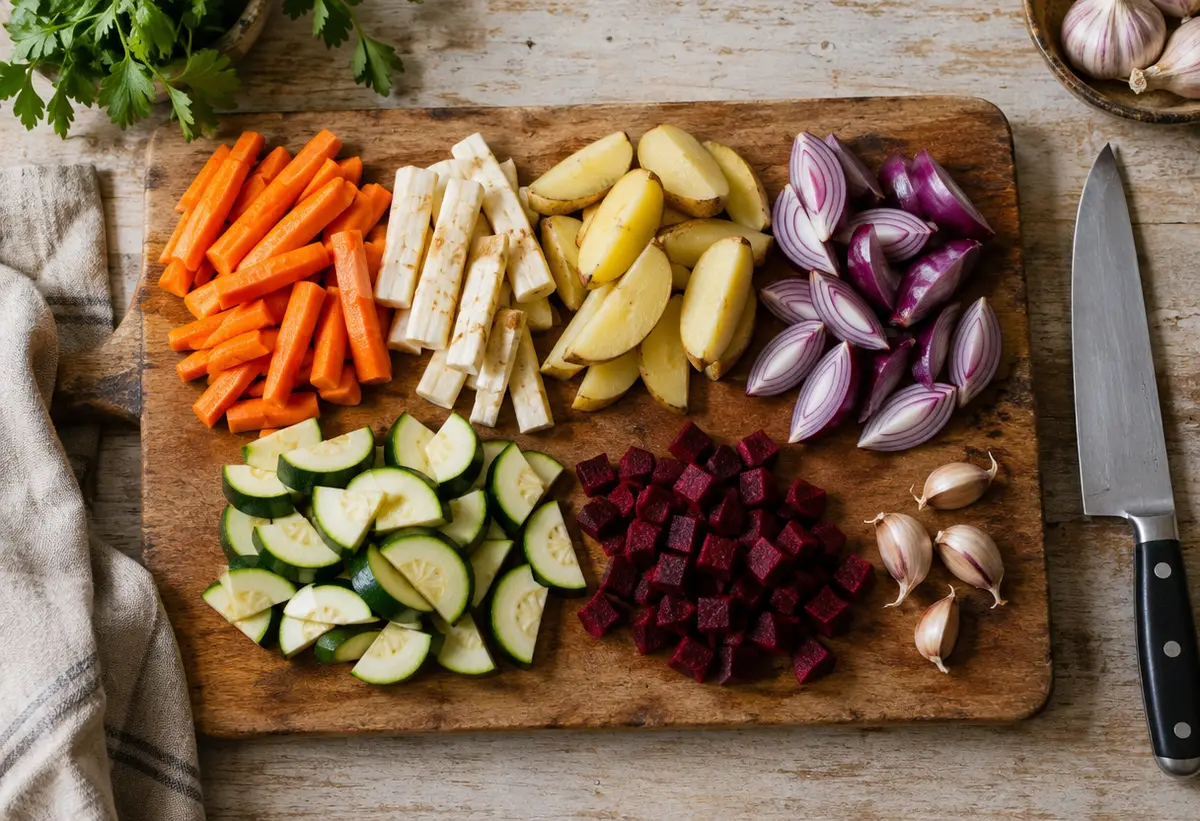
Cut each vegetable to its own time
Heat the oven to 220 °C. Cut the carrots and parsley roots into 1.5 cm batons, the potatoes into eighths, the onions into eighths with a piece of the root left on (so they hold together), the courgette into 2 cm half-moons. The beetroot, which takes longest, goes noticeably smaller: 1 cm dice. Leave the garlic in its skins.
Ingredients: 3 pcs carrots · 2 pcs parsley roots · 500 g potatoes · 2 pcs beetroot · 2 pcs red onions · 8 cloves garlic · 1 pcs courgette
TipRoot vegetables need much longer than courgette, and beetroot longest of anything on the tray. Instead of adding them in stages, you equalise the times by size: the harder the vegetable, the smaller the piece. Then everything is ready in the same minute.
Harder vegetable, smaller piece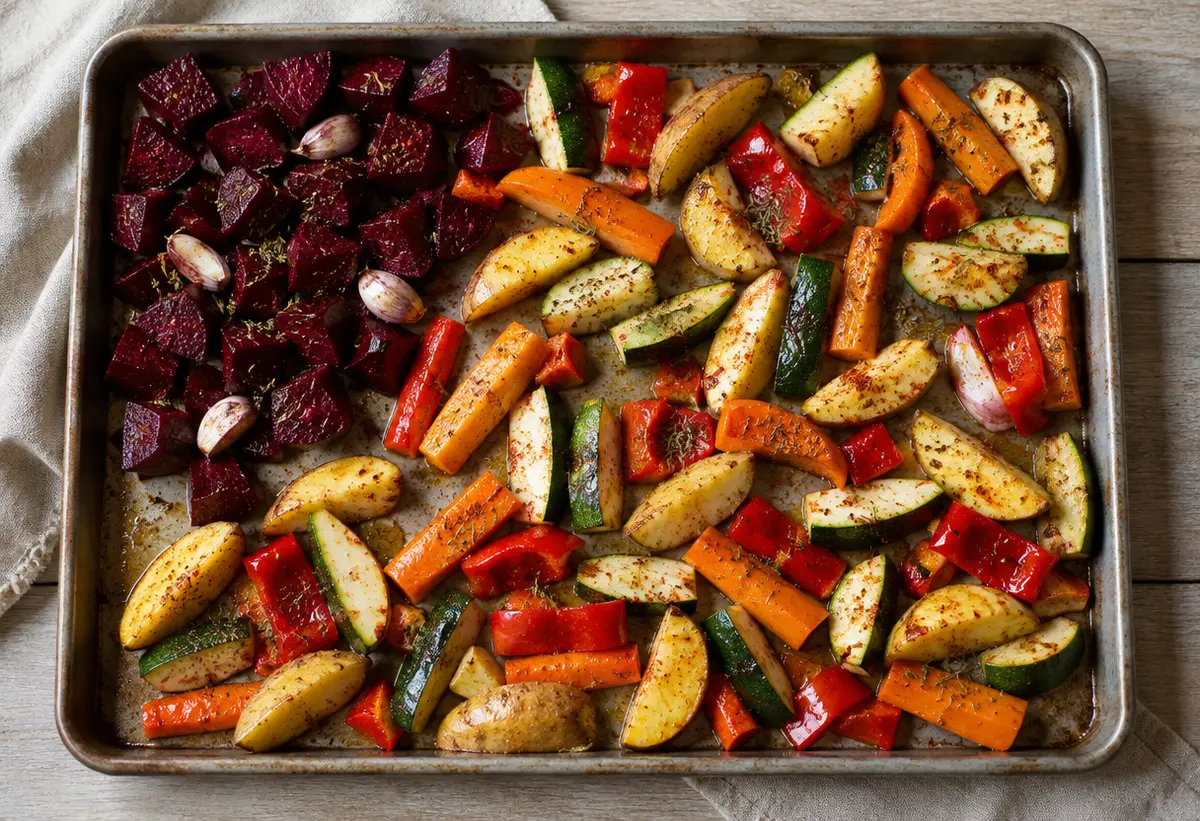
Toss and spread in a single layer
Toss the vegetables (not the courgette) in a bowl with the oil, marjoram, paprika, salt and pepper; keep the bowl unwashed. Spread on a large tray in a single layer with gaps between the pieces; push the beetroot into one corner. If they don't fit, use a second tray.
Ingredients: 4 tbsp olive oil · 1 tbsp dried marjoram · 1 tsp sweet paprika · 1½ tsp salt · ½ tsp black pepper
TipBeetroot stains everything it touches: in its own corner it stays beetroot and the carrot stays carrot. The gaps matter just as much — steam needs somewhere to go, or the vegetables cook in their own moisture and stay pale and soft.
One layer with gaps, beetroot in its corner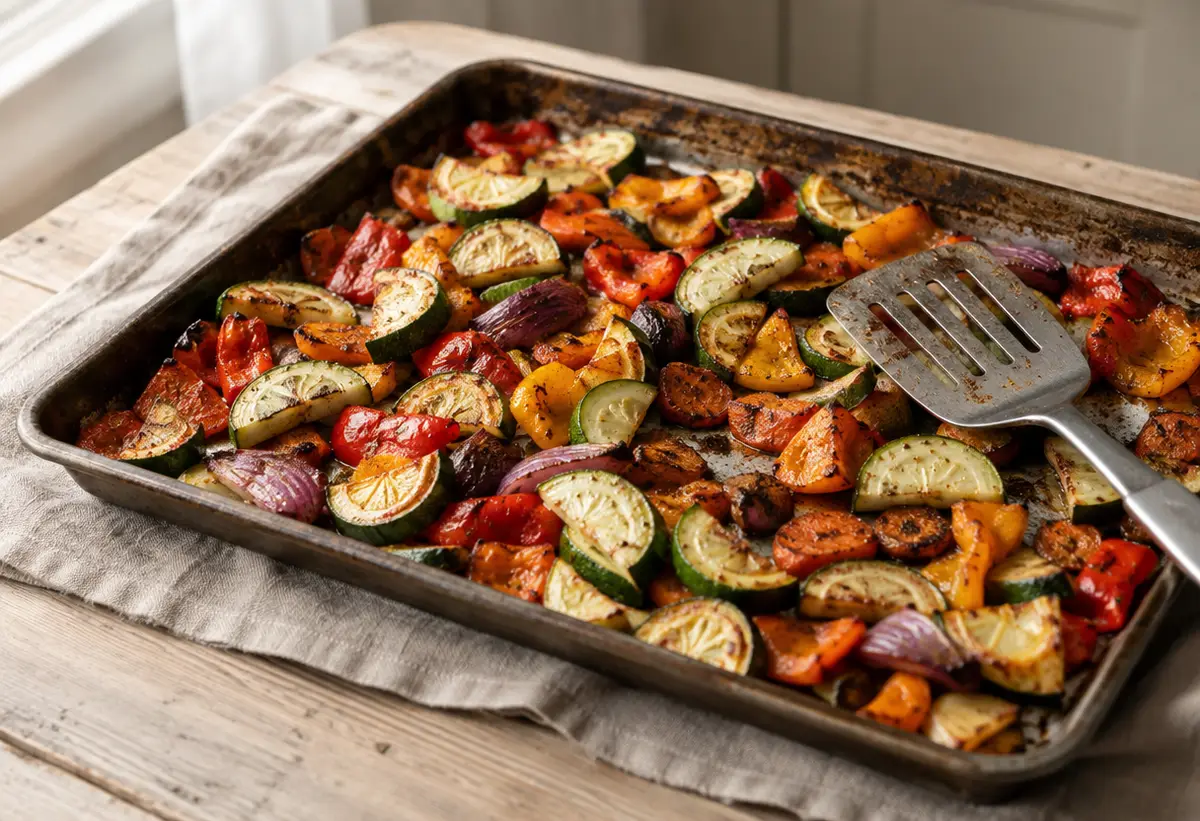
Roast hot
Roast 25 minutes, then pull the tray out, turn everything with a spatula and add the courgette, tossed in the bowl with the leftover oil and seasoning (add a pinch of salt). Roast another 15–20 minutes, until the edges are dark and caramelised and a knife slides into the carrot without resistance. Forty to forty-five minutes in total.
Tip220 °C is not excessive: caramelisation and the Maillard reaction only get going above roughly 140 °C at the surface, and at 180 °C a tray of wet vegetables takes a long time to get past that. High heat drives the water off faster than the vegetables can go soft.
Twenty-five minutes, turn, add the courgette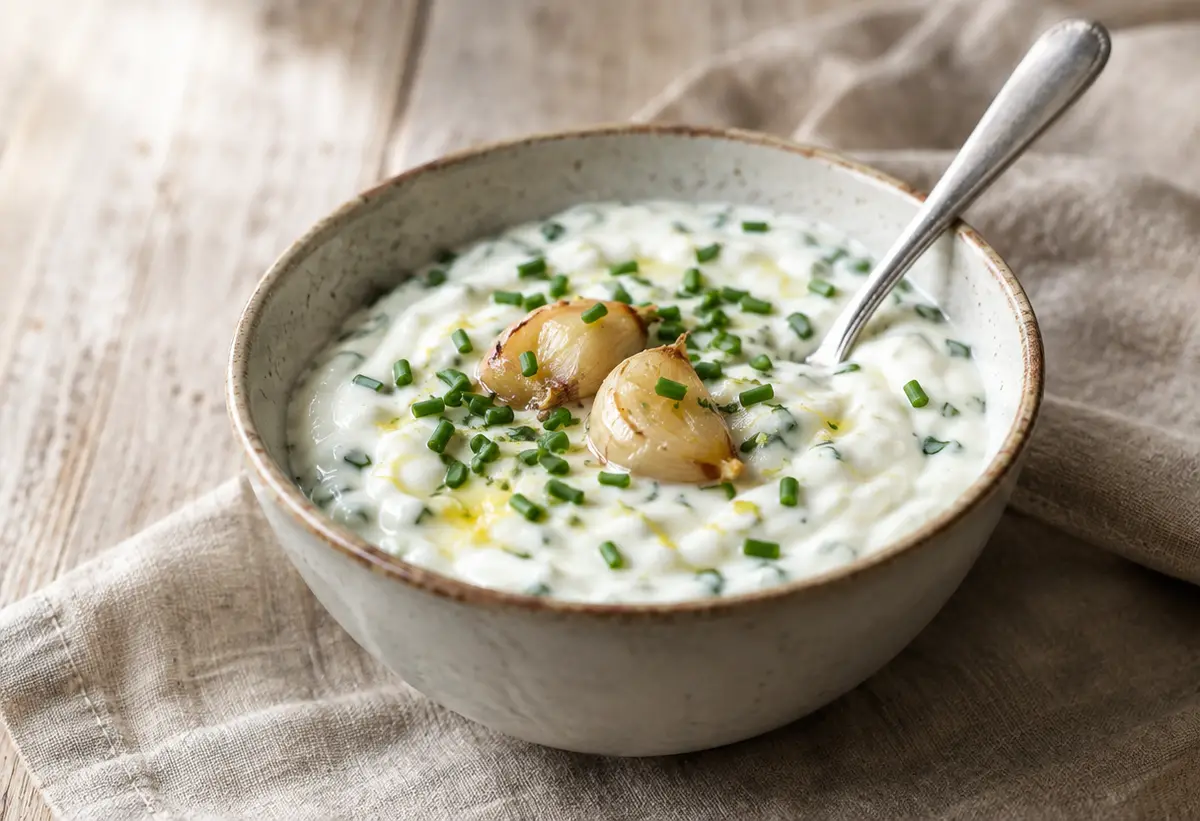
Make the garlic sauce
Crush the raw garlic clove to a paste with a pinch of salt under the flat of a knife, stir into the yogurt with the lemon juice and chopped chives. Squeeze two of the roasted cloves out of their skins and mash them in as well: they are sweet and mild, nothing like raw garlic.
Ingredients: 300 g Greek yogurt · 1 clove garlic · ½ pcs lemon, juice · ½ bunch chives · 100 g feta · ¼ tsp salt
Garlic crushed with salt, yogurt, lemon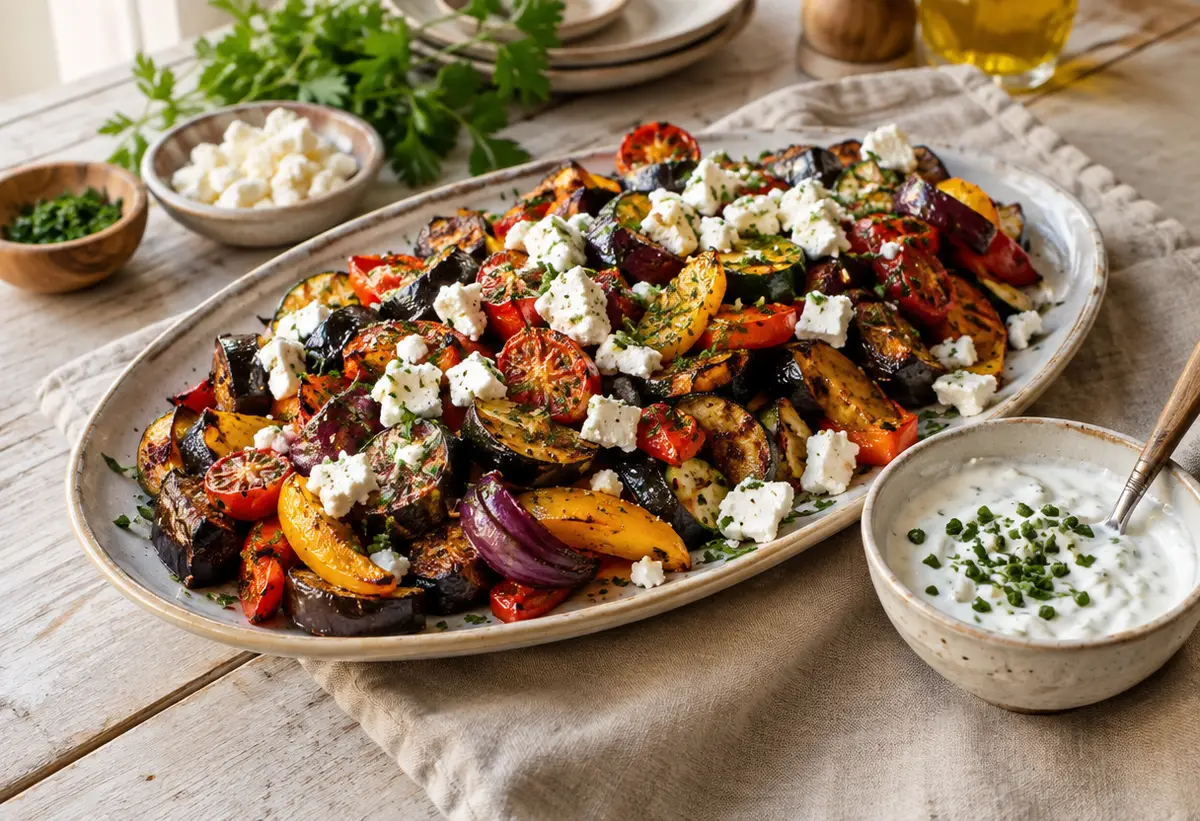
Serve
Pile the vegetables on a platter, crumble the feta over and serve the sauce alongside. Warm as dinner, at room temperature as a salad. They keep 3 days in the fridge; reheat 8 minutes at 200 °C, not in the microwave, which turns them soft.
Feta, sauce alongside, warm or at room temperature
Before you start
With grain or chickpeas
A drained can of chickpeas thrown on for the last 20 minutes turns crisp and makes this a whole dinner. So does 150 g of cooked pearl barley tossed through the vegetables after roasting.
With chicken on the same tray
Four chicken thighs laid skin up among the vegetables, everything for 45 minutes at 200 °C. The fat from the thighs drips onto the vegetables, which is the best thing that can happen to them.
They came out pale and soft
Too much on the tray, or too low a heat. Two trays instead of one and 220 °C instead of 180 °C usually fix it; and don't open the oven more than once.
Nutrition
per 100 gStep photos are computer-generated from the recipe.


