Whole roast chicken: crackling skin, juicy meat, gravy from the tray
The Sunday chicken that works every time, because all the work happens the day before: salted and left uncovered in the fridge overnight so the skin dries and the meat seasons to the bone. In the morning only paprika-garlic butter, a lemon in the cavity and 70 minutes in the oven. A thermometer instead of guessing, a quarter hour of rest instead of a dry breast.

Your own work in that: 20 min.
- Salting in the fridge 720 min
- Butter and lemon 10 min
- Roasting 70 min
- Resting 15 min
- Gravy 10 min
Step by step
0 / 8 done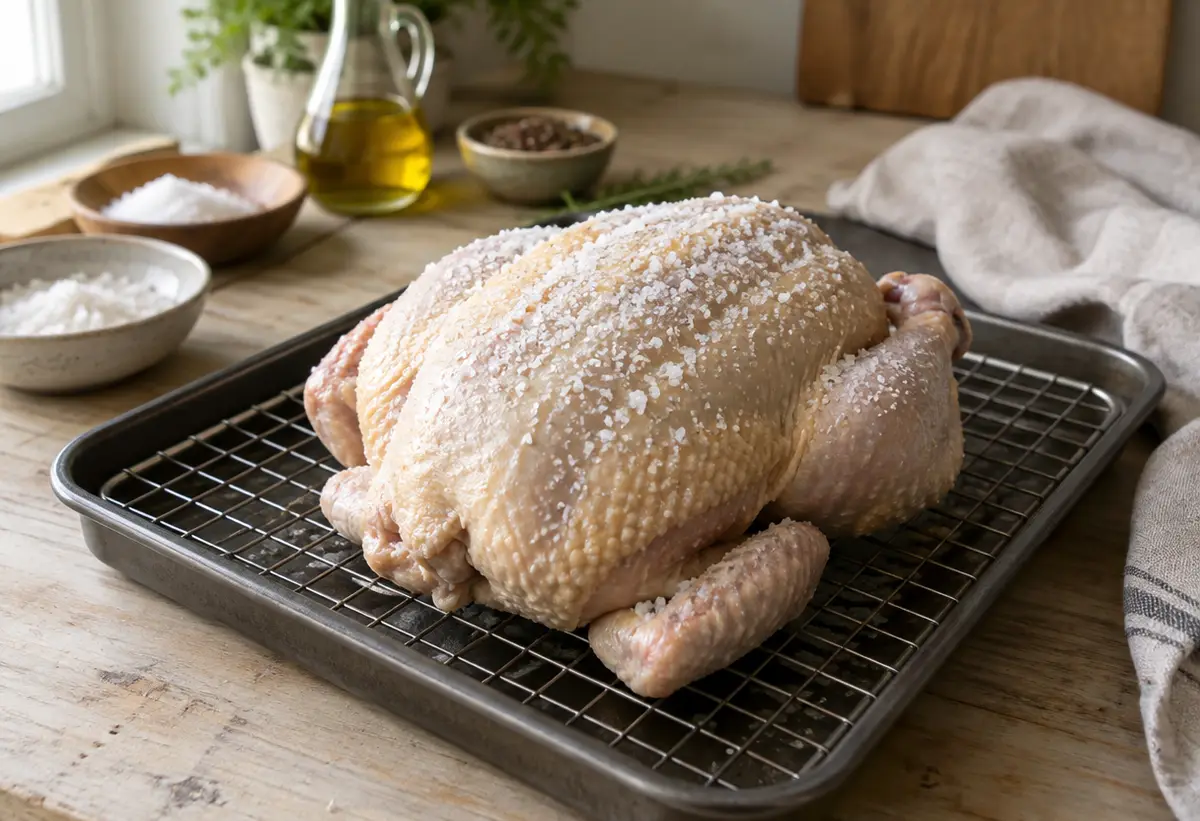
The day before: salt the chicken
Dry the chicken inside and out with paper towel, remove any giblets. Rub salt everywhere, including the cavity: a tablespoon per 1.5 kg. Set breast up on a rack over a plate or tray.
Ingredients: 1 pcs whole chicken · 1 tbsp salt · 60 g butter · 3 cloves garlic · 2 tsp sweet paprika · 1 tsp dried marjoram · ½ tsp black pepper · 1 pcs lemon
TipThis dry salting does what a wet brine does, without the water: the meat seasons to the bone and holds its juices, and the skin doesn't get soaked.
A tablespoon of salt, the cavity too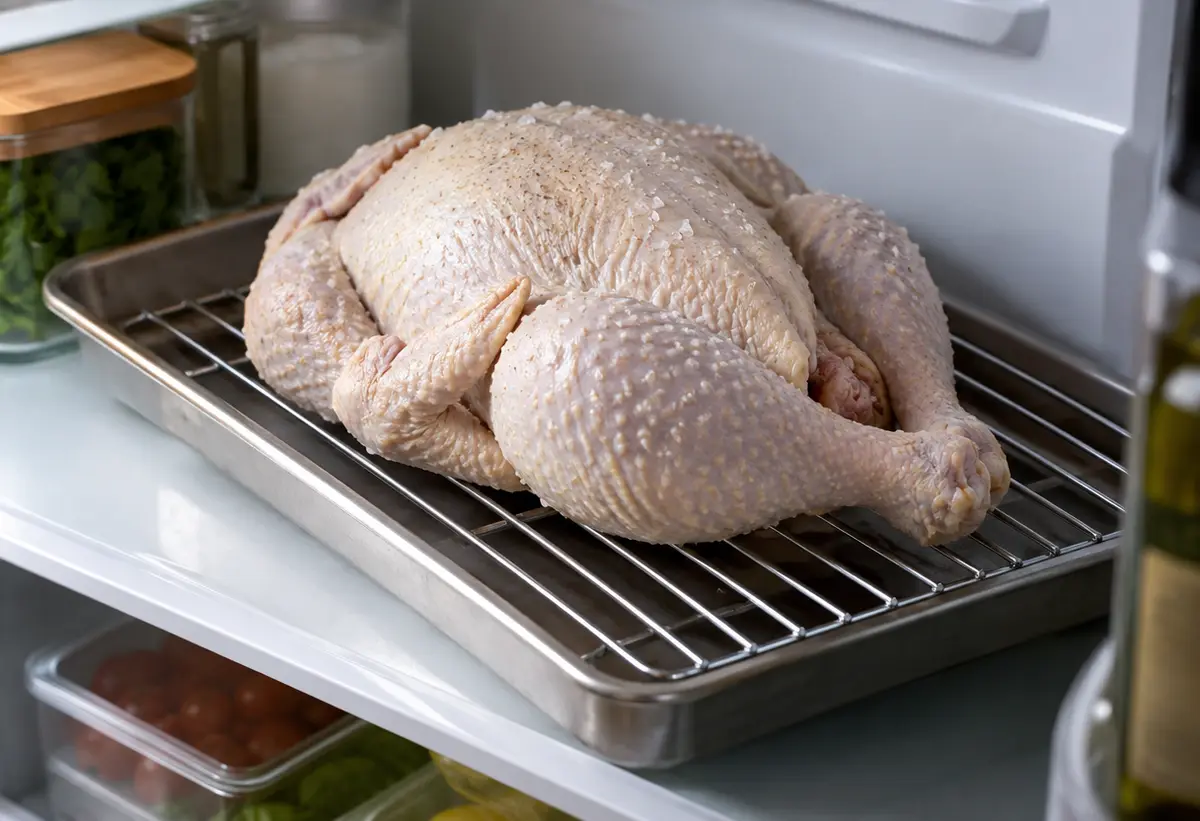
Leave uncovered in the fridge
Put the chicken on its rack in the fridge uncovered for 12–24 hours. The skin dries and tightens over that time; without dry skin there is no crisp skin. If you have only 2 hours, that still helps, just not as much.
Uncovered, on a rack, all night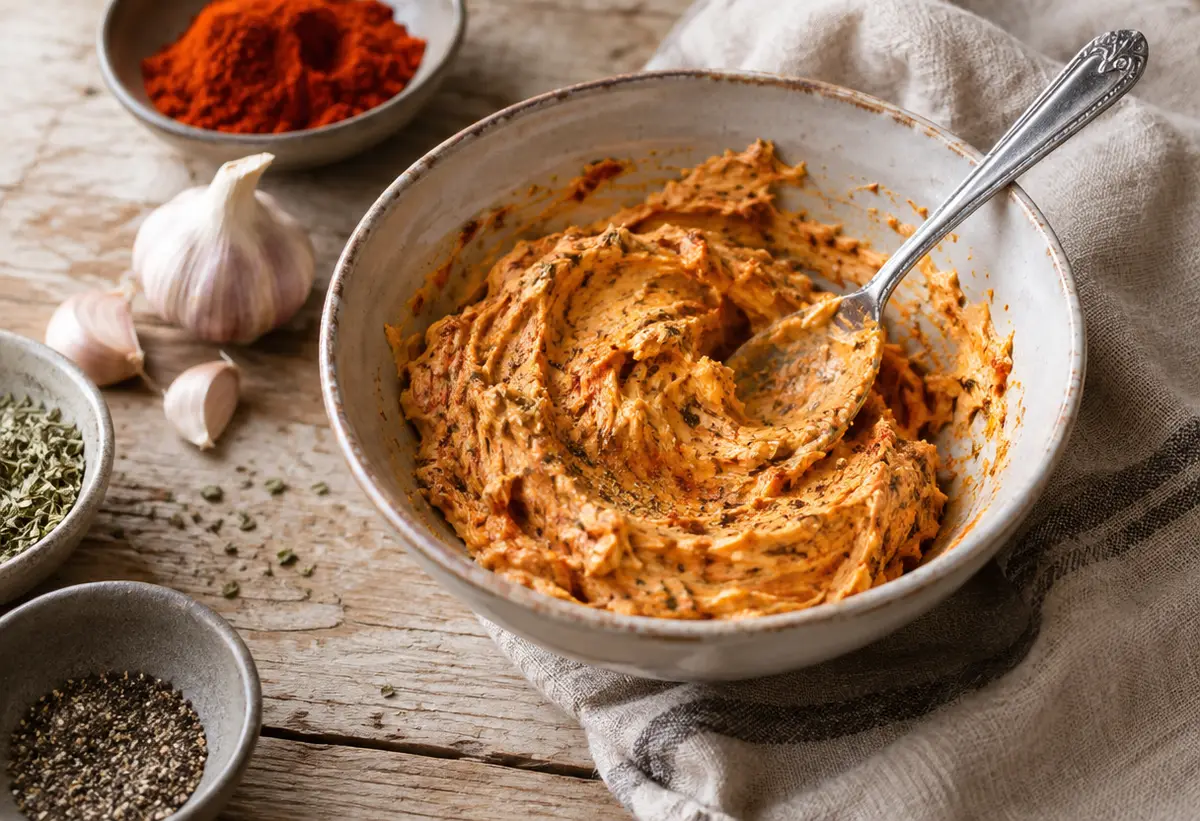
Paprika and garlic butter
Take the chicken out of the fridge 30–40 minutes before roasting so it isn't fridge-cold, and heat the oven to 200 °C. Mix the soft butter with the crushed garlic, paprika, marjoram crushed between your palms and the pepper. No more salt.
An orange paste of butter and spices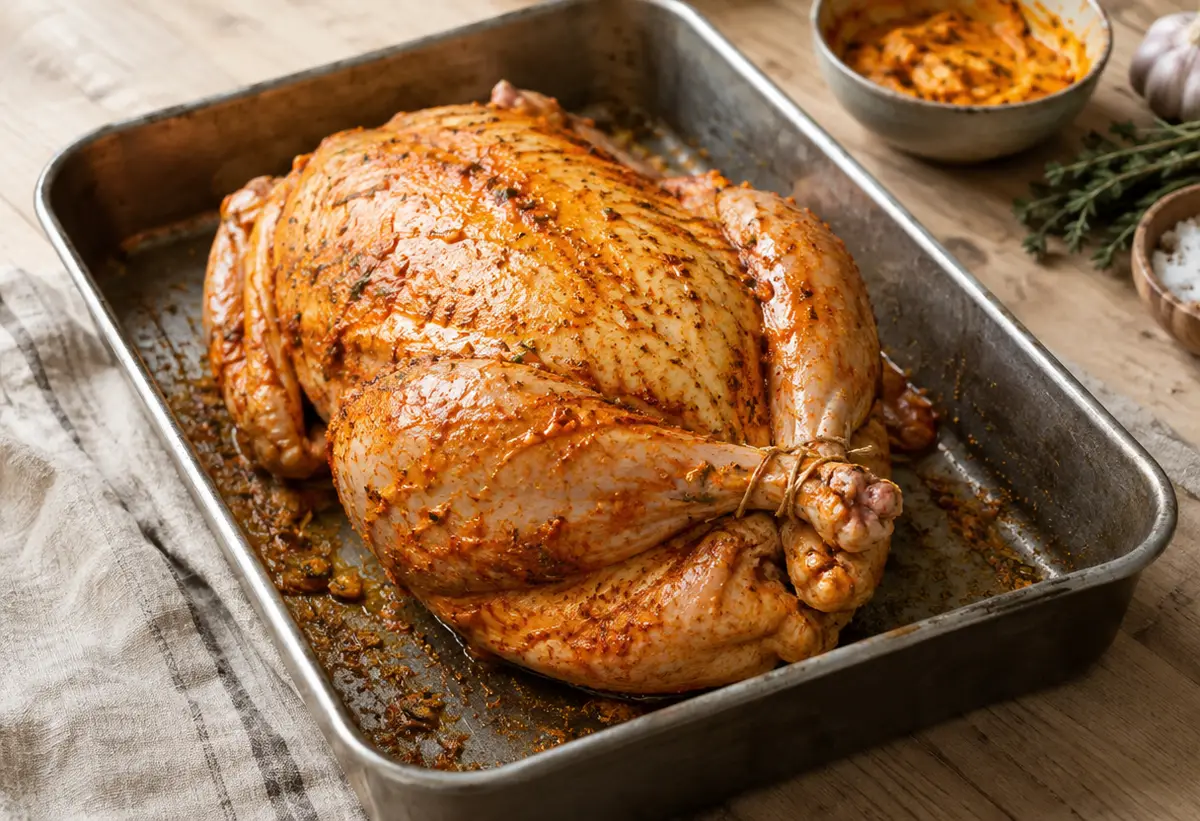
Rub and stuff with lemon
With your fingers, gently loosen the breast skin from the neck end and push half the butter underneath, spreading it over the breast. Rub the rest over the outside. Prick the lemon with a fork, halve it and put it in the cavity with the squeezed garlic skins. Tie the legs with string, tuck the wings under the back.
TipButter under the skin protects the breast, which cooks faster than the legs, and paprika gives a lovely colour. Tied legs make a compact shape that roasts evenly.
Butter under the breast skin, lemon inside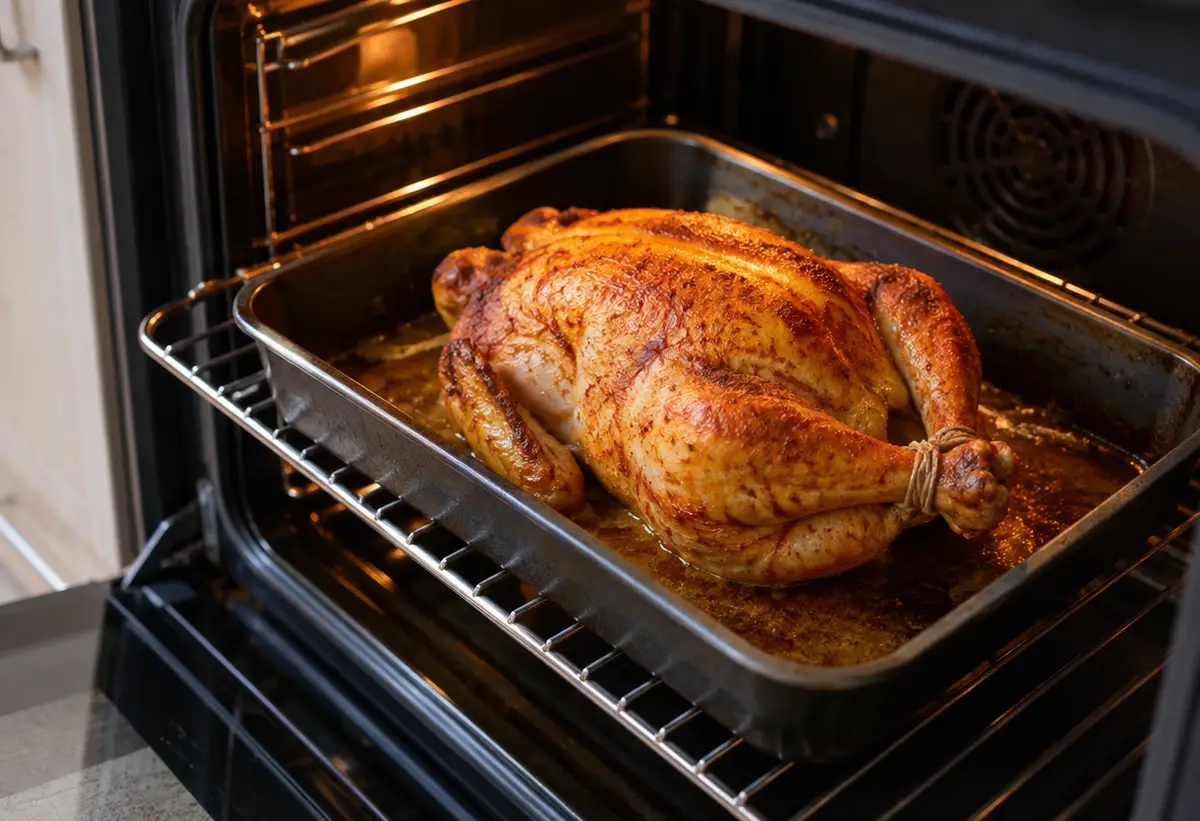
Roast
Set the chicken breast up in a roasting tray or ovenproof dish, middle shelf. Roast 65–75 minutes at 200 °C, basting with the tray juices after 40 minutes. The skin should be deep golden and blistered; if it darkens too fast, cover the breast loosely with foil.
Breast up, 200 °C, baste after 40 minutes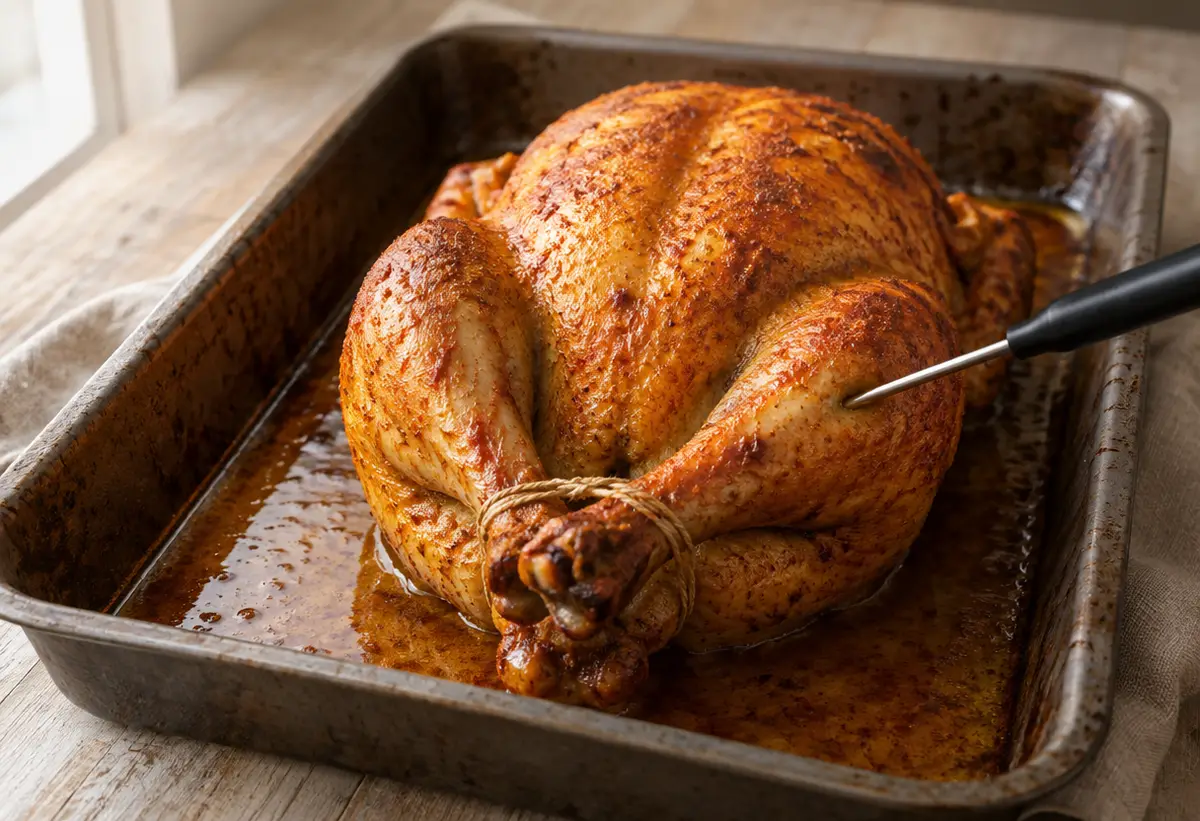
Check with a thermometer
Push a thermometer into the thickest part of the thigh without touching bone: 80 °C in the thigh, 74 °C in the breast means done. Without a thermometer: pierce the thigh at the joint, the juices should run clear, not pink. Not there yet? Roast in 10-minute steps and check again.
TipA 1.6 kg chicken needs roughly 40 minutes per kilo plus 10 at 200 °C. Bigger, or straight from the fridge: longer. A cheap probe thermometer ends the guessing for good.
80 °C in the thigh, clear juices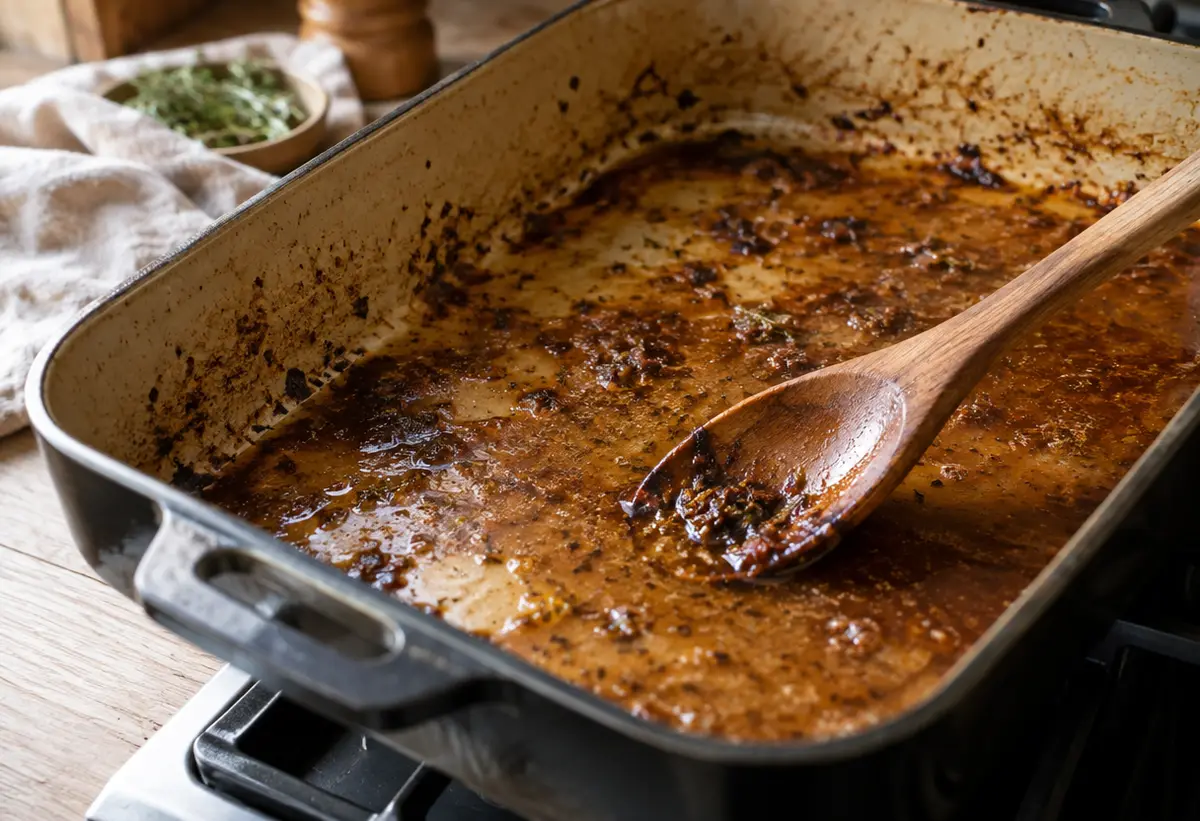
Rest and make the gravy
Move the chicken to a board and leave 15 minutes under loose foil; the juices settle back into the meat, and carved at once they would run out onto the board. Meanwhile set the tray on a burner, spoon off the excess fat, pour in the stock and stir, scraping up the browned bits, 3 minutes. Want it thicker? Stir a teaspoon of flour into a tablespoon of cold water, add it and boil for another minute.
Ingredients: 200 ml chicken stock or water · 1 tsp plain flour
A quarter hour under foil, gravy from the tray scrapings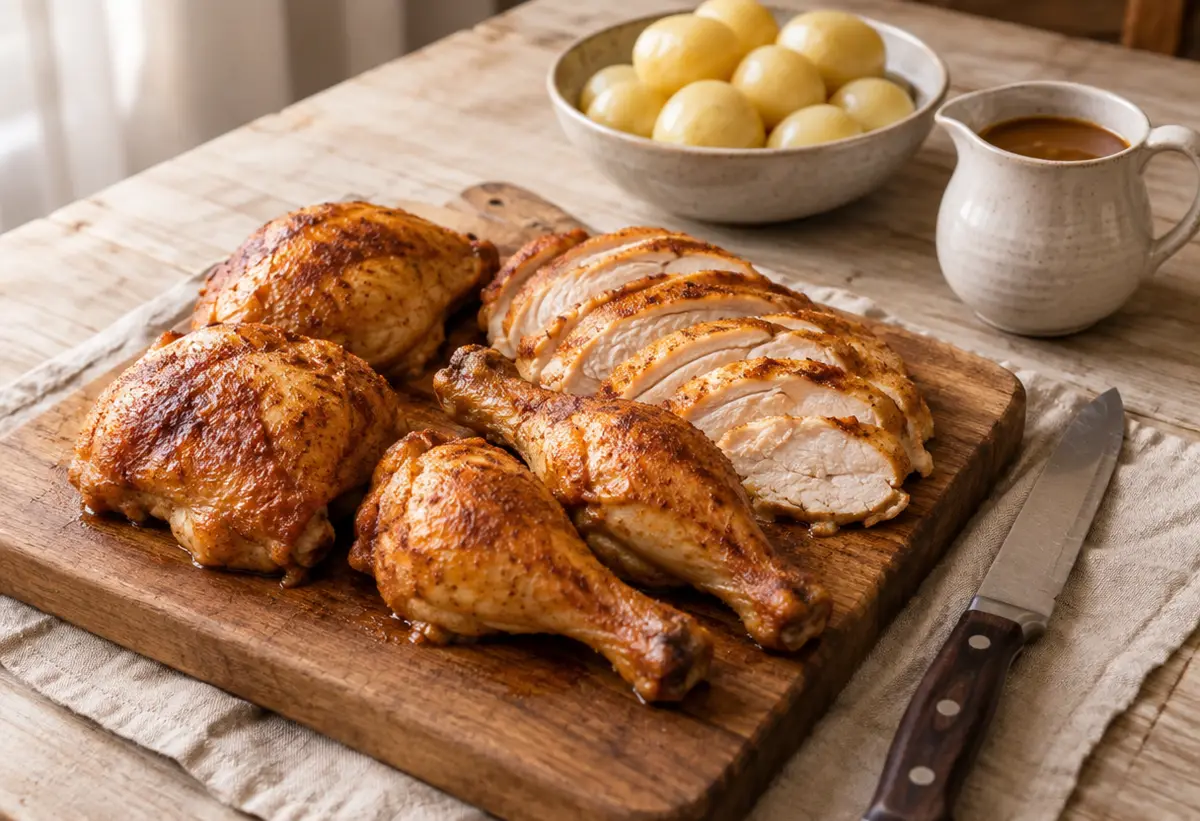
Carve and serve
Cut the legs off at the joint, split into thigh and drumstick. Cut the breast away along the breastbone and slice. Serve with the gravy, potatoes or chips and a salad. Drop the carcass into a pot with vegetables after dinner: tomorrow's chicken soup for free.
Legs, breast in slices, gravy alongside
Before you start
On a bed of vegetables
Put chunks of potato, carrot and onion with a spoon of oil under the chicken: they roast in its juices and dinner comes off one tray.
Spatchcocked
Cut out the backbone with scissors and press the chicken flat, breast up: it roasts in 45 minutes instead of 70, with crisp skin all over.
Soft skin
The chicken was wet or roasted covered. Dry it, air-dry it in the fridge uncovered, and roast without foil until the last 10 minutes.
Nutrition
per 100 gStep photos are computer-generated from the recipe.


