Kaiser rolls: a crackling crust and a five-fold swirl
The kaiser roll is the breakfast roll everyone in Central Europe knows and almost nobody bakes at home — mostly because of that swirl on top, which looks like a professional trick. It is in fact five folds tucked into the centre and a minute of practice. The crackling crust comes from elsewhere: from steam in the oven for the first ten minutes, and from a dough that is lean. Butter would give a soft roll, and a kaiser is meant to crack.

Your own work in that: 1 h 5 min.
- Dough 20 min
- Rising 105 min
- Shaping and baking 45 min
Step by step
0 / 6 done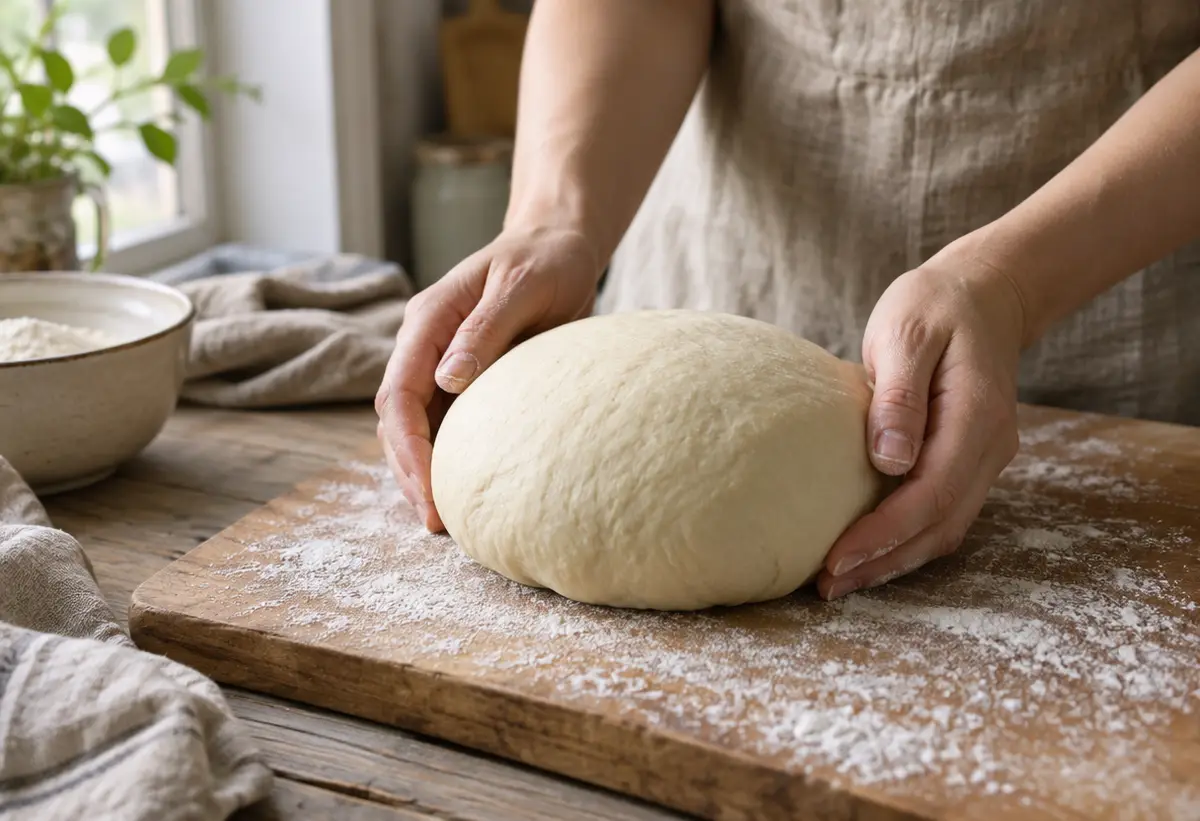
Knead the dough
Dissolve the yeast in the lukewarm water with the sugar and wait 5 minutes. Add it to the flour mixed with the salt, add the oil and knead 10 minutes, until smooth and elastic. It should be medium firm — a soft dough gives a fluffy burger bun, not a crisp kaiser.
Ingredients: 500 g strong bread flour · 300 ml water · 7 g dried yeast · 1 tbsp sugar · 1½ tsp salt · 2 tbsp oil
Smooth and elastic, medium firmFirst rise
Put it in an oiled bowl, cover and leave somewhere warm 60 minutes, until doubled. The finger test: the dent should fill back slowly. If it springs back instantly, give it another quarter hour.
Divide into ten balls
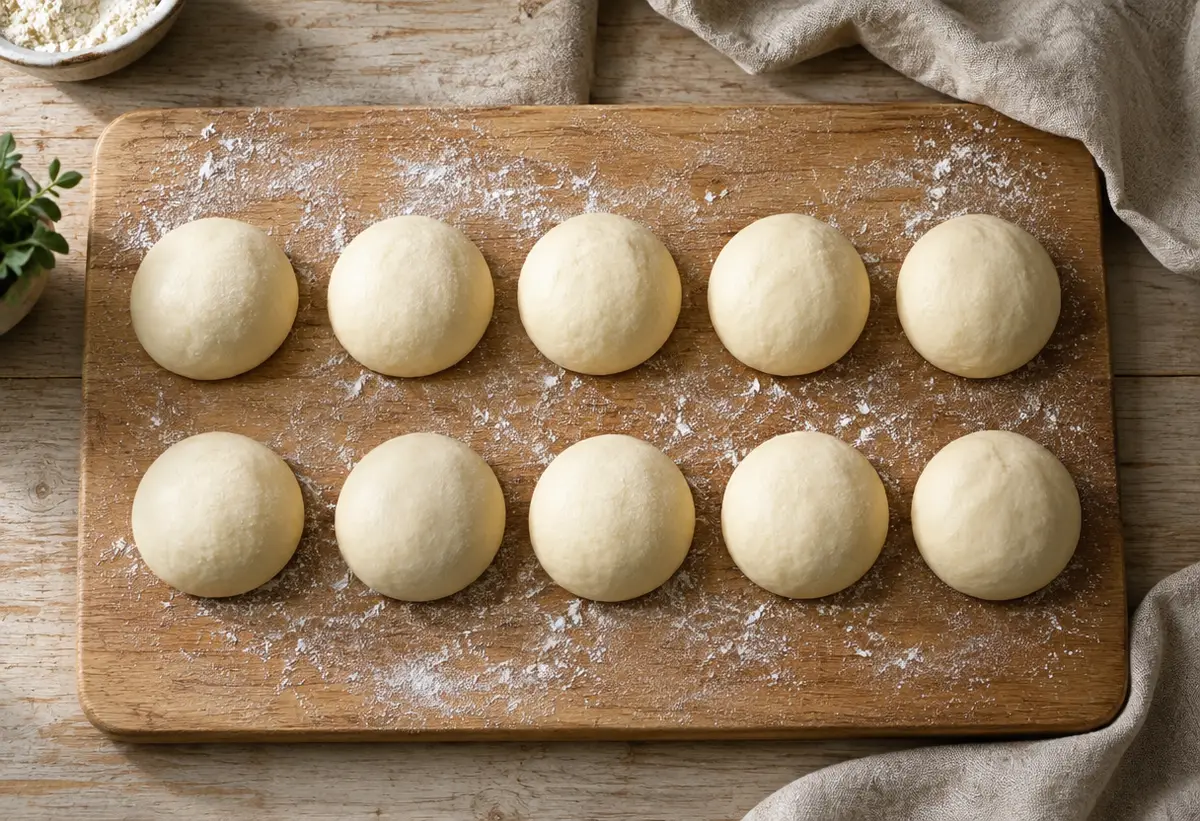
Divide the dough into 10 pieces of about 85 g and roll each into a tight ball, circling it under your palm on the counter. A taut surface is the condition for a clear pattern — a slack ball spreads and the folds vanish.
Tight balls, 85 grams each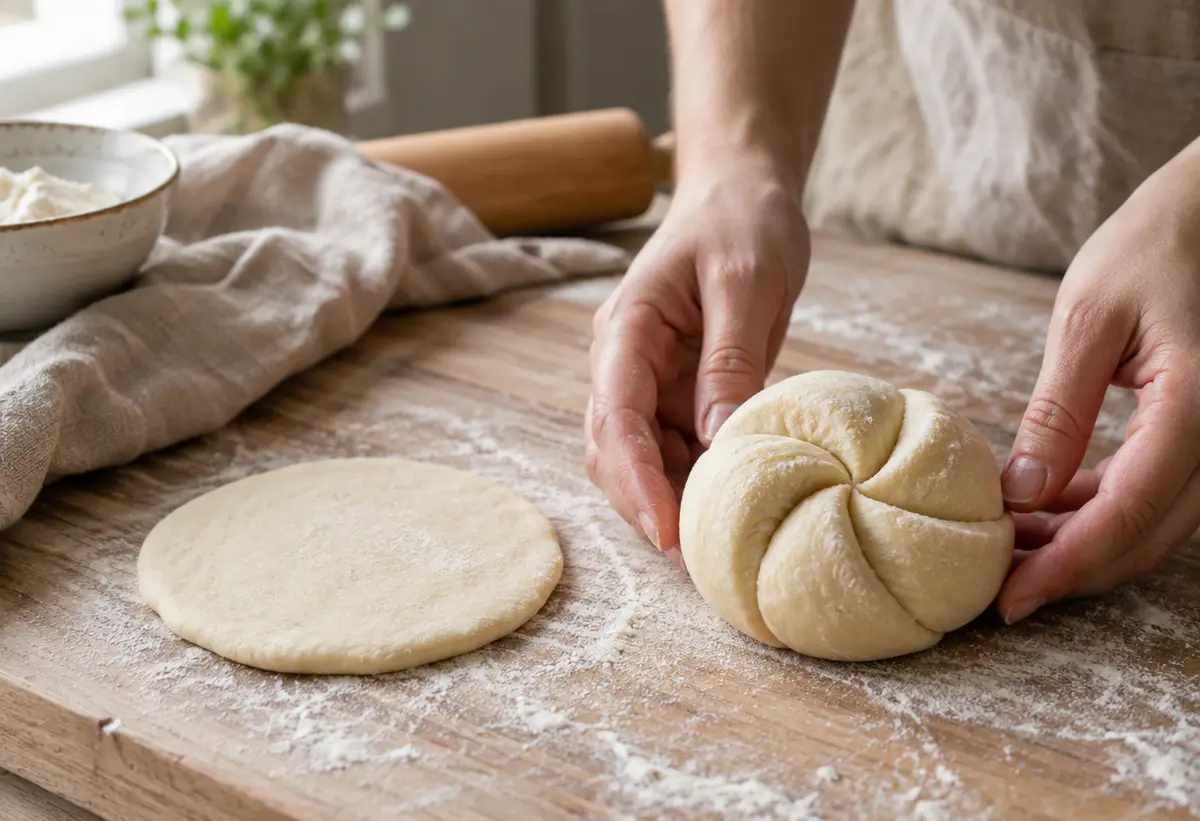
Fold the kaiser pattern
Flatten a ball into a 10 cm disc. Imagine five points around a clock face. Take the edge and fold it into the centre, working round — five folds, each tucked under the previous one. Push the last one under the first and press it down.
Ingredients: 500 g strong bread flour · 300 ml water · 7 g dried yeast · 1 tbsp sugar · 1½ tsp salt · 2 tbsp oil
TipCan't manage the fold? Press the pattern with a <b>kaiser stamp</b> or score five radiating lines with a blade. It looks similar, though folding gives a deeper relief.
Five folds, each tucked under the last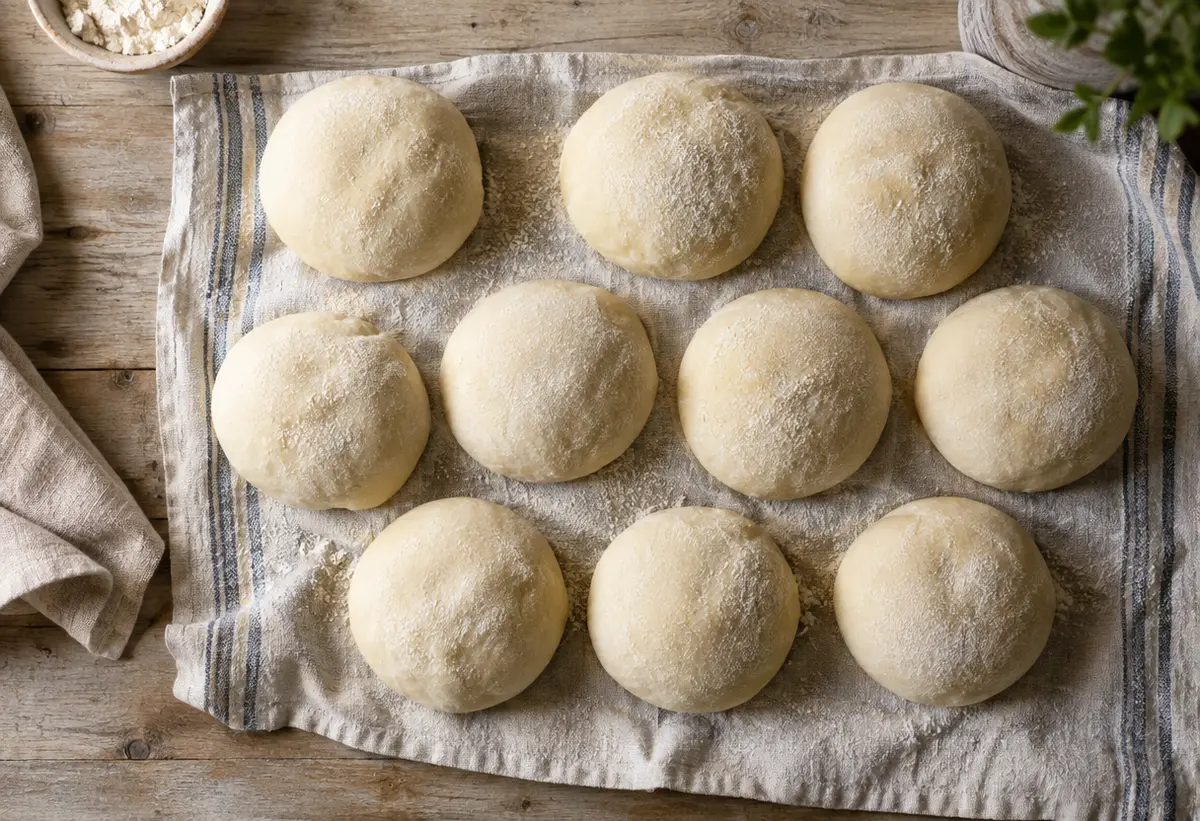
Prove pattern side down
Set the rolls pattern down on a floured cloth, cover and leave 45 minutes. Resting on the pattern sets it: risen the other way up, the folds would spread and the baked roll would come out smooth. Meanwhile heat the oven to 230 °C with an empty tin on the bottom shelf.
Pattern down, so it doesn't spread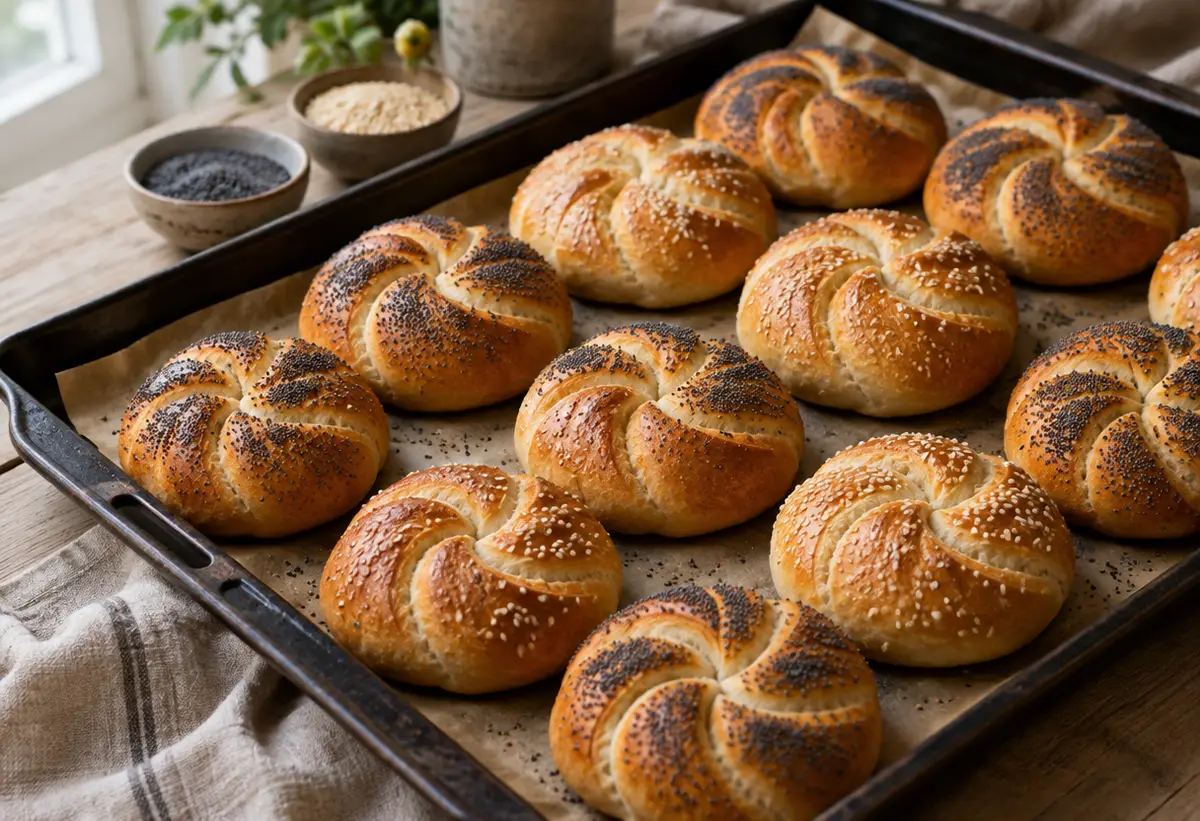
Bake with steam
Turn the rolls pattern up onto a tray, spray with water and scatter with poppy or sesame seeds. Put them in the oven heated to 230 °C, pour a cup of boiling water into the tin below and shut the door quickly. After 10 minutes carefully remove the tin with any remaining water (mind the steam) and carry on baking, 18–20 minutes in total, until golden and crisp.
Ingredients: 100 ml water · 2 tbsp poppy seeds · 2 tbsp sesame seeds
TipSteam in the first minutes keeps the crust flexible, so the roll expands fully and then dries crisp. Without steam the crust sets too early and the roll stays small.
A cup of boiling water in the tin below
Before you start
Do you need the stamp
No. A kaiser stamp is cheap and quick, but hand-folded rolls have a deeper, clearer pattern and look like what they are: homemade.
Reheating
Spray with water and put them in a 180 °C oven for 5 minutes. The crust comes back almost entirely crisp. It works even on three-day-old rolls.
Freezing
Bake 3 minutes short, cool and freeze. Reheat from frozen: 8 minutes at 190 °C and they are as good as bakery fresh.
Why no butter
Fat softens the crust and extends freshness, but takes away the crack. A kaiser is exactly about the contrast of a hard shell and a soft interior — two tablespoons of oil is the ceiling.
Nutrition
per 100 gStep photos are computer-generated from the recipe.