Kogel-mogel: egg yolks beaten with sugar, a childhood dessert in ten minutes
The simplest dessert there is, made in Polish homes for generations: egg yolks beaten with sugar until they turn pale, thicken and fall from the spoon in a ribbon. Nothing else. It is served in a glass, with a teaspoon and a biscuit for dipping. One safety rule: the eggs must be fresh and clean, because they stay raw; there is a pasteurised version over steam below as well.

Your own work in that: 10 min.
- Separating the yolks 3 min
- Beating 7 min
Step by step
0 / 4 done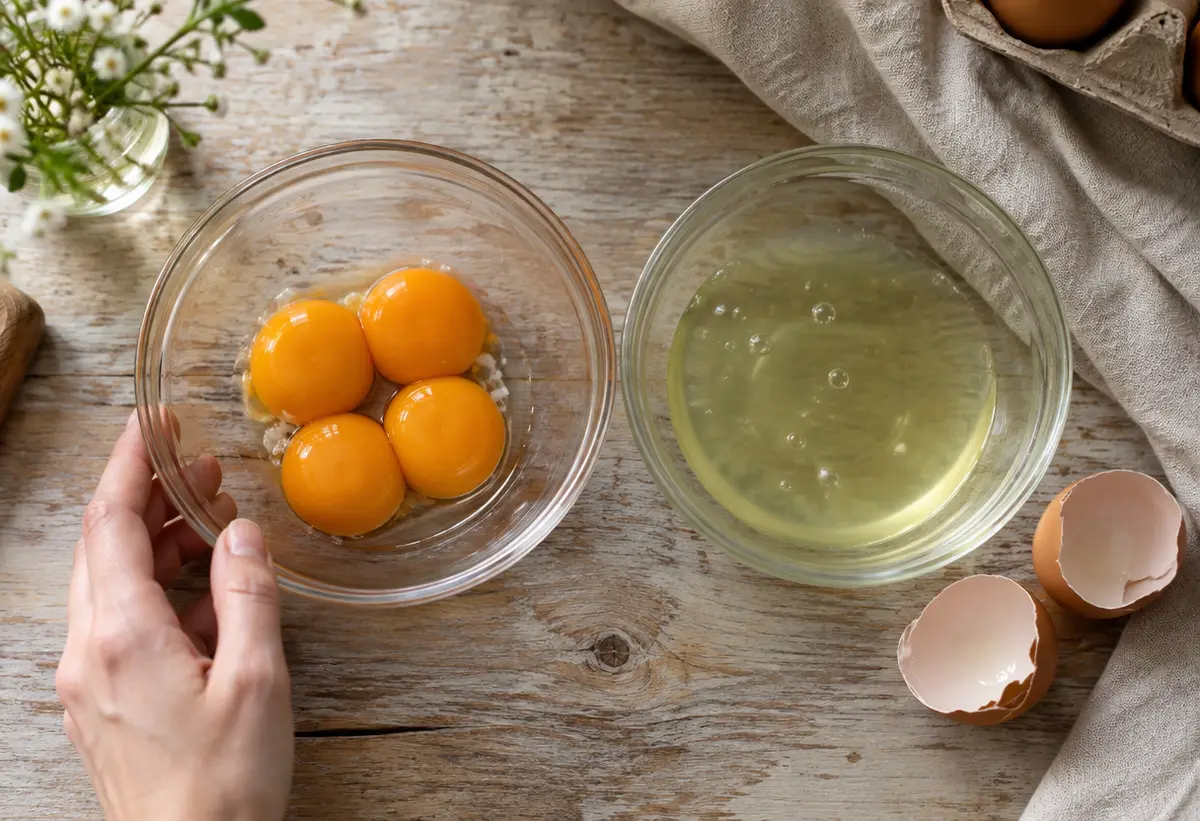
Choose the eggs and separate the yolks
Just before cracking, wash the eggs under warm running water and dry them. Crack each over a bowl and pass the yolk between the shell halves until the white runs off; tip the yolks into a second, dry bowl. Keep the whites for meringue or an omelette.
Ingredients: 4 pcs egg yolks · 4 tbsp sugar · 1 tsp vanilla sugar · 1 tsp cocoa powder
TipKogel-mogel is raw egg yolk, so: eggs as fresh as the date allows, no cracks, kept refrigerated, washed just before cracking. Safest are in-shell pasteurised eggs (larger supermarkets stock them). For small children, pregnant women, older people and anyone with a weakened immune system, serve only the pasteurised version from the tips below.
Fresh, washed, yolks on their own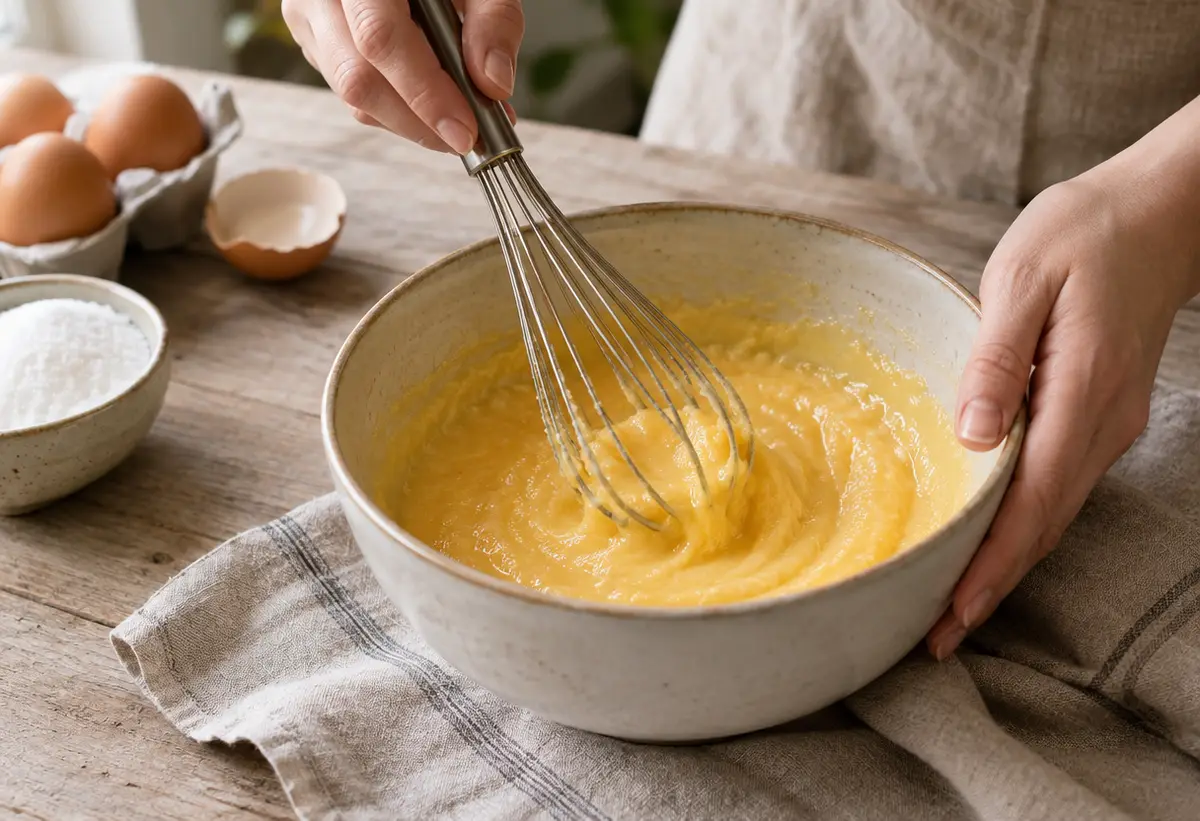
Beat with the sugar
Add the sugar and vanilla sugar to the yolks. Beat with a whisk or a mixer for 5–7 minutes: the mixture should go from orange to pale yellow, thick and fluffy, and the sugar must dissolve completely (rub a drop between your fingers: no grit). Caster sugar dissolves faster than granulated.
TipBeating aerates and dissolves the sugar at the same time. Too short: a dark, thin mixture with gritty sugar. Long enough: almost white and so thick the whisk leaves tracks.
From orange to pale yellow, sugar dissolved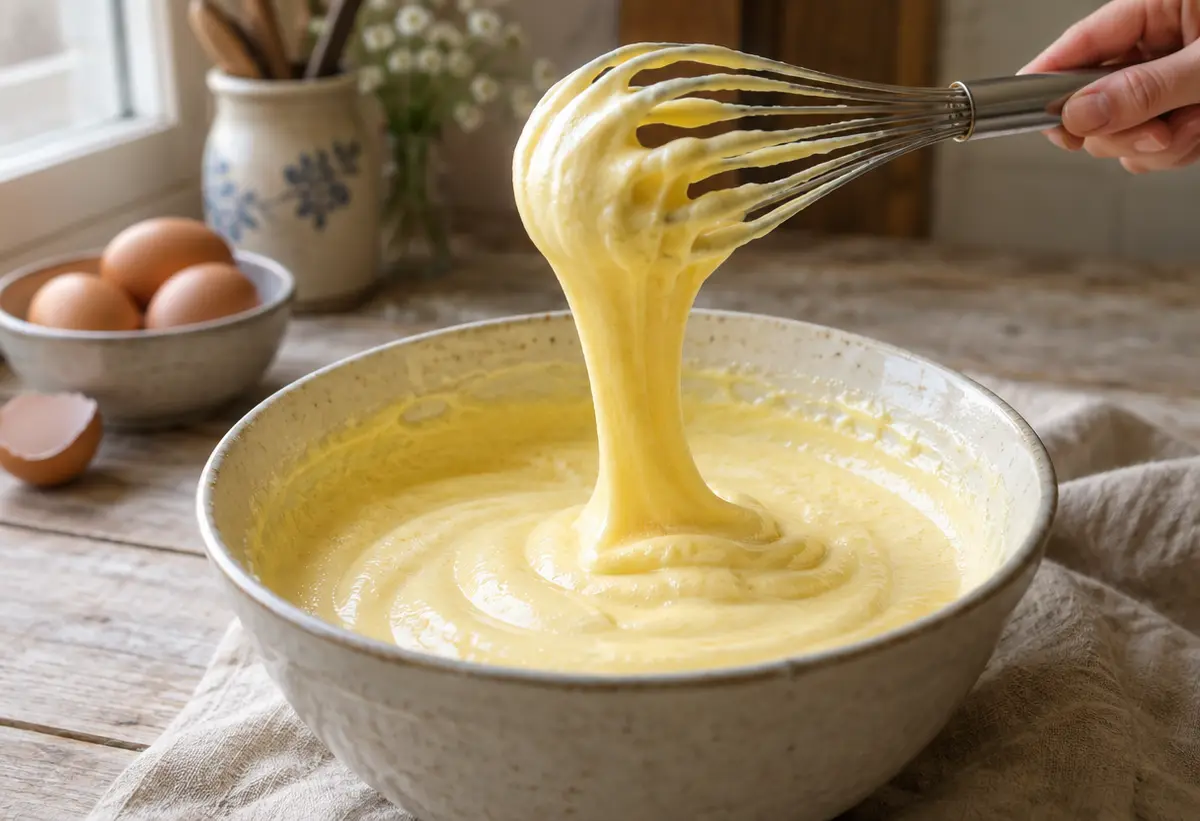
Check the ribbon
Lift the whisk: finished kogel-mogel falls slowly in a wide ribbon that stays visible on the surface for a moment. For the chocolate version stir in a teaspoon of cocoa now; for a looser one, a tablespoon of milk.
A ribbon that doesn't vanish at once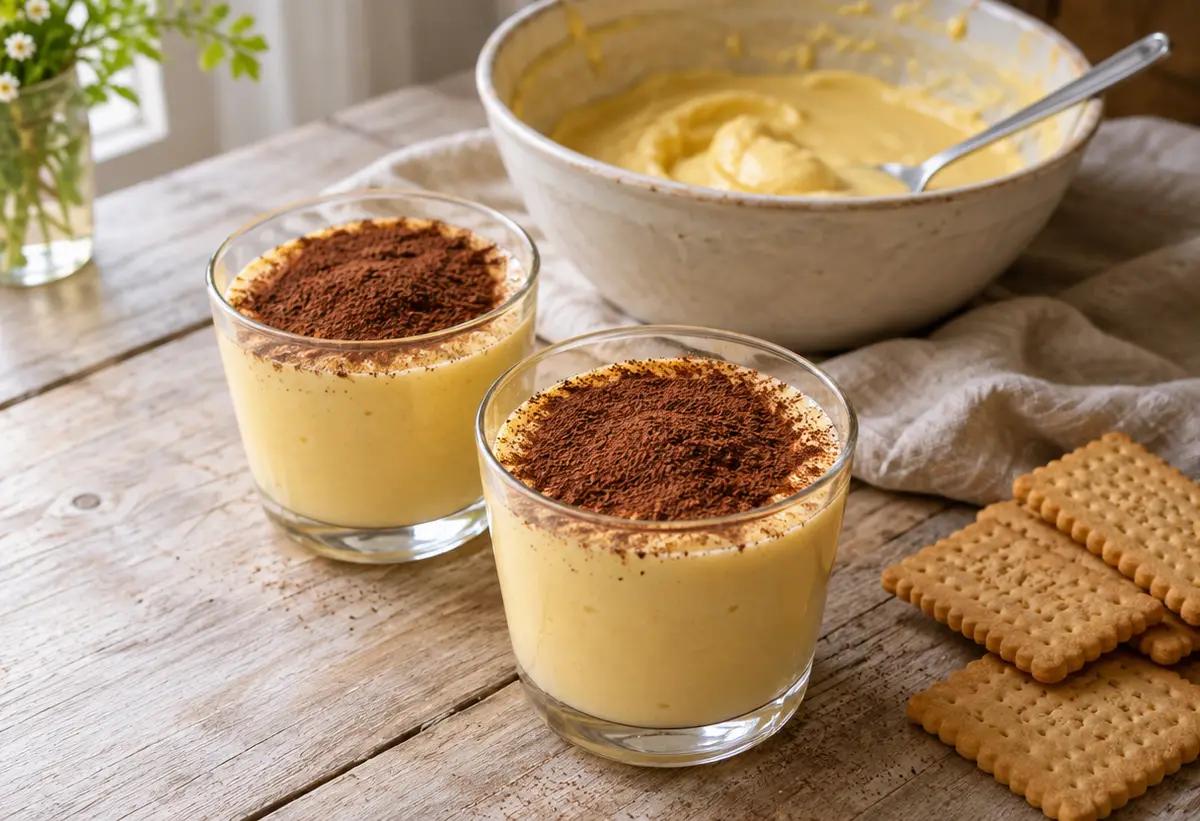
Serve at once
Spoon into two glasses, dust with cocoa, serve with biscuits. Eat straight away: after an hour in the fridge it sinks and separates. Don't keep it; raw yolks are not for tomorrow.
Ingredients: 6 pcs plain biscuits
In a glass, with a biscuit, right away
Before you start
The pasteurised version, for everyone
Beat the yolks and sugar in a bowl set over a pan of barely simmering water (the bowl must not touch the water) for 4–5 minutes, whisking constantly, until hot (71 °C on a kitchen thermometer) and thick, then take it off and beat 2 minutes more until it cools slightly. Same taste, and the salmonella risk is practically gone. Serve only this version to children, pregnant women and older people.
With rum or coffee
For grown-ups: a teaspoon of rum or strong coffee stirred in at the end. Coffee kogel-mogel is an old evening treat.
For a sore throat
Grandmother's version: yolks with honey instead of sugar and a tablespoon of butter, beaten the same way. Warm honey kogel-mogel was served for the throat; it works at least on the mood.
Nutrition
per 100 gStep photos are computer-generated from the recipe.
