Milk fudge: one hundred and eighteen degrees and a minute of beating
Fudge is pure sugar chemistry, and two numbers decide everything. The first is 118 °C — the temperature at which the cooled mixture is chewy but not runny; at 112 °C it stays a sticky paste, at 125 °C a hard caramel that breaks teeth. The second is a minute of vigorous beating off the heat, which forces microscopic sugar crystals to form — and those crystals are what give fudge its characteristic, faintly sandy softness.

Your own work in that: 55 min.
- Boiling 40 min
- Setting 120 min
- Cutting 15 min
Step by step
0 / 6 doneHave everything ready first
Line a 20 × 20 cm tin with paper and butter it. Set out a sugar thermometer, a wooden spoon and a glass of cold water. When the mixture reaches temperature you will have a matter of seconds to react — that is no moment to be hunting for paper.
Ingredients: 10 g butter
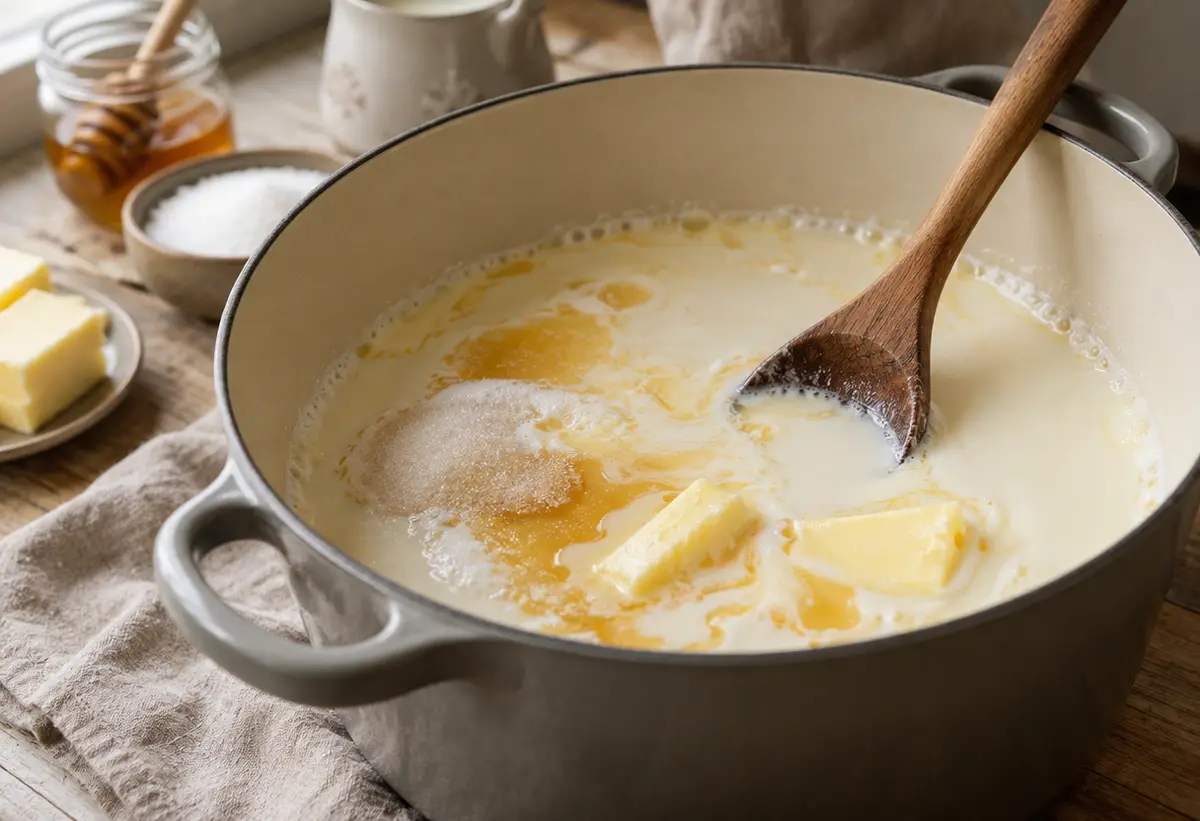
Dissolve the sugar in the milk
In a heavy-bottomed pan (at least three times the volume of the ingredients) combine the sugar, milk, cream, butter, honey and salt. Heat, stirring, until the sugar has completely dissolved — only then raise the heat. Undissolved crystals will seed crystallisation through the whole batch.
Ingredients: 400 g sugar · 250 ml whole milk · 200 ml whipping cream (30%) · 100 g butter · 2 tbsp honey · 2 tbsp vanilla sugar · ½ tsp salt
TipThe pan must be large: a milk and sugar mixture <b>triples in volume</b> at the boil and boils over very easily. That is the commonest accident when making fudge.
Sugar fully dissolved before boiling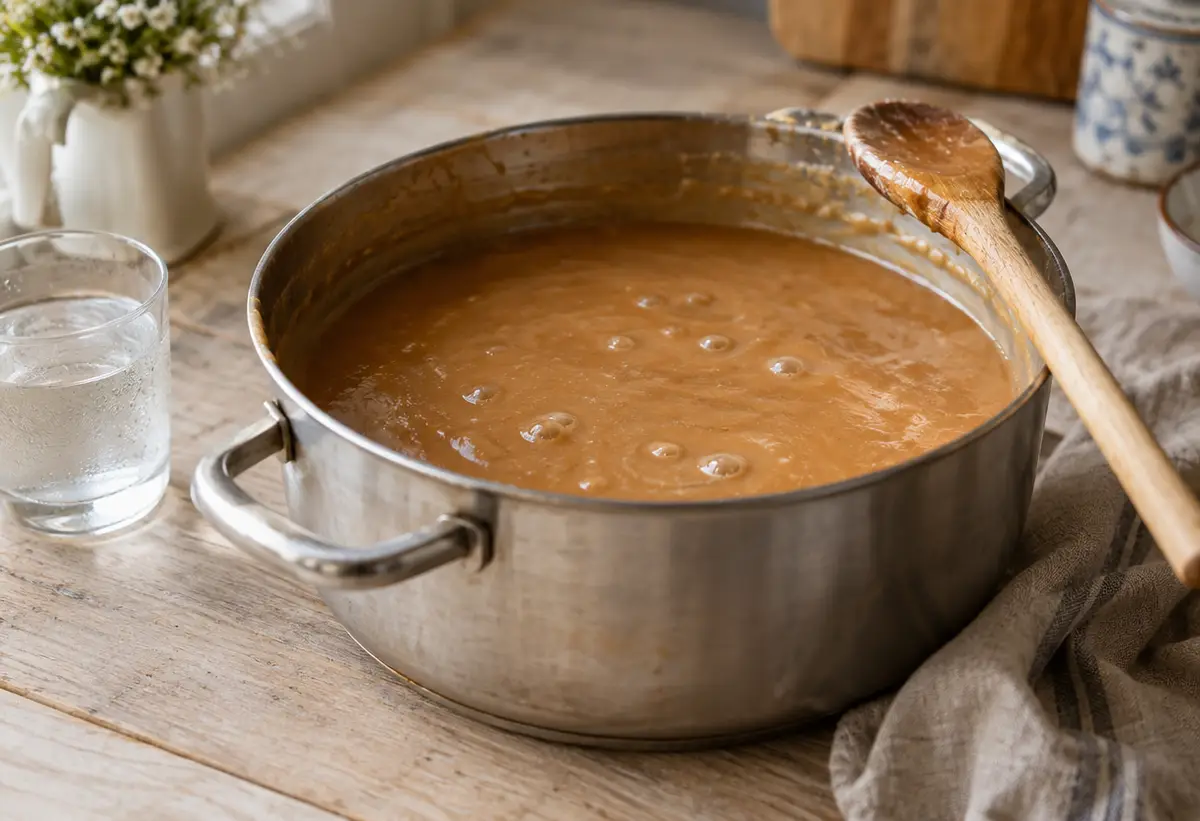
Boil to 118 degrees
Boil over medium heat, stirring every minute, until the thermometer reads 118 °C. It takes 20–25 minutes. The mixture thickens, darkens and starts to smell of caramel. The last ten degrees come very fast — from 110 °C, don't leave the pan.
TipWithout a thermometer: a drop in cold water should form a <b>soft ball</b> you can shape between your fingers but which holds together. That is 118 °C.
One hundred and eighteen degrees; watch from 110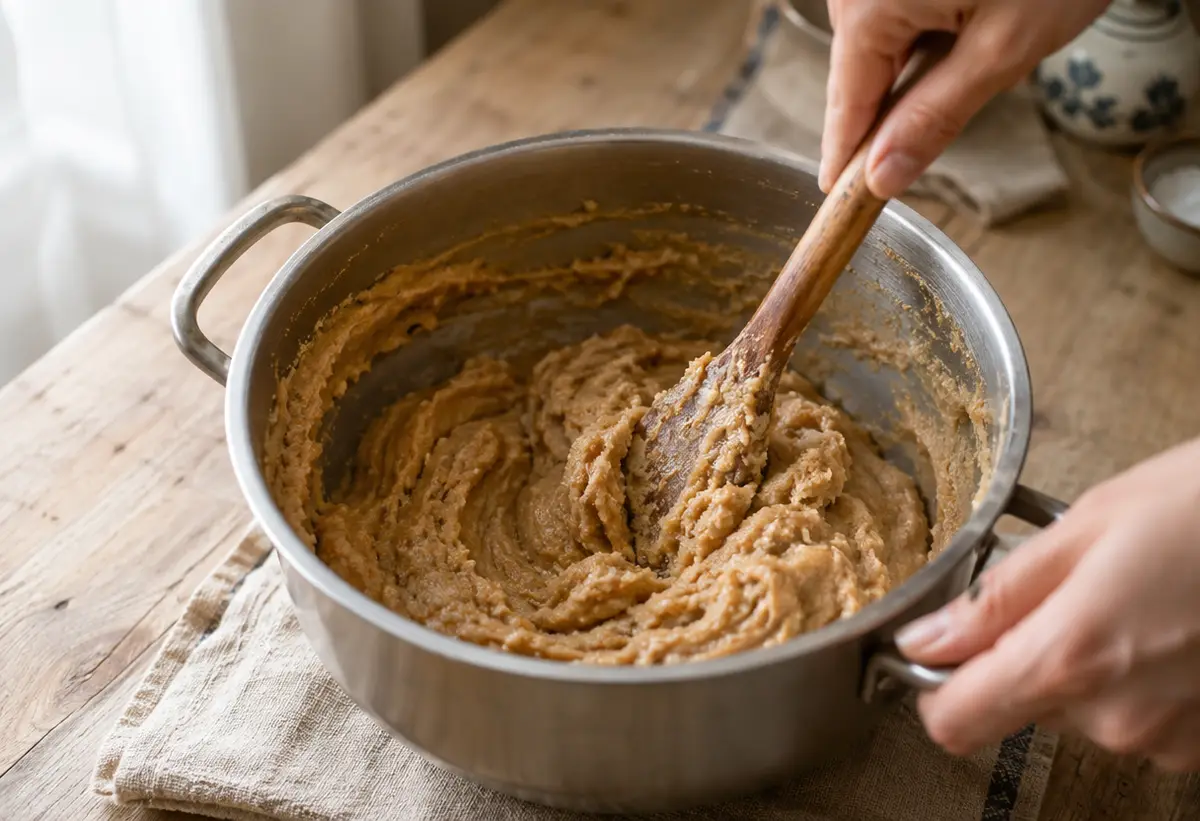
Beat for a minute off the heat
Take the pan off the heat, add the vanilla sugar and beat vigorously with a wooden spoon for 60 seconds. The mixture loses its gloss and pales noticeably — the sign that sugar has begun to crystallise. Skip this step and instead of fudge you get smooth, chewy toffee.
TipBeating forces <b>fine, even crystals</b>. But don't go beyond 2 minutes: the mixture sets in the pan and can no longer be poured and levelled.
It loses gloss and pales: that is the moment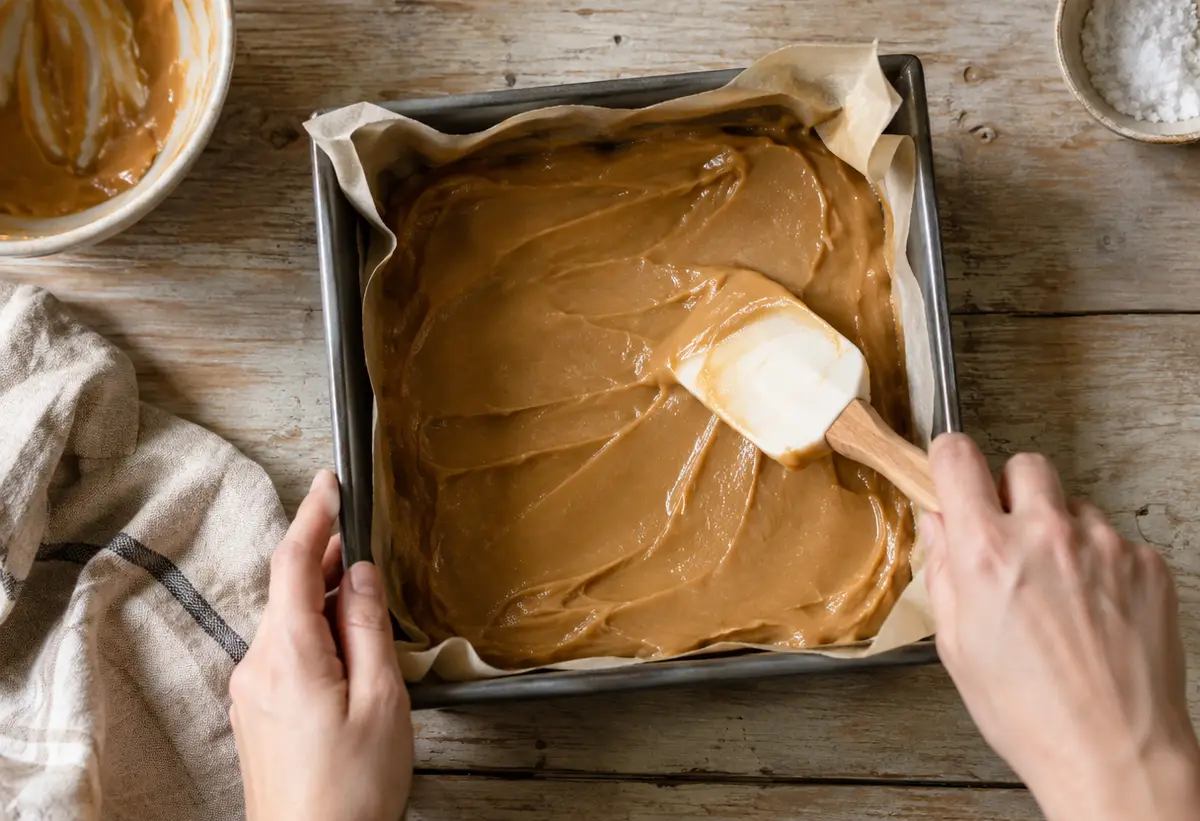
Pour and level at once
Pour into the tin and level with a spatula in one stroke. It sets within a minute, so there is no time for corrections. Don't scrape the base of the pan — anything caught there leaves dark, bitter streaks in the fudge.
One stroke of the spatula, no corrections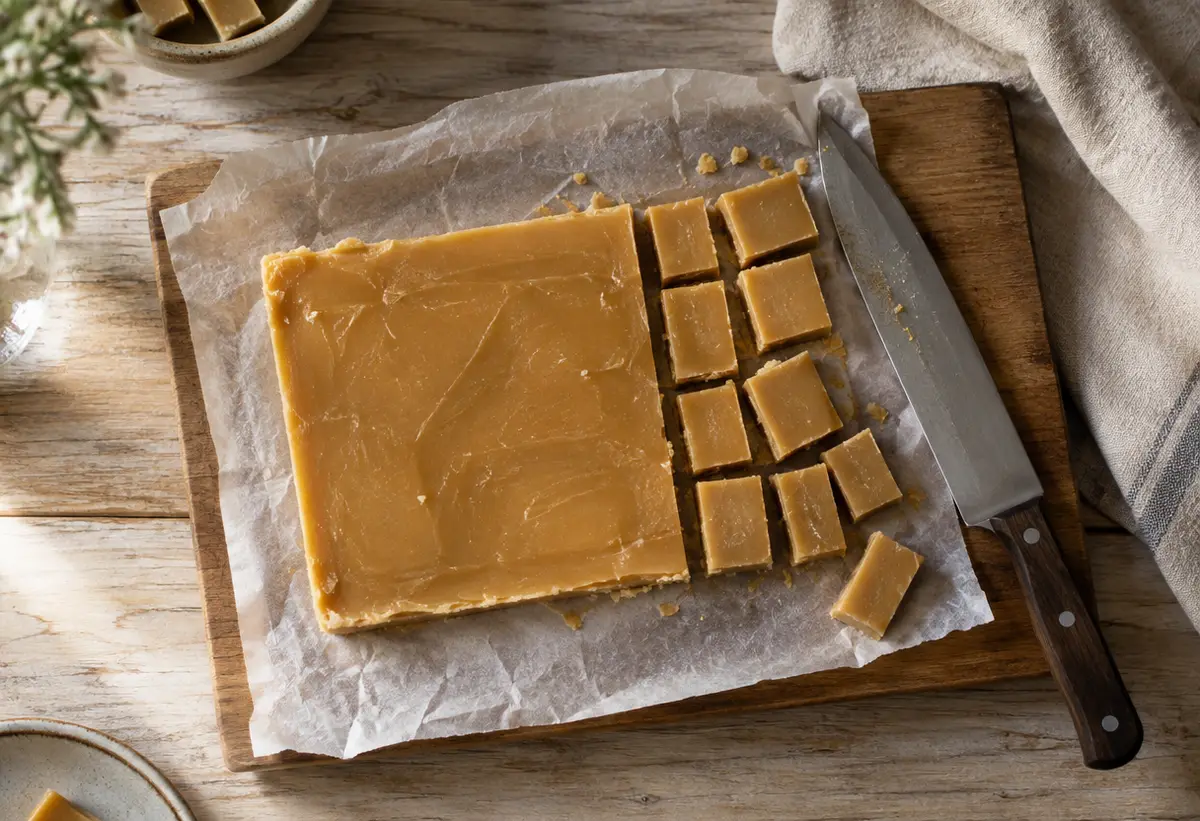
Cool and cut
Leave at room temperature 2 hours, until firm enough to cut. Lift it out by the paper and cut with a large knife, in one decisive press, into 2.5 × 4 cm bars (40 pieces). Wrap in twists of paper or layer with parchment in a tin.
TipDon't chill fudge in the fridge. Cold, it hardens excessively and cracks rather than cutting; at room temperature it sets evenly.
Two hours on the counter, then a big knife
Before you start
Why honey
Honey, like glucose syrup, contains glucose and fructose, which get in the way of sucrose molecules arranging into large crystals. Two tablespoons are enough to keep the fudge tender rather than gritty.
Chewier or firmer
Want it soft and chewy? Take it off at 115 °C. Firmer and crisper? Go to 121 °C. Every three degrees is a distinctly different sweet — it is worth making two batches and comparing.
Cocoa version
Two tablespoons of sifted cocoa beaten in with the vanilla sugar, at the beating stage. Added earlier, cocoa settles and scorches during the long boil.
How long it keeps
Up to two weeks in a sealed tin at room temperature, layered with parchment. Over time they harden and become more crumbly.
Nutrition
per 100 gStep photos are computer-generated from the recipe.
