Pierogi ruskie: thin dough, generous potato and cheese filling
A hot-water dough with an egg that neither splits in the pot nor dries out while you fill it. The filling is potato, farmer's cheese and fried onion, seasoned boldly with pepper. This batch makes about 60 pierogi; half can go in the freezer.

Your own work in that: 2 h 15 min.
- Filling 30 min
- Dough 15 min
- Dough rests 30 min
- Shaping 60 min
- Boiling 30 min
Step by step
0 / 8 done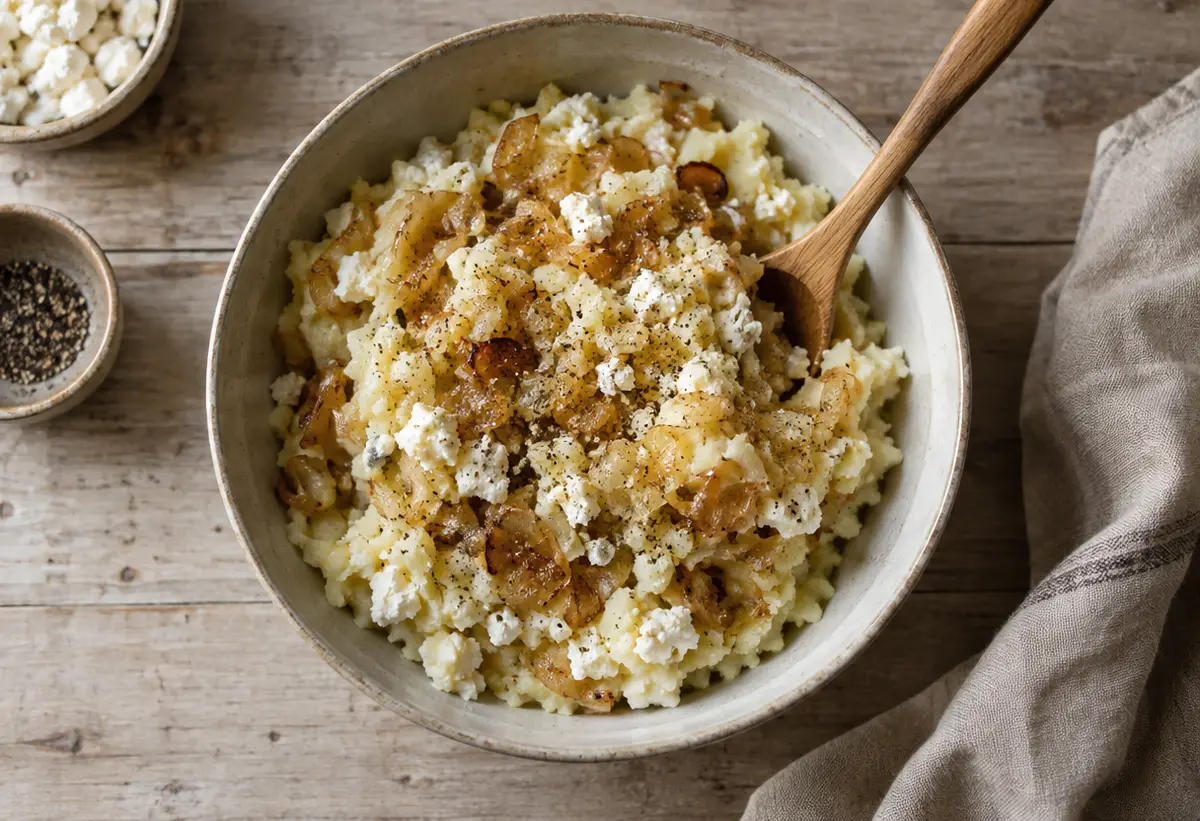
Make the filling
Peel the potatoes, boil in salted water until tender, drain and steam off thoroughly. Dice the onions finely and soften in butter. Mash the potatoes (don't blend; they turn gluey), add the cheese crumbled with a fork, the onion with its butter, salt and pepper. Mix and cool.
Ingredients: 700 g potatoes · 400 g farmer's cheese (twaróg), semi-fat · 2 pcs onions · 40 g butter · 1 tsp salt · 1 tsp freshly ground black pepper
TipSeason the filling more boldly than seems sensible: the dough is neutral and takes some of the flavour.
Potato, cheese, onion: season boldly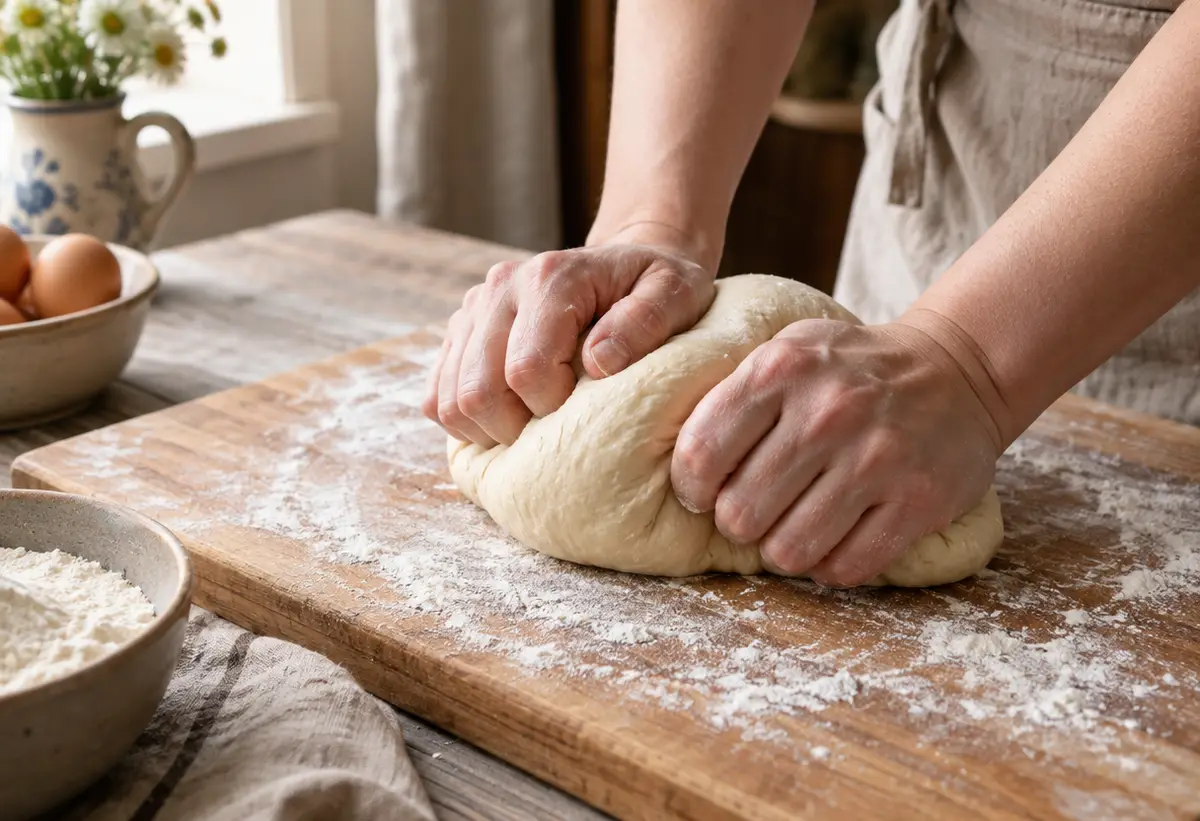
Knead the dough
Sift the flour into a bowl with the salt. Pour in the hot water, stir with a spoon, and once it has cooled enough to touch add the egg and oil. Knead on the counter 8–10 minutes, until smooth, soft and elastic. Don't add more flour than you must.
Ingredients: 500 g plain flour · 250 ml hot water · 1 pcs egg · 1 tbsp oil · 1 tsp salt
TipHot water part-scalds the flour: the dough stays supple, doesn't tear, and doesn't toughen after boiling.
Smooth, soft dough after 10 minutes of kneading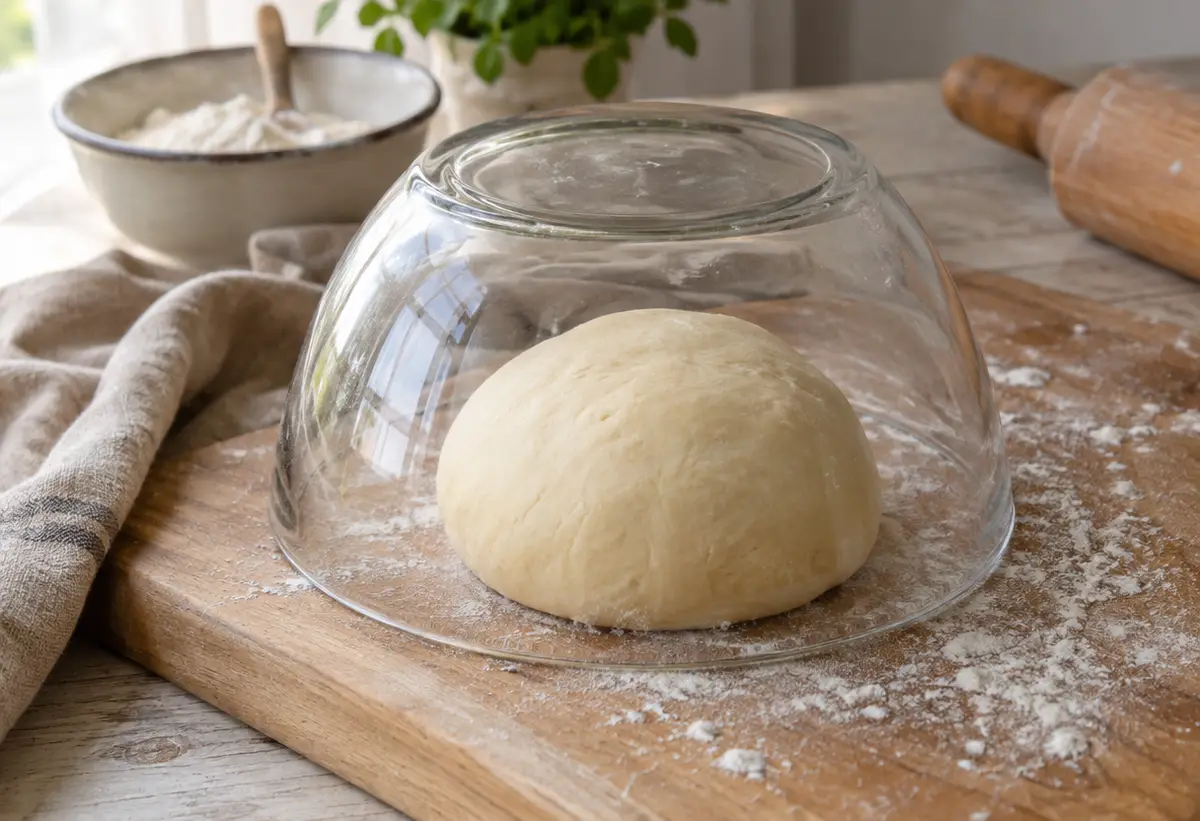
Rest the dough
Cover the ball of dough with an upturned bowl and leave it for 30 minutes. The gluten relaxes and the dough rolls thin without springing back.
Under a bowl so it doesn't dry out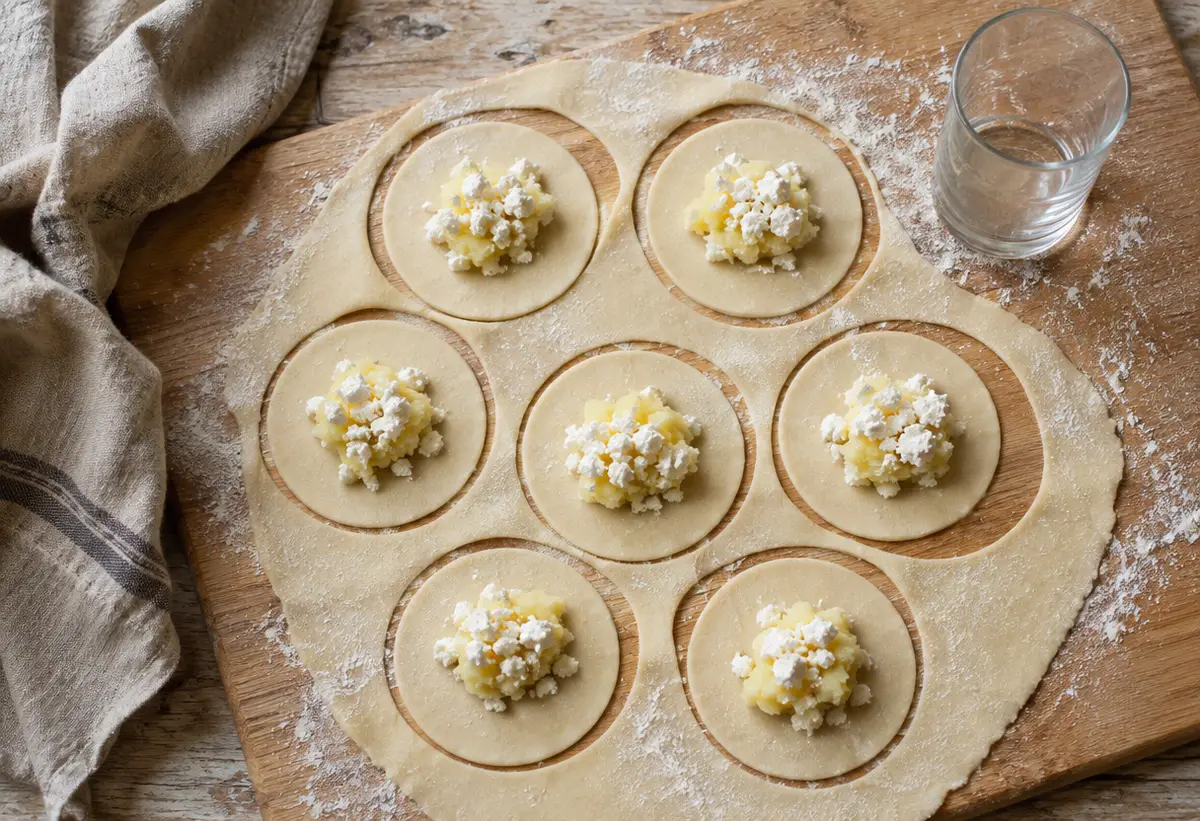
Roll and cut
Cut off a third of the dough (keep the rest under the bowl) and roll it on a lightly floured counter to 2 mm. Cut circles with a 7–8 cm glass. Put a heaped teaspoon of filling (about 20 g) in the centre of each.
Circles cut with a glass, a teaspoon of filling on each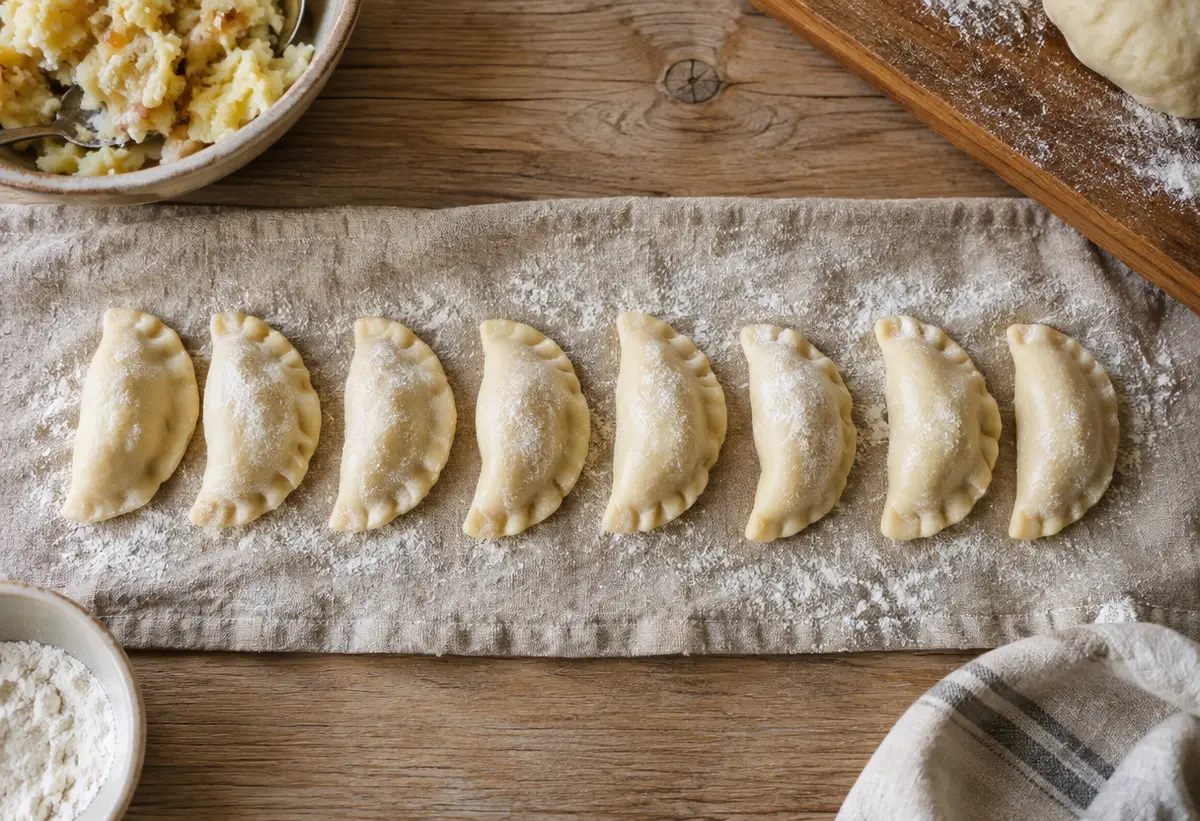
Shape the pierogi
Fold each circle in half and press the edges firmly together with your fingers, working from the middle outwards to push the air out. Crimp the edge for looks and security. Lay the finished pierogi on a floured cloth, not touching.
TipIf the edges won't stick, moisten them with the barest touch of water. Flour on the rim is the commonest reason pierogi open in the pot.
Sealing the edge, air pushed out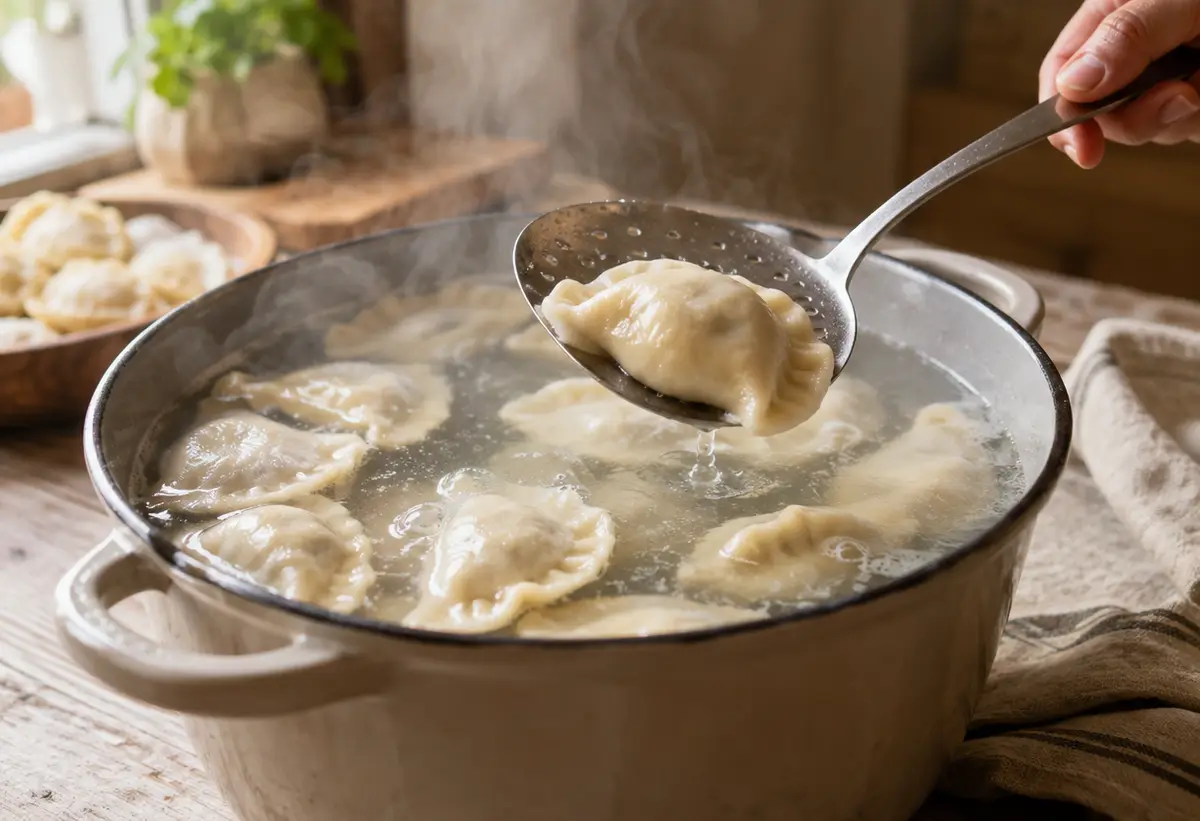
Boil in batches
Bring a wide pot of well-salted water to the boil. Drop in 10–12 pierogi at a time and stir gently so they don't stick to the bottom. Once they float, cook 2–3 minutes more. Lift out with a slotted spoon.
TipThe water should boil steadily, not violently. A hard boil tears the dough.
Floating: 2–3 minutes more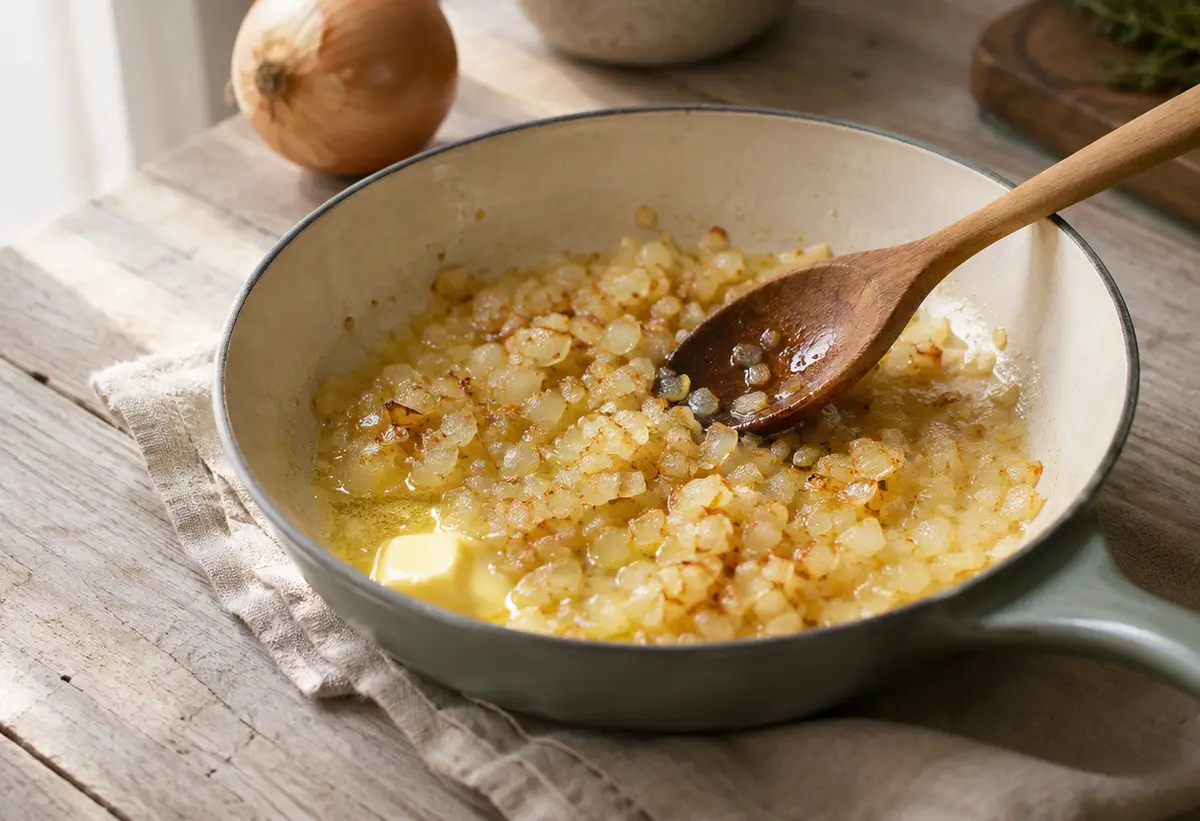
Fry the topping
Chop the onion finely and fry it in the butter until golden. For the bacon version, first render the finely diced bacon in the pan, then add the onion and butter.
Ingredients: 1 pcs onion · 100 g smoked bacon · 30 g butter · 150 g sour cream, 18 %
Golden onion in butter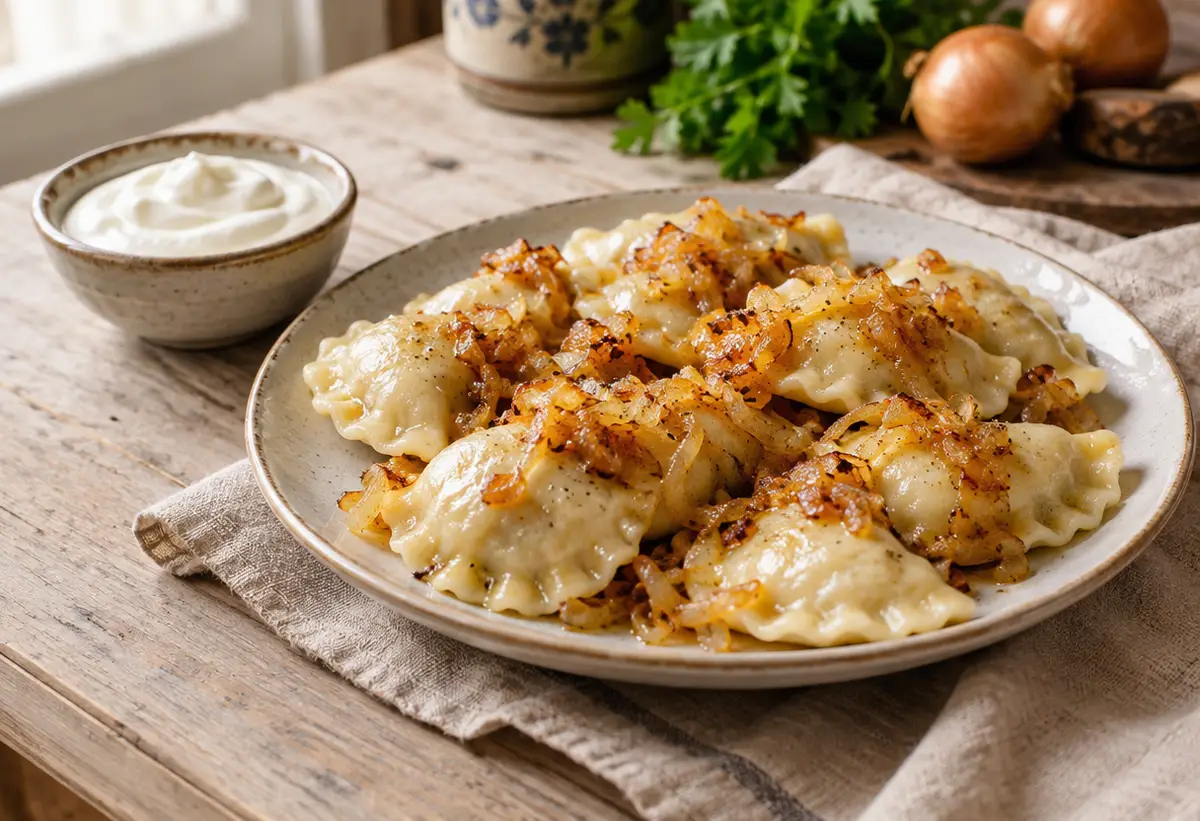
Serve
Spoon the topping over the pierogi and put the sour cream alongside. Next day they are best pan-fried in butter until golden on both sides.
With the topping and sour cream
Before you start
Freezing
Freeze raw pierogi spread out on a board, and only bag them once frozen solid. Boil from frozen, a minute longer.
The dough tears
Under-kneaded or under-rested. Put it back under the bowl for another 15 minutes; don't add flour.
About the name
“Ruskie” is usually traced to Red Ruthenia, today's Polish-Ukrainian borderland, not to Russia. In Ukraine similar dumplings are simply varenyky with potato and cheese.
Nutrition
per 100 gStep photos are computer-generated from the recipe.


