Fluffy Polish yeast cake with plums and crumble
The classic from grandma's baking tray: a tall, moist yeast dough, tart Hungarian plums pressed skin-side down and a thick buttery crumble. Two rises, but only about 40 minutes of actual work.

Your own work in that: 25 min.
- Starter 20 min
- Kneading 10 min
- Rising 60 min
- Plums, crumble, pan 15 min
- Rising 20 min
- Baking 55 min
Step by step
0 / 10 done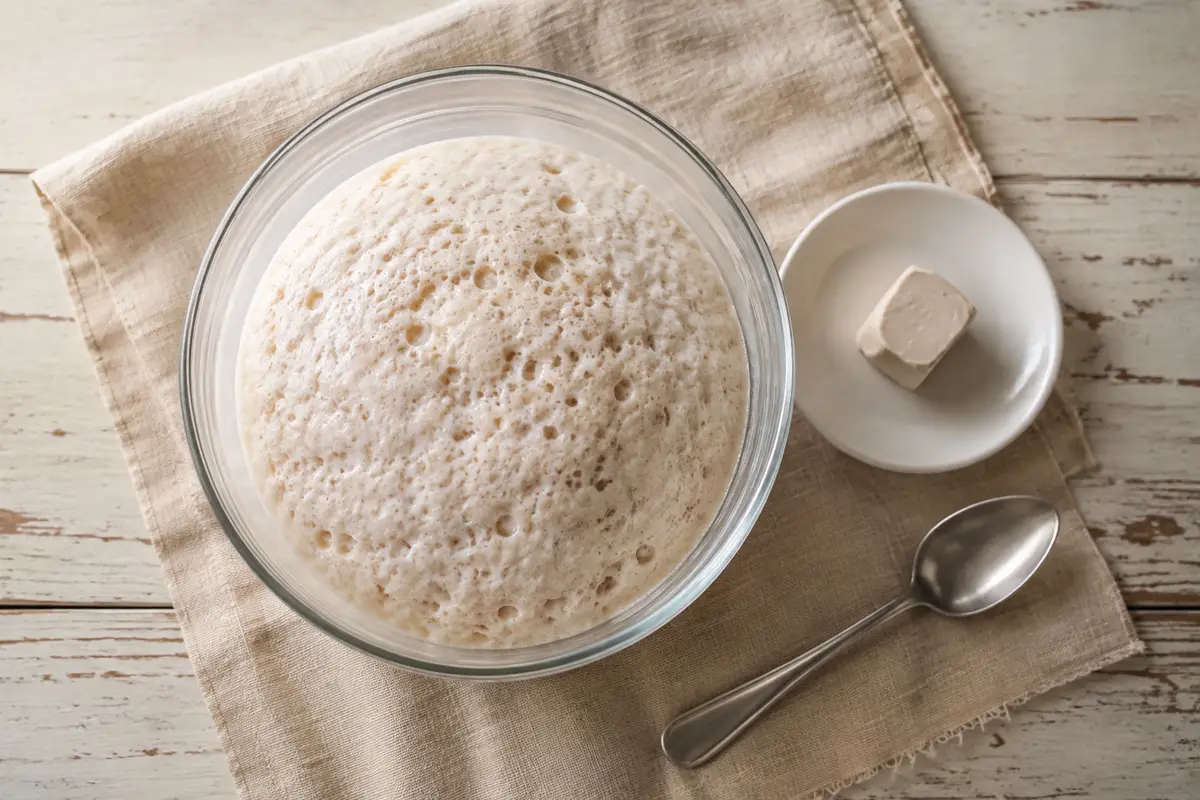
Make the starter
Warm the milk to about 35 °C: lukewarm, never hot. Crumble in the yeast, add a tablespoon of sugar and 2 tablespoons of flour, stir. Cover with a cloth and leave for 15–20 minutes, until a thick foam rises on top.
Ingredients: 250 ml milk · 25 g fresh yeast · 1 tbsp sugar · 2 tbsp plain flour
TipNo foam after 20 minutes means the yeast is dead. Better to start again than bake a brick.
The starter after 20 minutes: thick, fine foam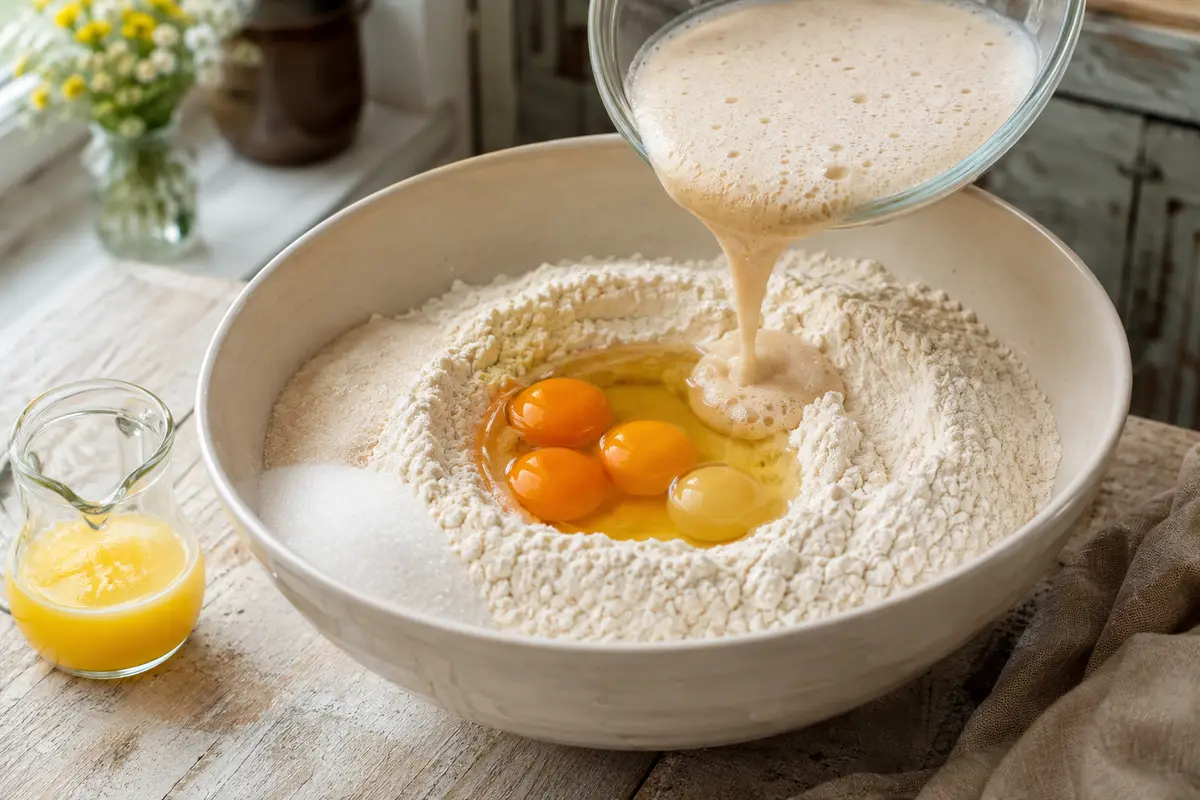
Combine the dough ingredients
Melt the butter and set it aside to cool. Sift 500 g flour into a large bowl, add the sugar, the salt, the egg, the yolks and the risen starter.
Ingredients: 500 g plain flour · 150 g sugar · 1 pcs egg · 3 pcs egg yolks · 50 g butter · 1 tsp salt
Everything in the bowl, just before kneading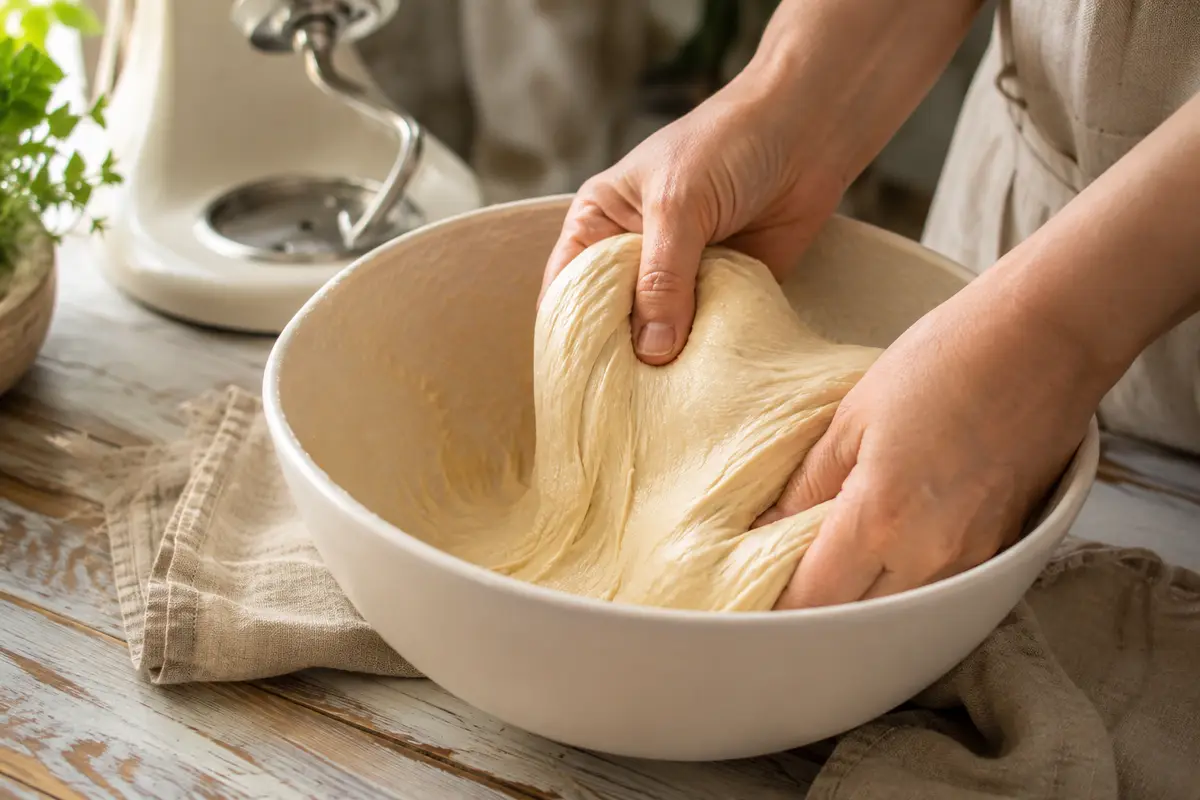
Knead for about 10 minutes
Knead with a mixer fitted with dough hooks, or by hand, for 5 minutes. Then, without stopping, pour in the cooled butter in a thin stream and knead another 5 minutes, until the dough is smooth, elastic and starts pulling away from the sides of the bowl.
TipThe dough should be sticky but not runny. Don't add flour by eye; a dry dough rises worse.
Smooth, glossy dough pulling away from the bowl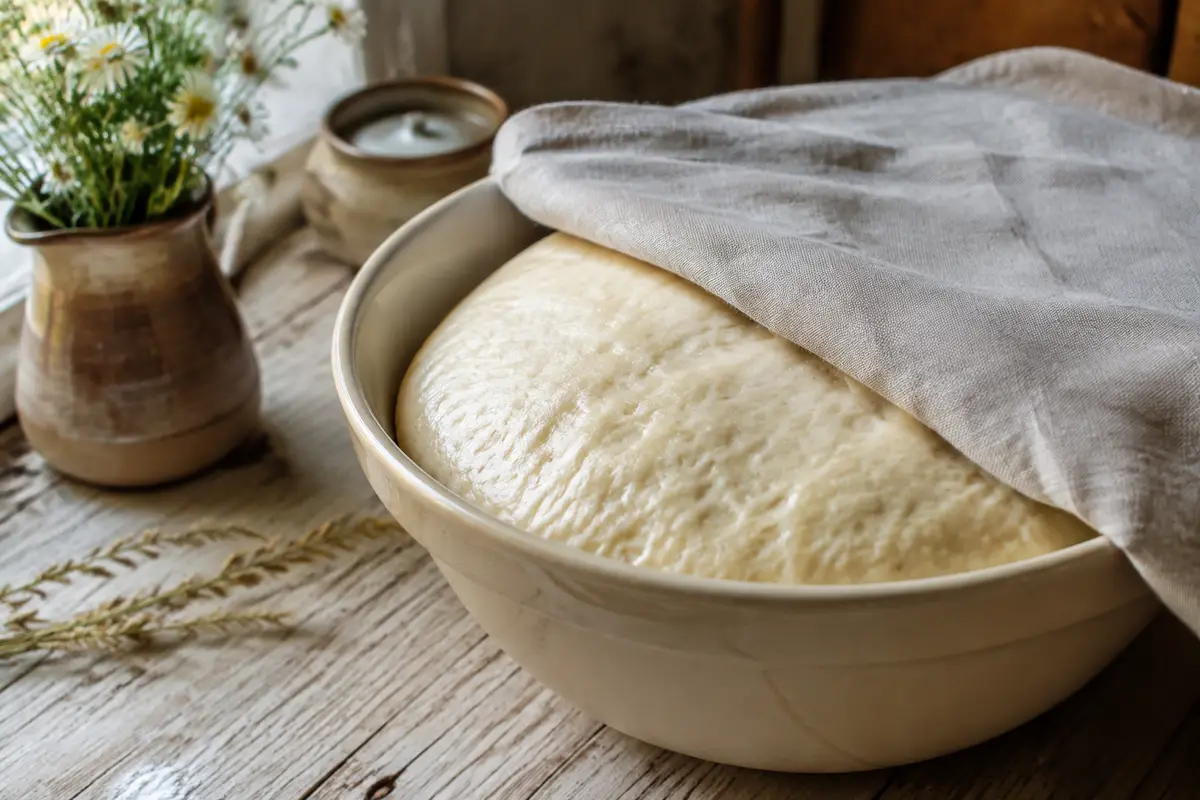
First rise
Cover the bowl with a cloth and leave it in a warm, draught-free place for 60 minutes. The dough should double in volume.
TipCold kitchen? Put the bowl in the oven with only the light switched on.
After an hour: the dough has doubled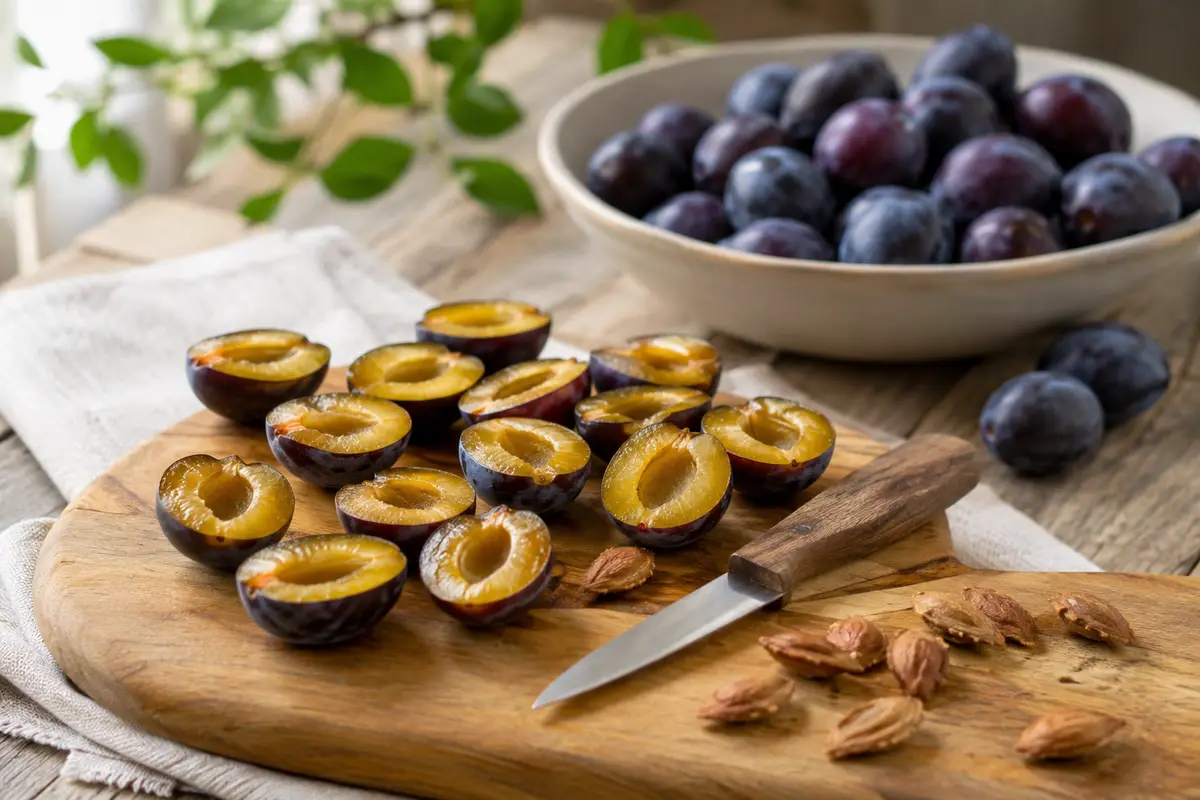
Prepare the plums
Meanwhile wash and dry the plums, then pit them. Halve the small Hungarian plums; quarter any large ones.
Ingredients: 600 g Hungarian (Italian prune) plums · 150 g plain flour · 100 g sugar · 100 g cold butter · 1 tbsp icing sugar
Pitted plum halves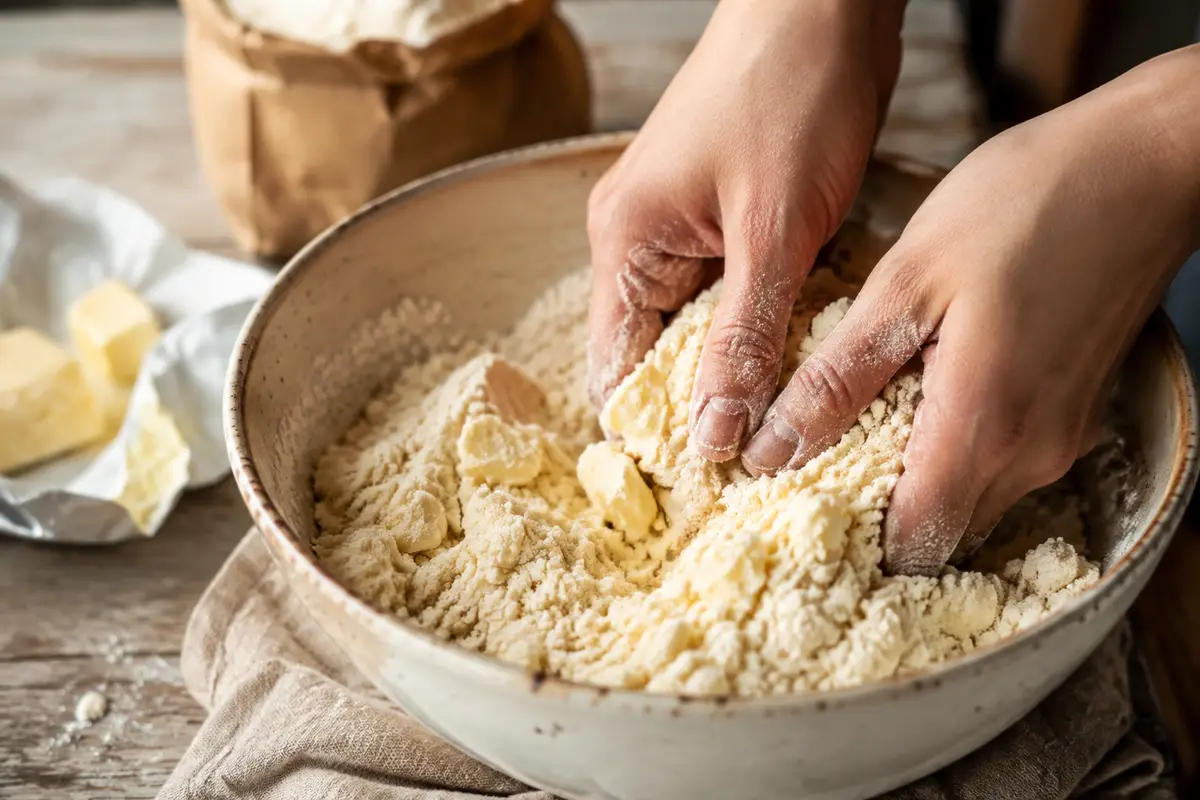
Make the crumble
Rub the flour, sugar and cold butter cut into cubes between your fingers into coarse lumps. Keep it in the fridge until needed.
TipThe colder the butter, the crunchier the crumble.
Crumble: coarse, uneven lumps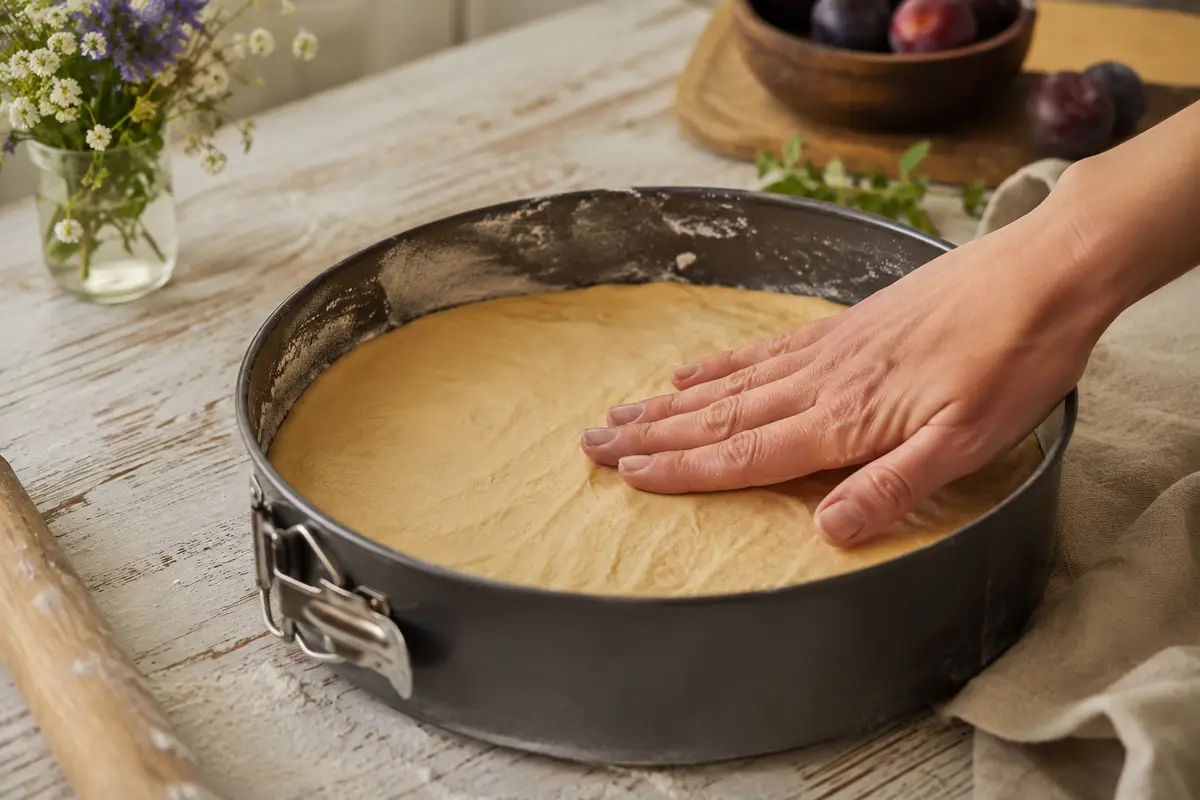
Move the dough to the pan
Butter and flour a 26–28 cm pan (a tall-sided springform or a baking tray). Tip in the risen dough and spread it evenly over the bottom with your hands.
Dough spread in a 26 cm springform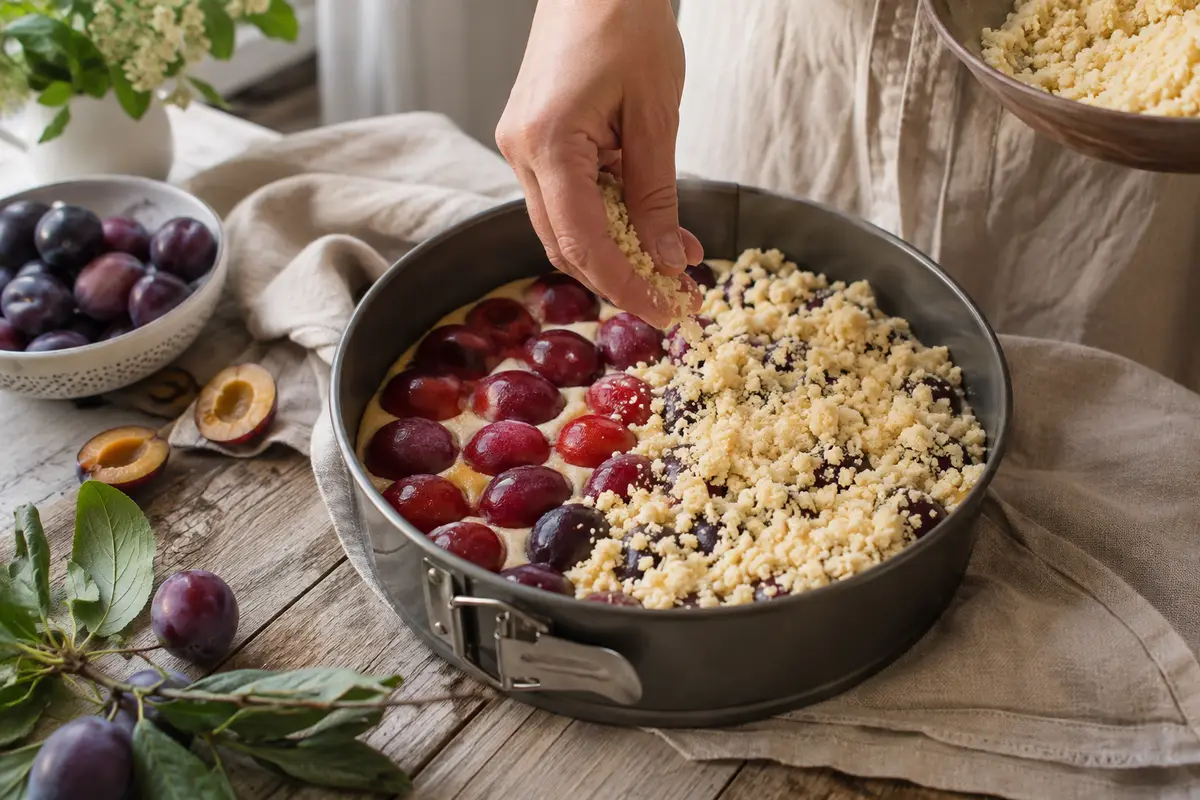
Arrange the plums, add the crumble
Lay the plums close together, skin side down, pressing them lightly into the dough. Sprinkle generously with crumble. Cover and leave for 20 minutes to rise again. Meanwhile heat the oven to 180 °C.
Plums skin-side down under the crumble, ready for the oven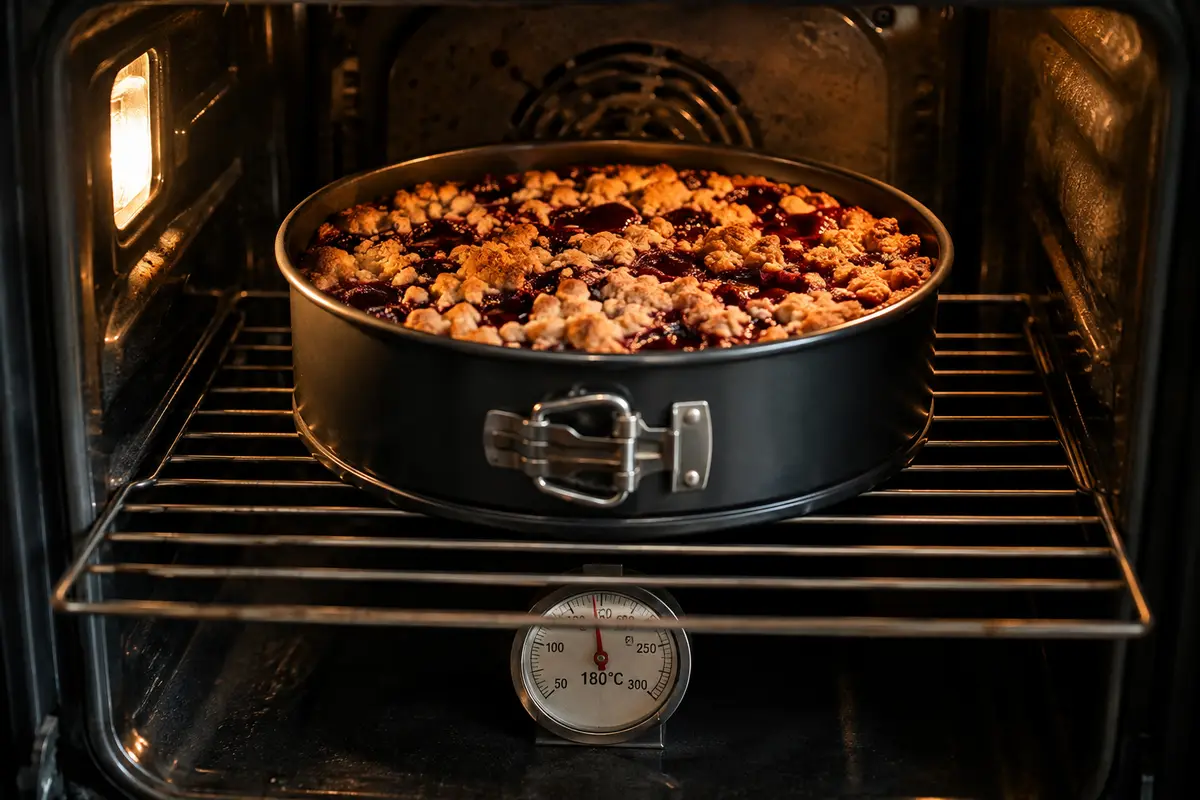
Bake
Oven: 180 °C, conventional (top and bottom heat), middle shelf. Bake 50–55 minutes, until a skewer pushed into the dough (away from the plums) comes out dry. If the top browns too fast, cover loosely with foil after 35 minutes.
Golden crumble after 50 minutes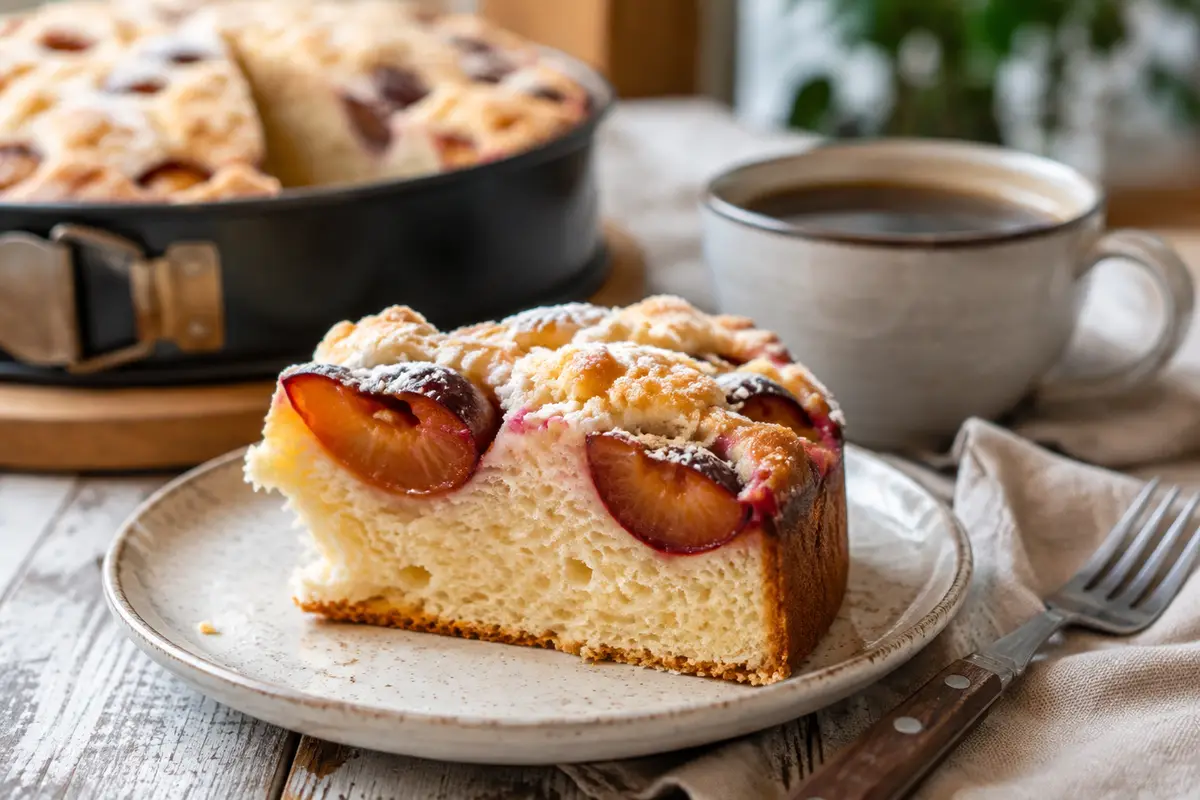
Cool and serve
Switch off the oven, open the door a crack and leave the cake for 10 minutes so it doesn't sink. Then take it out, cool in the pan and dust with icing sugar.
Cross-section: airy crumb, juicy plums, icing sugar
Before you start
Fresh or dry yeast?
Fresh yeast (25 g, a quarter of a cube) gives the fluffiest cake. Instant dry: 7–8 g (one sachet), and still make a starter to check it is alive.
Temperature decides everything
Milk and butter lukewarm, never hot. Above 45 °C yeast weakens, and at about 55 °C it dies and the dough won't move. Cold kitchen? Extend the rise, don't shorten it.
Prune plums, not greengages
Hungarian (Italian prune) plums are meaty and come off the stone easily. Very juicy plums can be tossed in a spoon of flour so they don't soak the dough.
Storing
Covered, at room temperature, 2 days. Freezes well in slices; reheat 8 minutes at 150 °C and it is like fresh.
Nutrition
per 100 gStep photos are computer-generated from the recipe.


