Karpatka: two choux pastry sheets and a thick vanilla custard butter cream
A cake that looks like mountains under snow: two sheets of choux pastry spread unevenly so they bake into ridges and valleys, with a thick layer of homemade custard cream beaten with butter between them. The choux is the same as for cream puffs, only on a tray. The custard is made from milk, yolks and potato starch, no packet powder.

Your own work in that: 55 min.
- Choux paste 20 min
- Baking the sheets 50 min
- Custard 20 min
- Custard cooling 60 min
- Cream and assembly 15 min
- Setting in the fridge 120 min
Step by step
0 / 9 done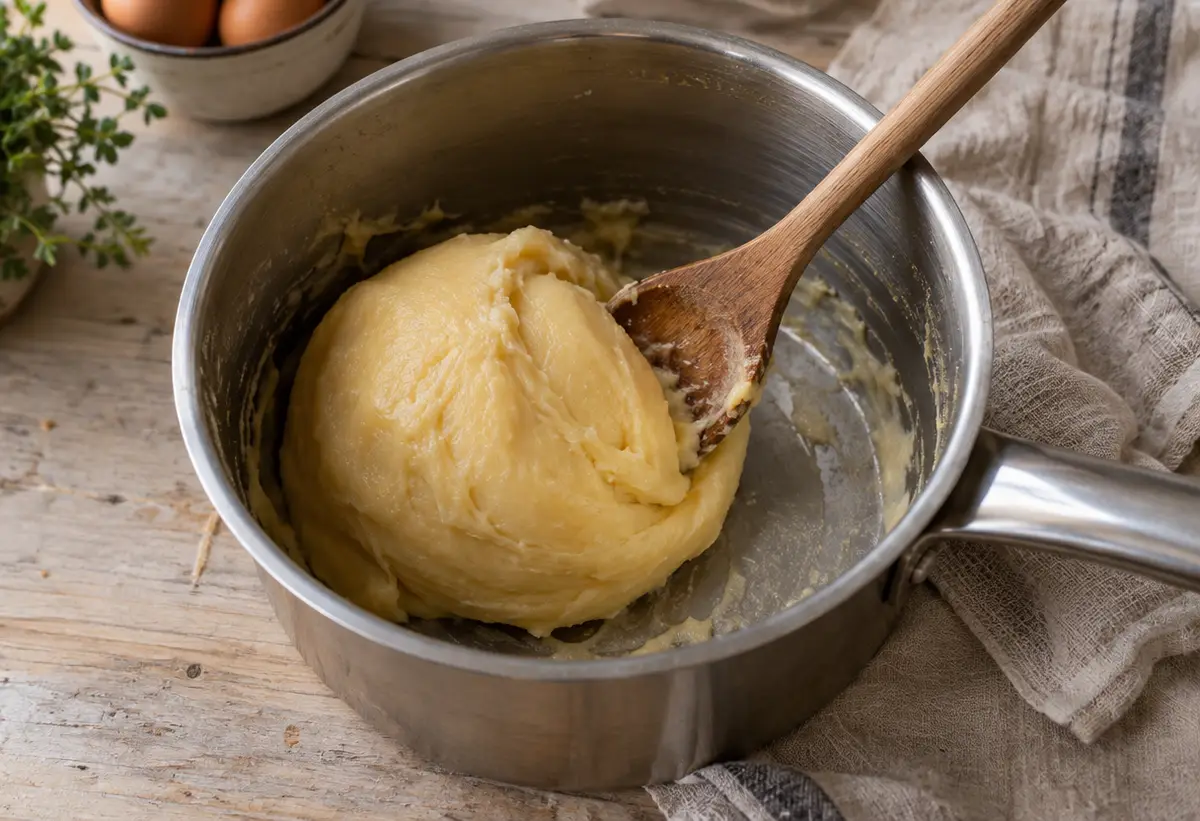
Cook the choux paste
Heat the oven to 200 °C. Bring the water, butter and salt to the boil in a saucepan. Take off the heat, tip in all the flour at once and stir vigorously with a wooden spoon until a smooth ball forms. Return to low heat and stir 2 minutes, until a thin film forms on the base. Transfer to a bowl and cool 10 minutes.
Ingredients: 250 ml water · 130 g butter · 160 g plain flour · 5 pcs eggs · 1 pinch salt · 1 tsp baking powder
TipDrying the paste over the heat drives off water so it can absorb the eggs later. Without it the sheets bake flat and make no mountains.
The ball pulls from the sides, a film on the base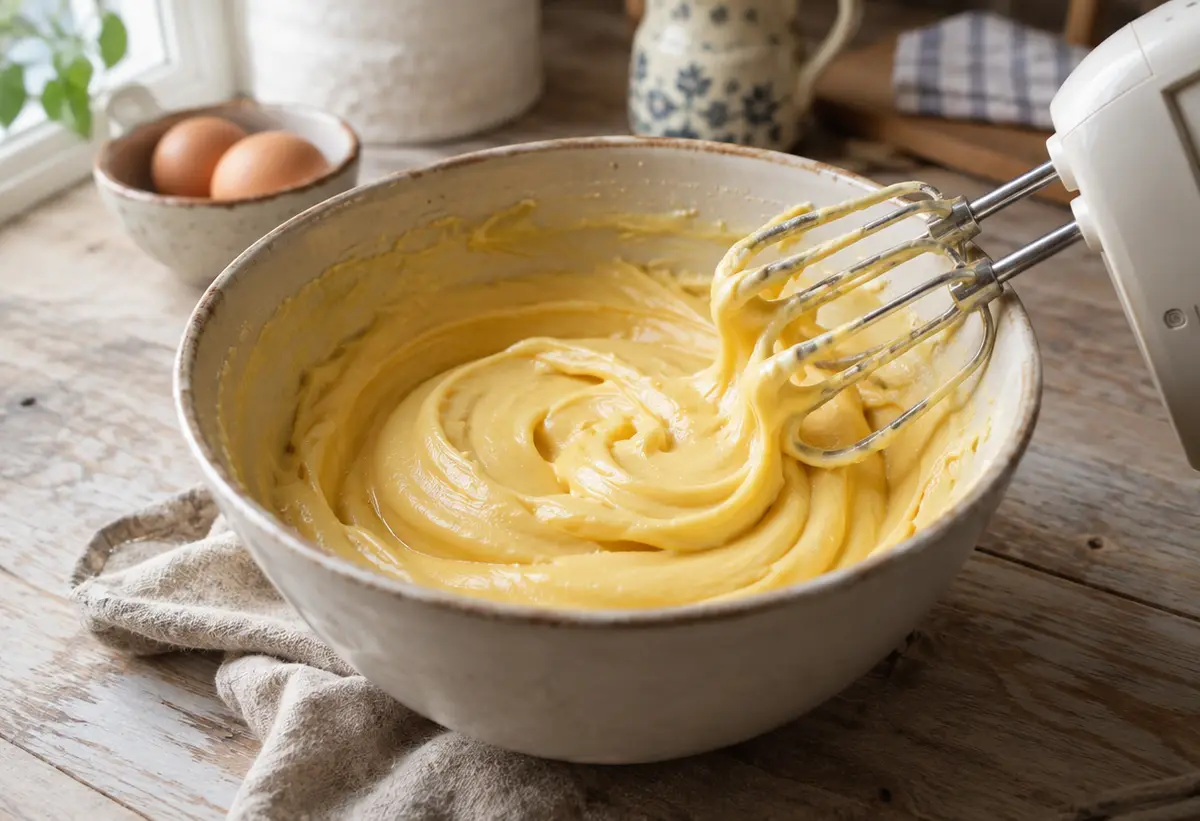
Add the eggs one at a time
Beat the eggs into the lukewarm paste one at a time with a mixer, until smooth after each. Finally mix in the baking powder. The paste should be thick and glossy and fall from the spoon in wide sheets, forming a V.
One at a time, until smooth, a V shape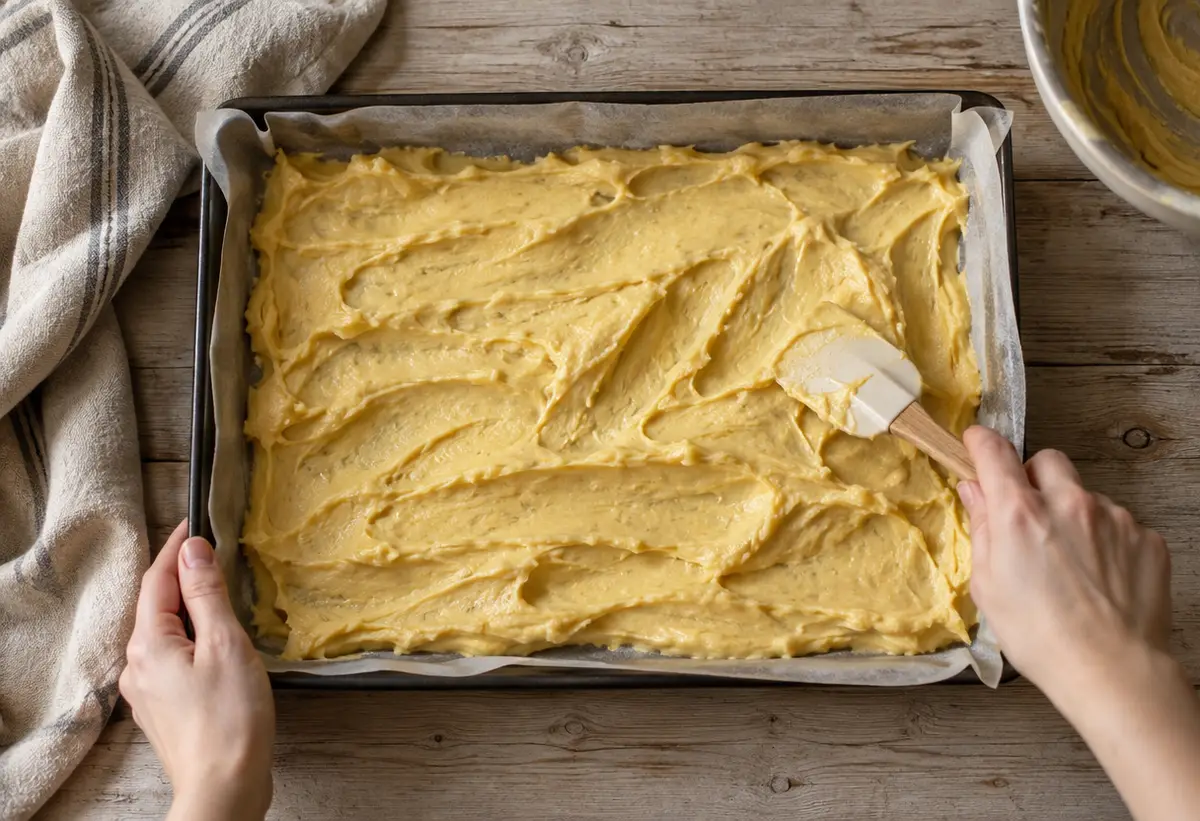
Spread unevenly and bake the first sheet
Line a 25 × 35 cm tin with paper. Spread half the paste over the whole tin thinly and deliberately unevenly: leave ridges and hollows, those become the Carpathian peaks. Bake 25 minutes at 200 °C without opening the oven for the first 20 minutes. The sheet should be golden, tall and dry.
TipOpening the oven in the first minutes lets in cold air and the sheet collapses. If it is pale after 25 minutes, give it 5 more; a pale sheet is moist inside and will sink.
Thin, with peaks and hollows, on purpose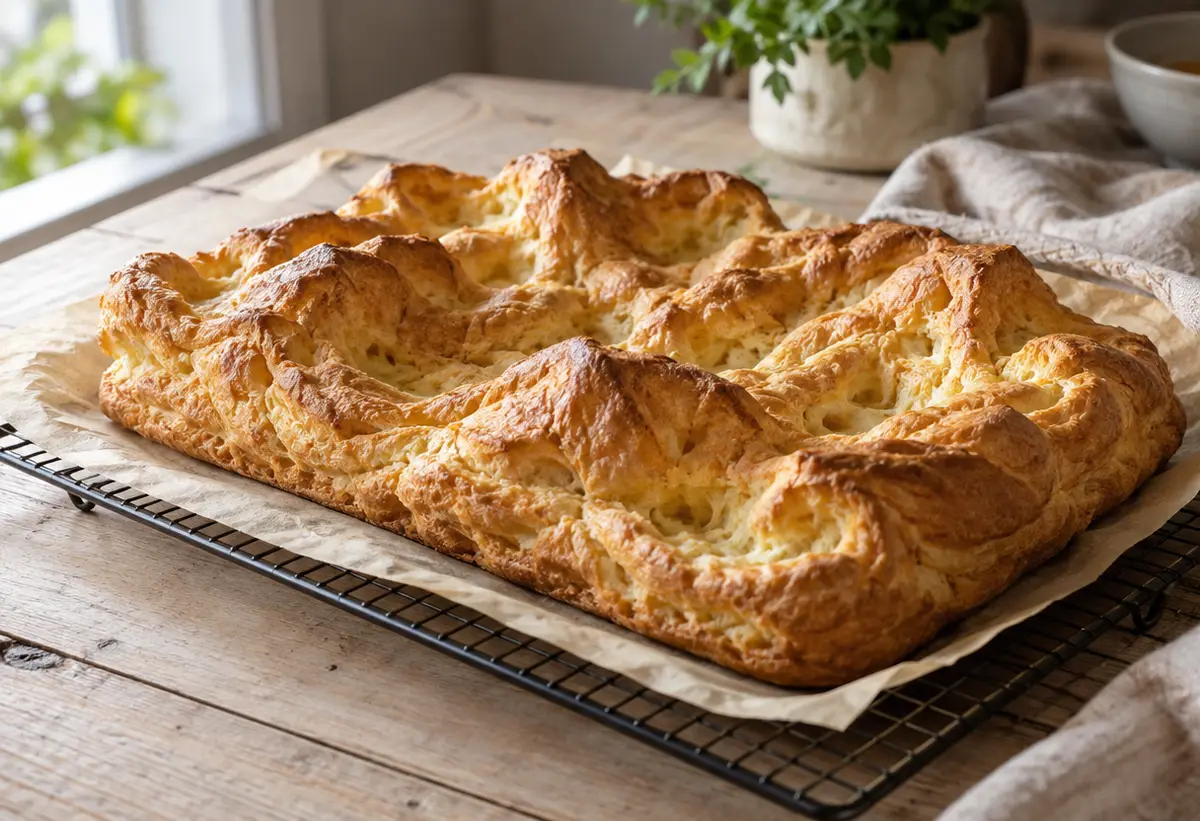
Bake the second sheet
Slide the first sheet with its paper onto a rack. Line the tin with fresh paper and spread and bake the second half of the paste the same way, another 25 minutes. Cool both sheets completely.
Golden ridges and valleys, the second the same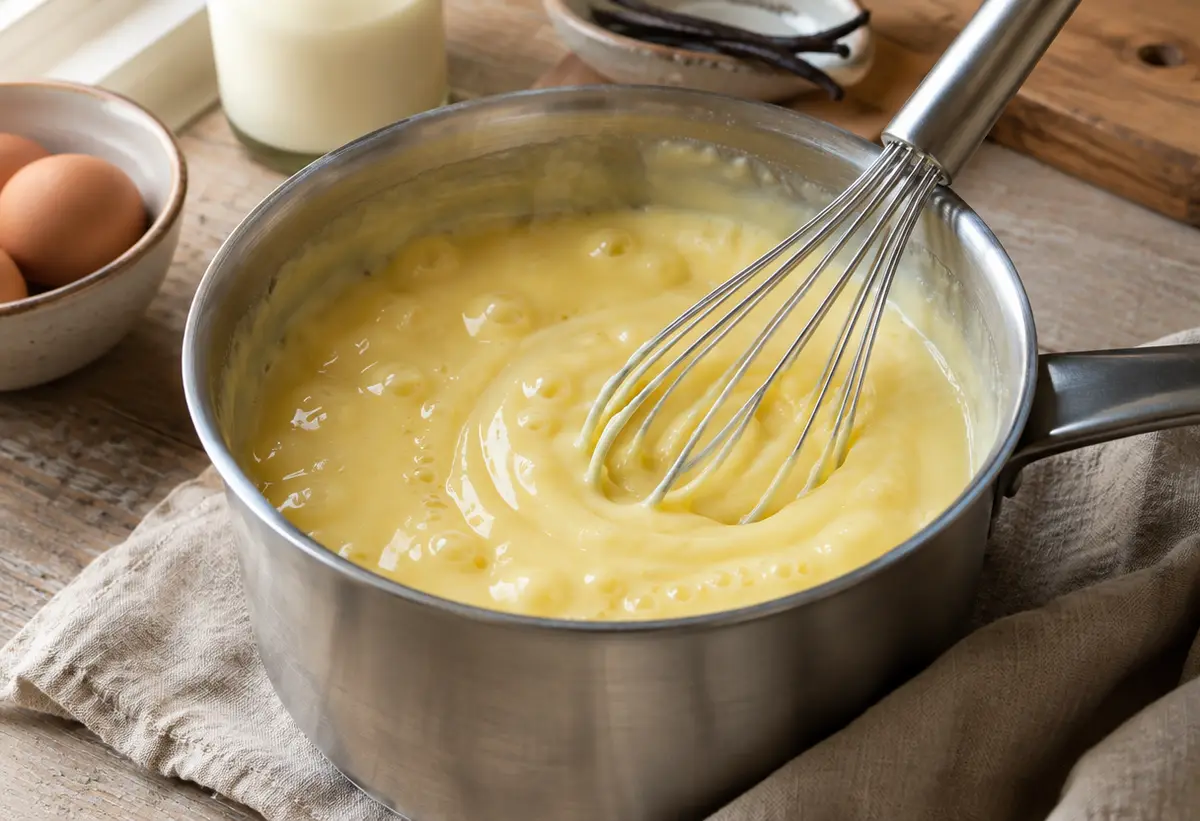
Cook the custard
Pour off 200 ml of the milk and whisk with the yolks, sugar, vanilla sugar, flour and potato starch into a smooth slurry. Bring the rest of the milk to the boil, lower the heat and pour in the slurry in a thin stream, whisking constantly. Cook, stirring, 2–3 minutes, until it thickens and bubbles. It will be very thick; that is right.
Ingredients: 750 ml milk · 4 pcs egg yolks · 150 g sugar · 2 tbsp vanilla sugar · 40 g plain flour · 40 g potato starch · 200 g butter · 2 tbsp icing sugar
TipPotato starch gives body, wheat flour gives creaminess; starch alone makes a jelly-like custard, flour alone a floury one. Hence half and half.
Thick, smooth, bubblingCool the custard to room temperature
Pour the custard into a bowl, cover with film touching the surface so no skin forms, and cool completely, about 60 minutes. Custard and butter must be the same temperature, or the cream splits.
Beat the cream with butter
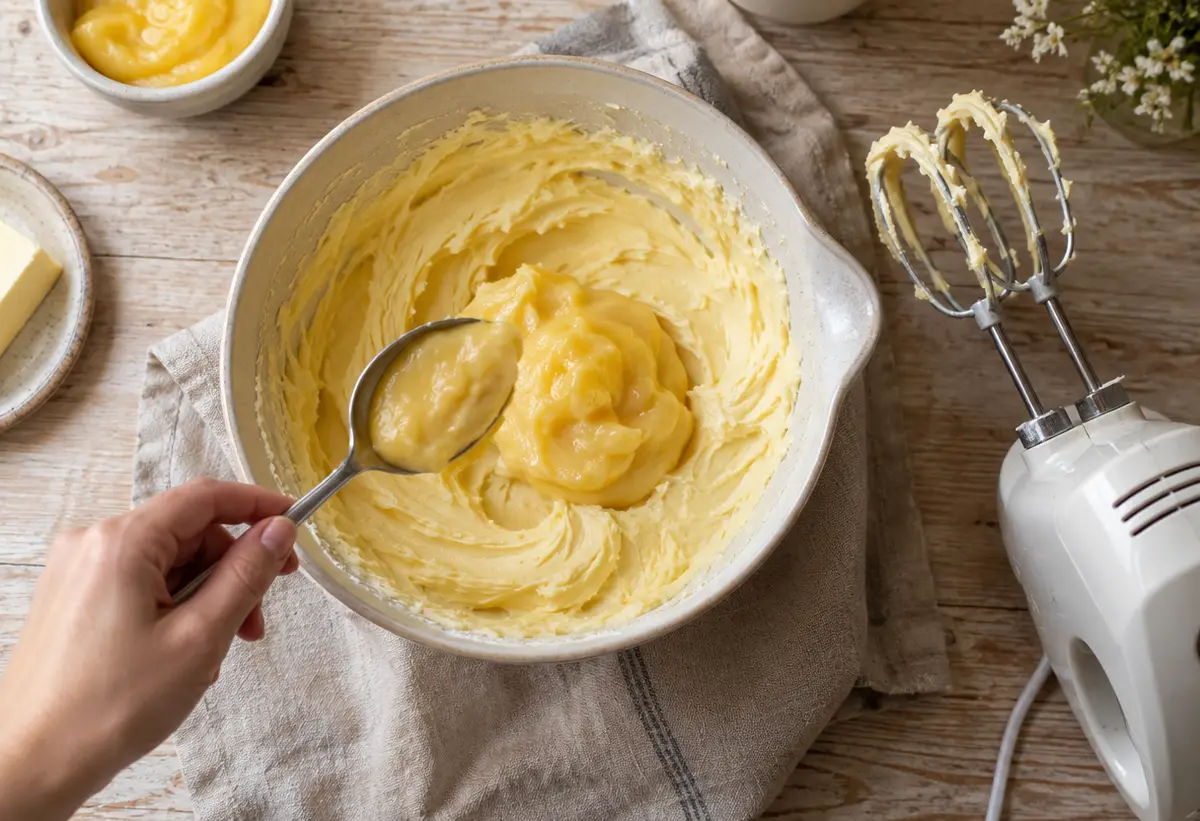
Beat the soft butter with a mixer until pale and fluffy, 4 minutes. Add the cooled custard a spoon at a time, beating after each, until you have a smooth, fluffy cream. If it looks split, that is a temperature difference: hold the bowl over steam for a moment and keep beating.
Butter to a fluff, custard spoon by spoon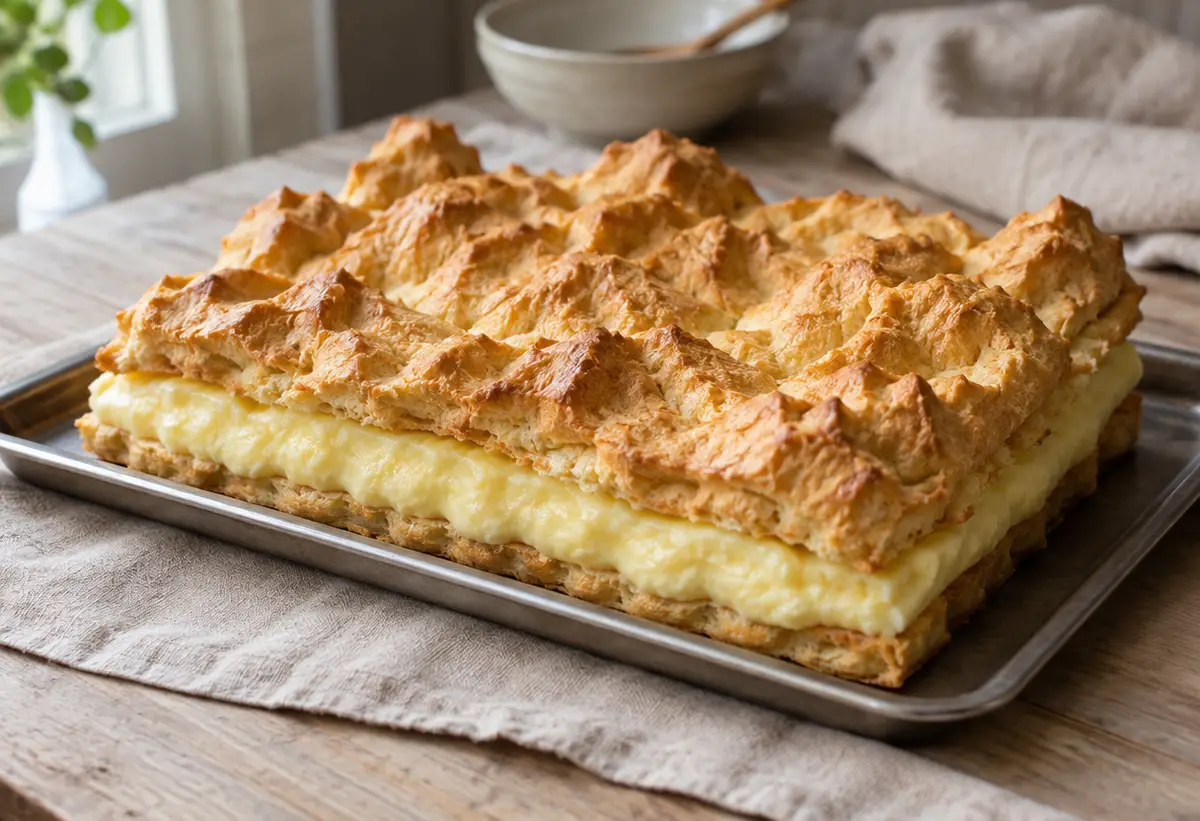
Assemble
Put the flatter sheet base down in the tin or on a platter. Spread all the cream evenly over it. Cover with the second sheet, peaks up, and press lightly. Refrigerate 2 hours for the cream to set.
Flat one down, cream, peaks on top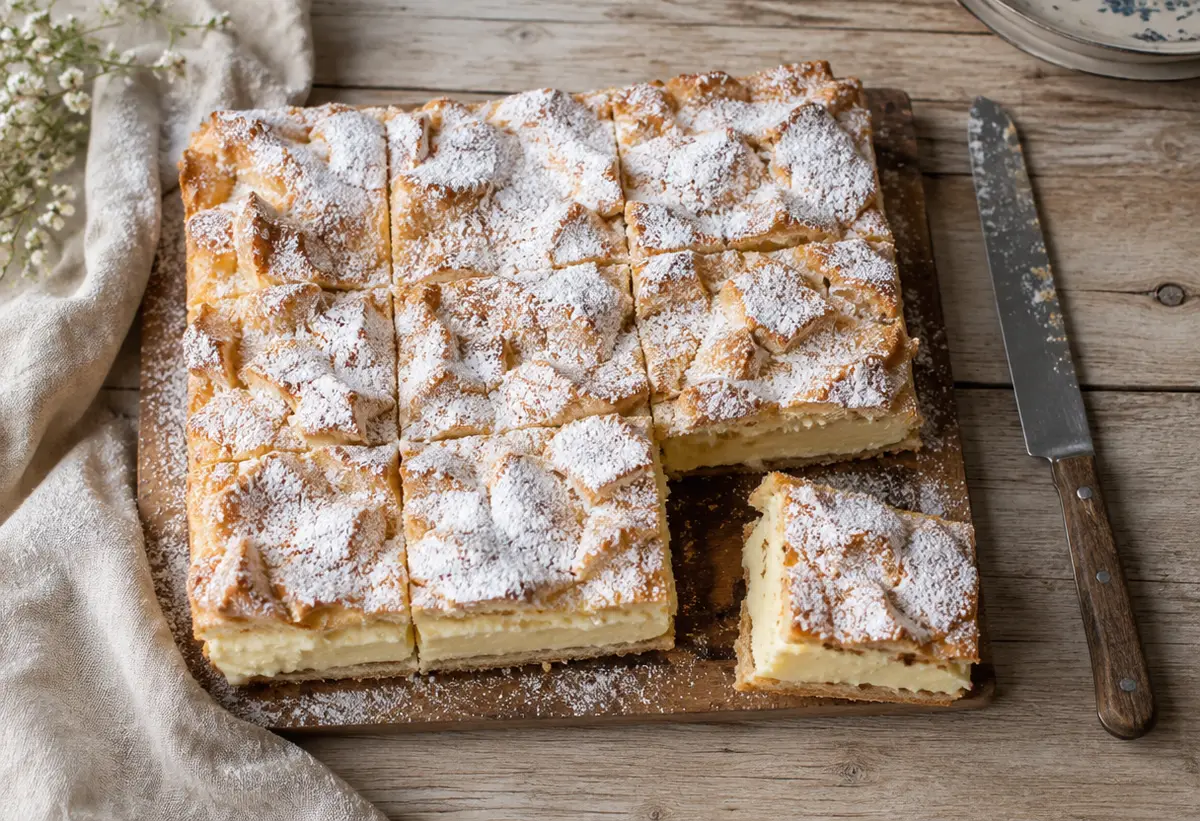
Dust and cut
Before serving, dust with icing sugar through a sieve so the peaks look snow-capped. Cut with a long knife in single strokes into 16 squares. Keeps 3 days in the fridge; the sheets soften, but many like it exactly that way.
Icing-sugar snow, a long knife
Before you start
A lighter cream
Instead of 200 g butter, 100 g butter plus 250 ml whipping cream (30%), whipped and folded in at the end. Less rich, more like a patisserie cream.
With packet custard
In a hurry: 2 packets of unsweetened vanilla custard powder cooked with 750 ml milk and 150 g sugar, then proceed the same way. Homemade is better, but this works too.
The sheets sank
Oven opened too early, paste not dried enough, or too loose from the eggs. Sunken sheets are still good; the cake is simply lower.
Nutrition
per 100 gStep photos are computer-generated from the recipe.


