Fried carp for Christmas Eve: milk, scored bones and four minutes a side
The Christmas Eve fish people either love or remember from childhood as a trap full of bones. This version solves both problems: an hour in milk softens the muddy note, and cuts made every three millimetres sever the fine Y-shaped bones so that once fried you barely notice them. The steaks fry over medium heat, four minutes a side, in flour, in oil with a little butter.

Your own work in that: 30 min.
- Carp soaking in milk 60 min
- Salting 30 min
- Coating 10 min
- Frying 20 min
Step by step
0 / 7 done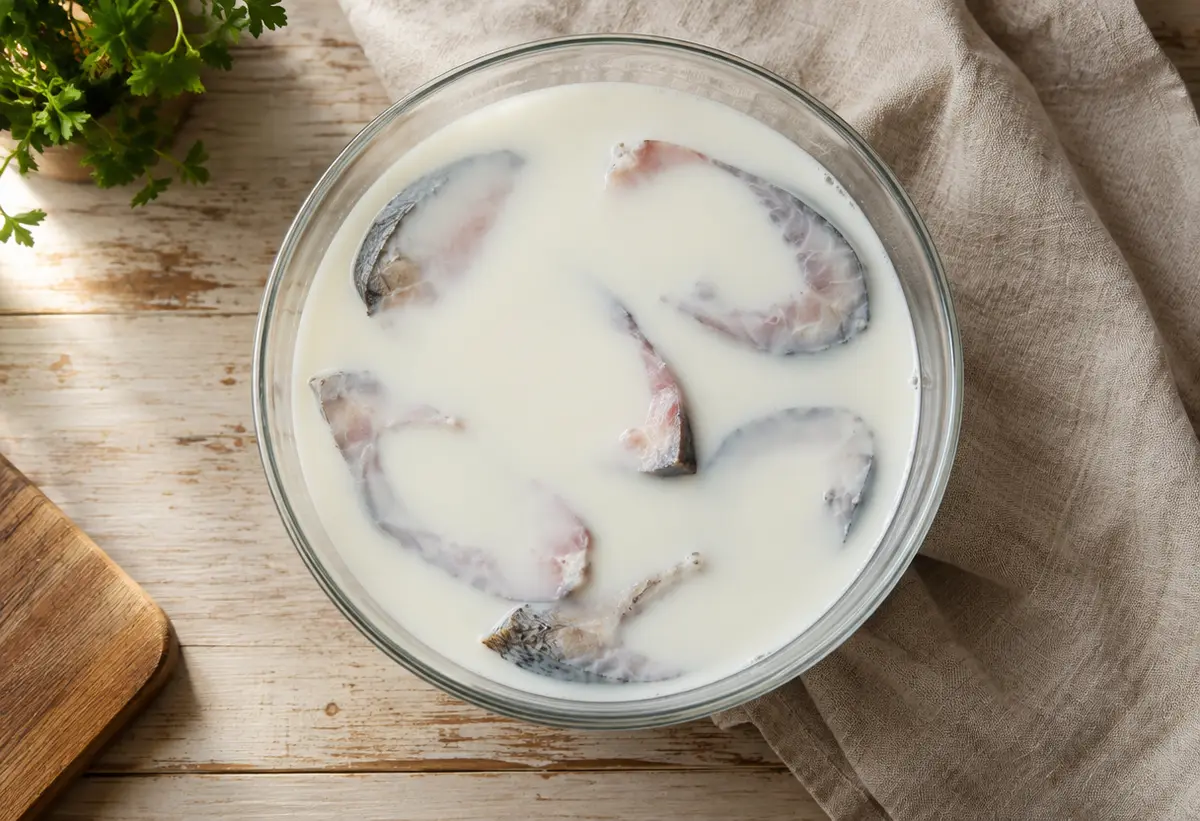
Soak the carp in milk
Rinse the steaks and cover them with cold milk. Refrigerate for an hour. This is the traditional way to soften the muddy aftertaste.
Ingredients: 1200 g carp steaks · 700 ml milk · 2 tsp salt · 1 tsp black pepper
TipThe muddy note comes from the water the fish lived in, not from the species. Buy carp from a source you trust, one that kept the fish in clean running water before sale — then the milk is insurance rather than rescue. Without milk, salted water (a spoon per litre) works, though less well.
An hour in cold milk, in the fridge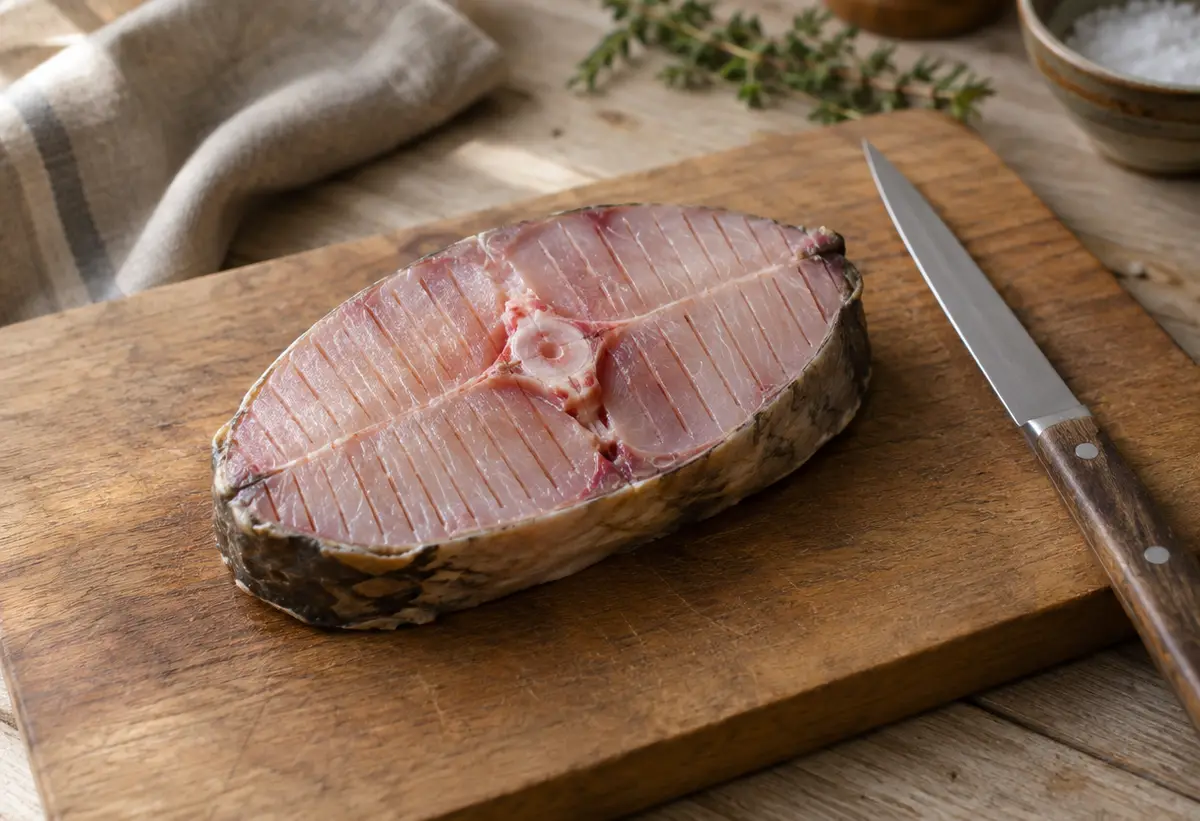
Score the bones
Lift the steaks out, pat dry and lay them on a board. With a very sharp thin knife score the flesh across, every 3 mm, taking the blade down to the backbone on both sides of each steak. Don't cut through the main bone — this is about the flesh.
TipCarp carries many fine intermuscular bones, some of them Y-shaped, embedded in the flesh either side of the spine. They cannot be pulled out with tweezers; cuts every 3 mm sever them into pieces so short that once fried you barely notice them. Cuts wider than 5 mm are not enough. This is the step that genuinely solves the bone problem — don't skip it.
Every three millimetres, down to the bone, both sides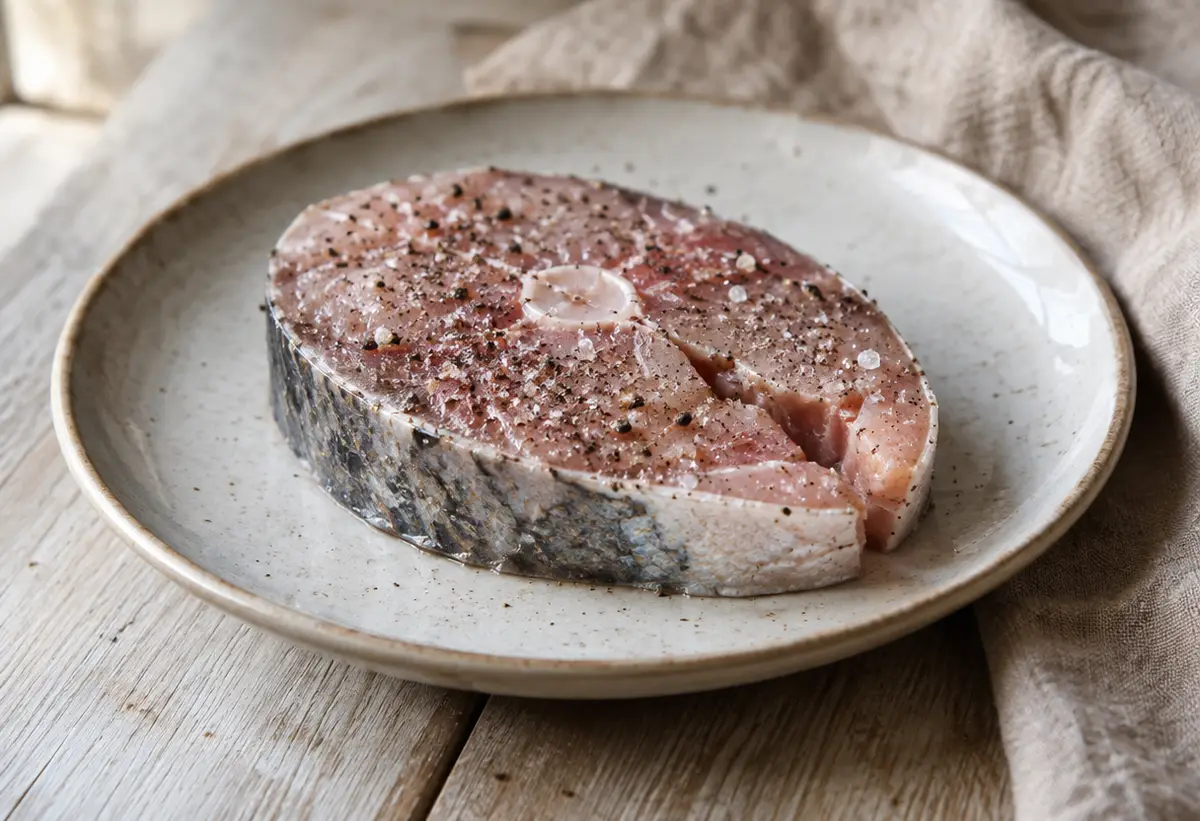
Salt and rest
Season the steaks with salt and pepper on both sides, rubbing it into the cuts. Leave 30 minutes somewhere cool. In that time the salt seasons the flesh right through rather than only the surface, and firms it slightly so the fish holds together better in the pan. During that half hour peel the potatoes and put them on in salted water (about 20–25 minutes).
Salt into the cuts, half an hour's rest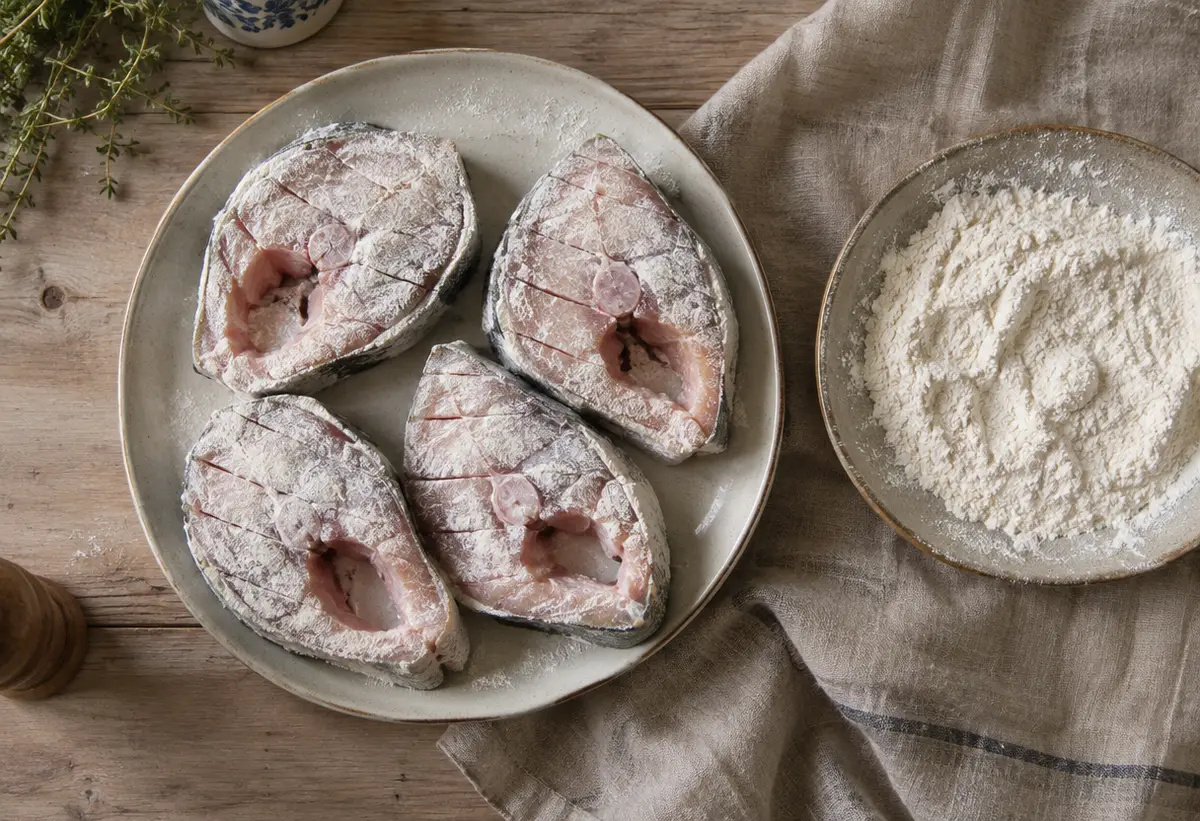
Coat in flour
Pat the steaks dry with paper towel — they must be dry. Turn them one at a time in the flour, thoroughly, getting it into the cuts, and shake off the excess. For the breadcrumbed version: flour, beaten egg, breadcrumbs pressed on with your palm.
Ingredients: 150 g plain flour · 2 pcs eggs · 150 g breadcrumbs · 150 ml oil · 40 g butter
TipWet fish won't take the flour evenly, and in hot fat that water turns to steam which lifts the coating off. Paper towel first, flour second — in that order.
Dry fish, flour worked into the cuts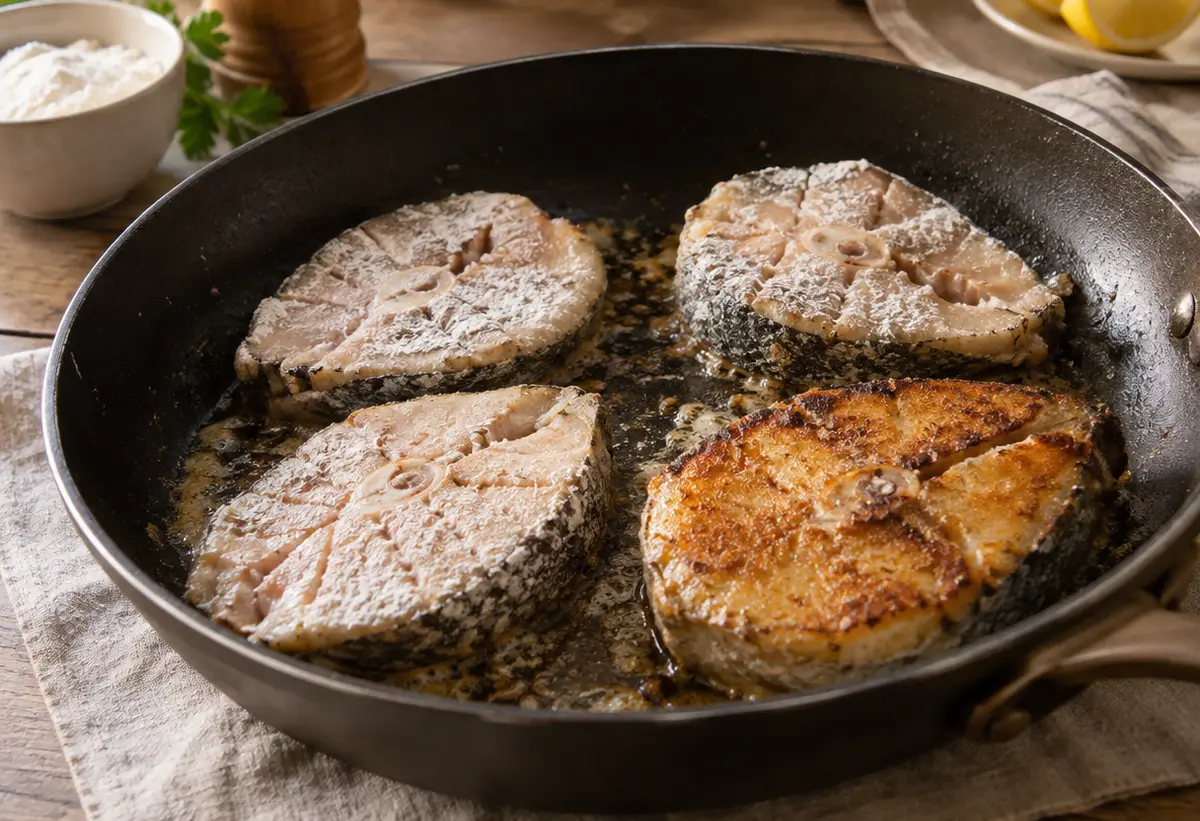
Fry four minutes a side
Heat the oil in a wide pan over medium heat and add the butter. Fry in batches: lay the steaks in without touching and fry 4–5 minutes undisturbed, until the underside is deep golden. Turn once and fry another 4–5 minutes. The fish is done when the flesh by the backbone lifts away from the bone without resistance and the juices run clear. Two batches take about 20 minutes in all.
TipToo high a heat scorches the flour before the heat reaches the centre of a two-centimetre steak; too low and the fish soaks up fat. Medium heat and a single turn. Carp is an oily fish — it needs no deep oil, just a few millimetres of fat in the pan.
Four minutes, one turn, four minutes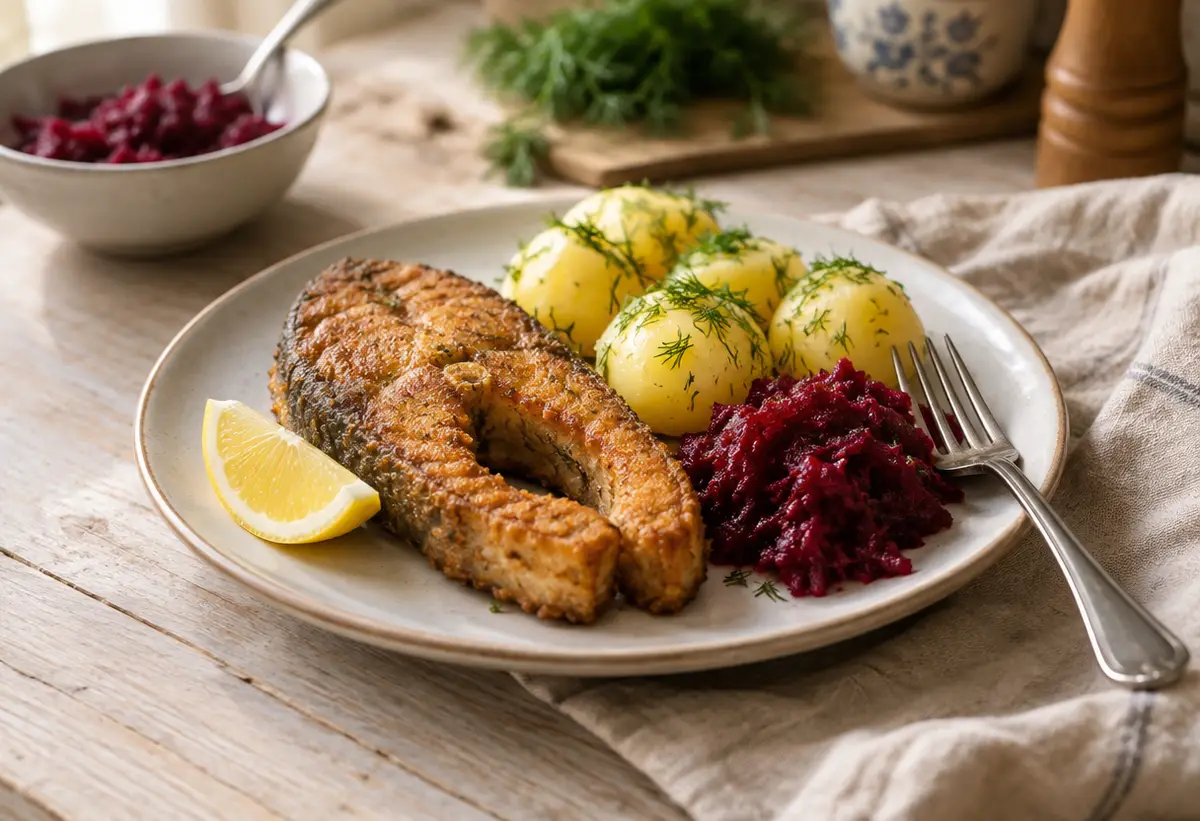
Serve with lemon
Rest on paper towel for a minute, then arrange on a platter. Serve hot with a lemon wedge, potatoes scattered with dill and, if you like, beetroot. The acidity of the lemon balances the richness of the carp — it is part of the recipe, not a garnish.
Ingredients: 2 pcs lemons · 1200 g potatoes · ½ bunch dill
Lemon, potatoes, beetrootThe next day
In many households cold fried carp is better than hot: the flesh sets, the coating softens and the flavour evens out. Keep covered in the fridge for 2 days. The fried steaks can also be set in aspic (see the tip below).
The platter on the Christmas Eve table
Before you start
Choosing a carp
Buy the fish cleaned, with pale, springy flesh and no ammonia smell. The best carp is farmed and spent a few days in clean water before sale — that, not the species, decides whether it tastes muddy. Steaks 2 cm thick fry evenly; thicker ones stay raw at the bone.
No bones at all
Ask the fishmonger for machine-scored carp fillets — many fish shops have a special machine for it. Fry a fillet 3 minutes a side, as it is thinner. Steaks have more flavour, fillets less trouble.
Fried carp in aspic
Arrange the fried, cooled steaks in a dish, cover with strained root-vegetable stock set with gelatine (10 g per 500 ml) and refrigerate overnight. Serve with horseradish.
Nutrition
per 100 gStep photos are computer-generated from the recipe.


