Polish yeast sheet cake with streusel: fluffy, buttery, from the tray, like grandma's
The simplest yeast cake, the one all the others start from: flour, milk, yeast, butter and eggs, kneaded long until the dough is smooth and elastic, and rising somewhere warm until doubled. On top, a thick streusel of cold butter. No fruit, no cheese, no icing: just the cake, still soft the next day.

Your own work in that: 40 min.
- Starter and kneading 30 min
- Rising 60 min
- Tray and streusel 10 min
- Rising in the tray 30 min
- Baking 30 min
Step by step
0 / 6 done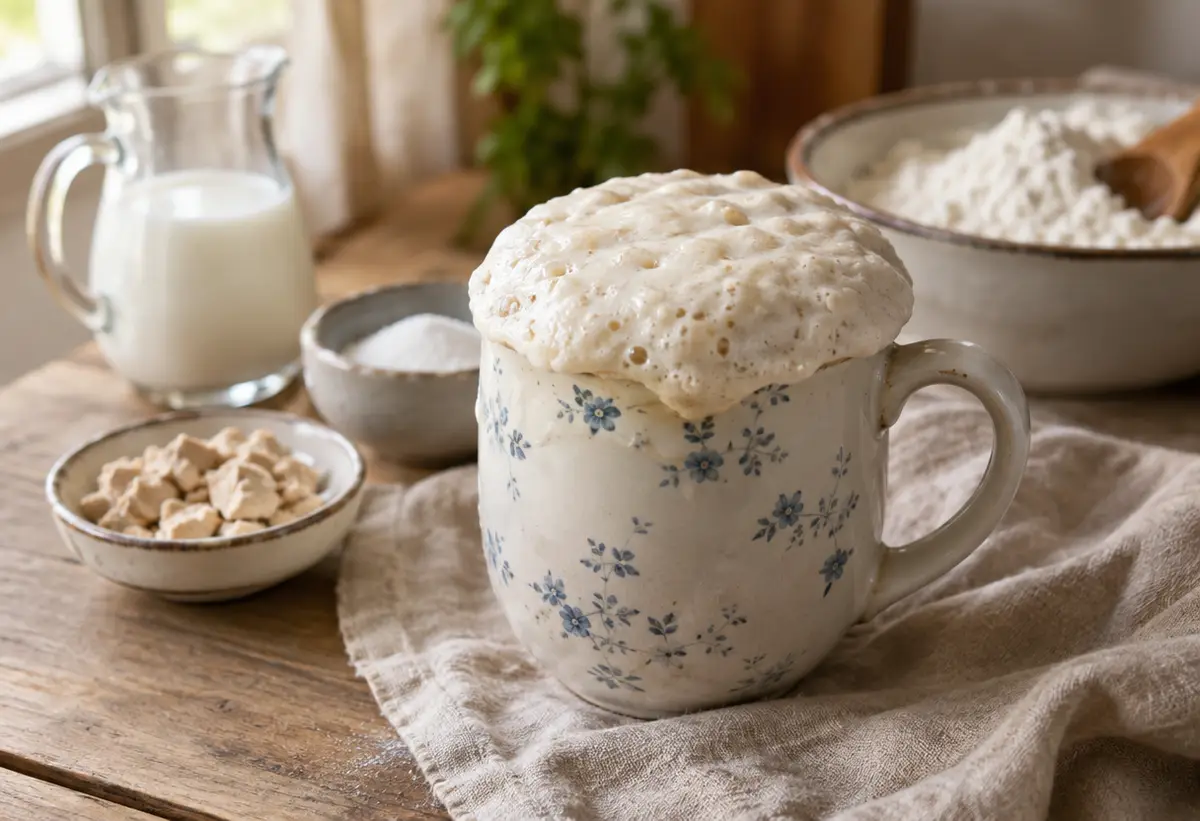
Make the starter
Crumble the yeast into a cup, add a teaspoon of sugar, a spoon of flour and 100 ml lukewarm milk. Stir and leave 15 minutes, until foamy and doubled. If nothing happens, the yeast is dead; don't go on with it.
Ingredients: 500 g plain flour · 250 ml milk · 25 g fresh yeast · 80 g sugar · 80 g butter · 2 pcs eggs · 1 tbsp vanilla sugar · 1 tsp salt
TipThe milk should be lukewarm, about 35 °C: hot kills yeast, cold puts it to sleep. A finger dipped in it should feel neither warm nor cold.
Foamy after a quarter hour: the yeast is alive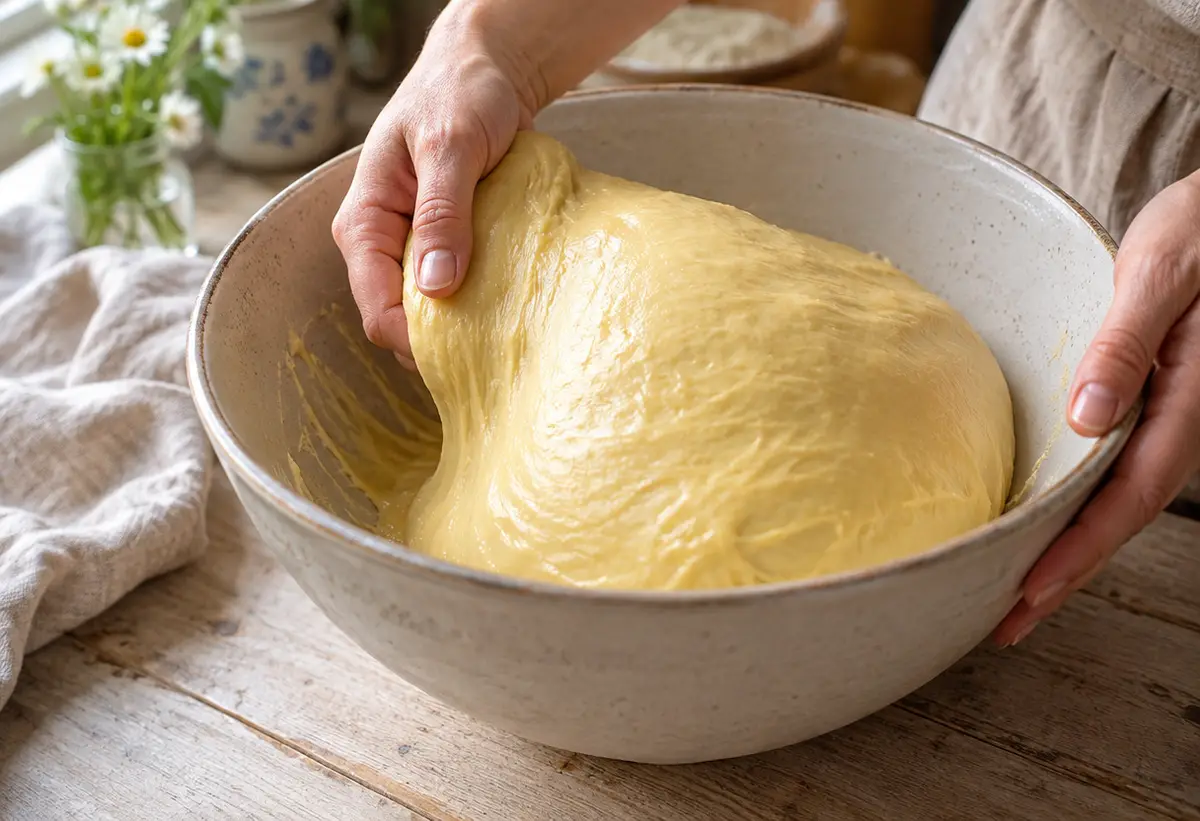
Knead long
Into a bowl with the flour, sugar, vanilla sugar and salt pour the starter, the rest of the milk and the eggs. Mix, then knead with dough hooks or by hand 10 minutes. Pour in the cooled butter and knead another 5 minutes, until the dough is smooth, glossy, elastic and comes away from the bowl. At first it sticks to everything; don't add flour, keep kneading.
TipLong kneading builds the gluten network that holds the gas from the yeast. A briefly kneaded dough rises, but collapses in the oven and bakes dense. Butter goes in at the end, not the start: fat hinders gluten formation.
A quarter hour of kneading, butter last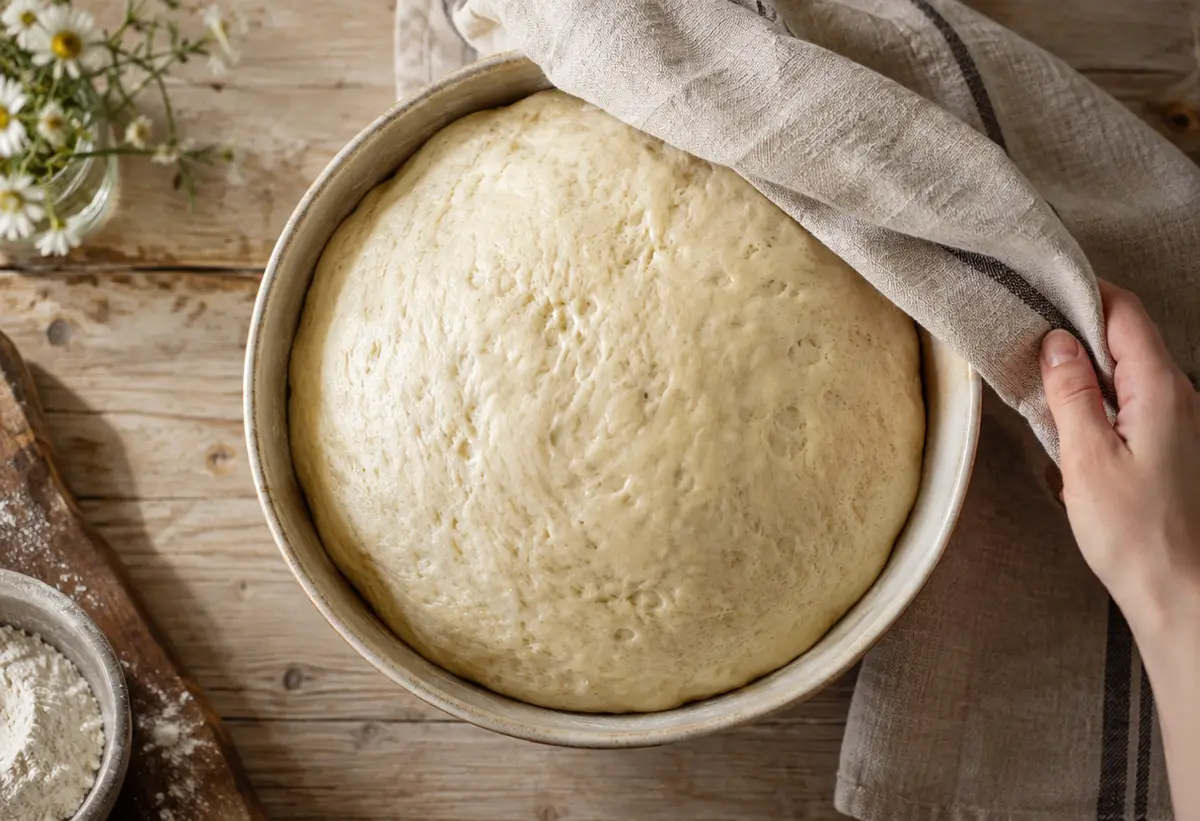
Rise somewhere warm
Cover the dough with a cloth and leave somewhere warm (about 28 °C, e.g. a lightly warmed, switched-off oven with the door ajar) for 60 minutes, until doubled in volume.
TipYeast works fastest in warmth and without draughts. In a cold kitchen the rise takes noticeably longer; that's no problem, just wait for the doubling, not for the clock.
Doubled, a dome under the cloth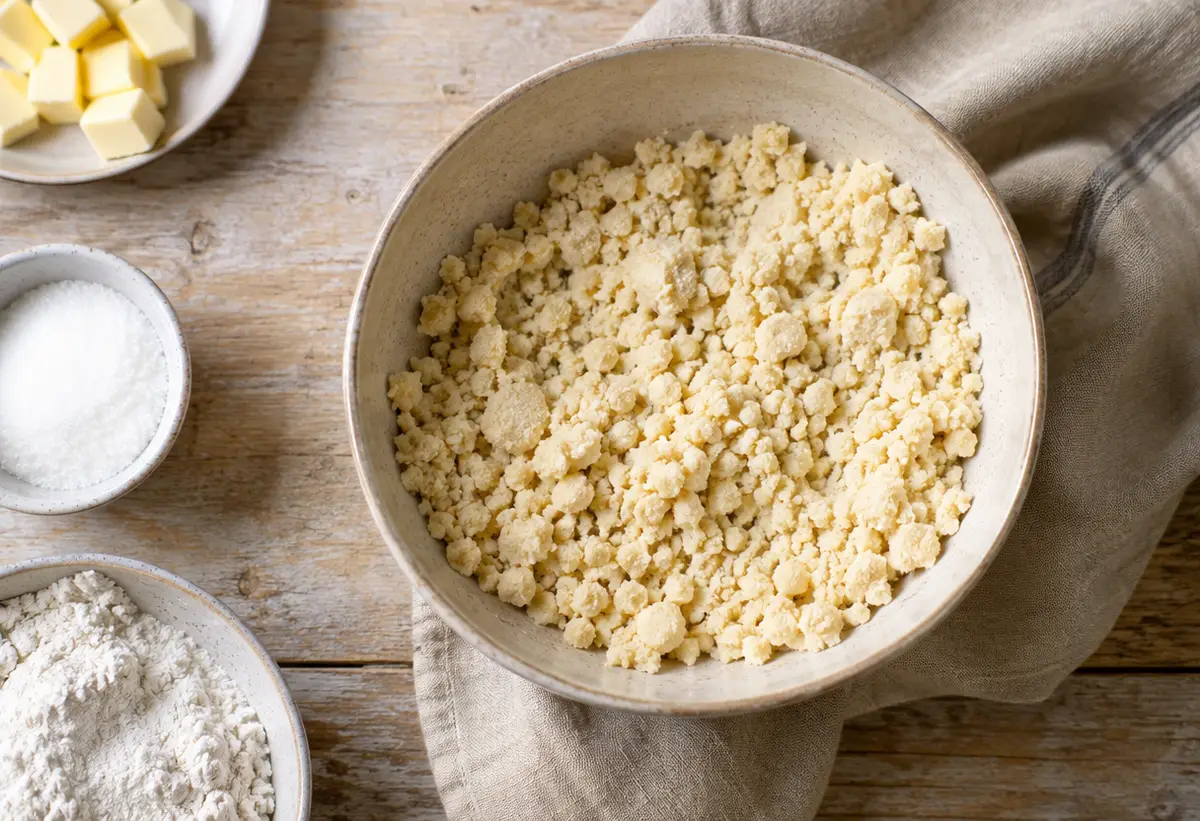
Make the streusel
While the dough rises: rub the cold cubed butter into the flour and sugar with your fingertips into coarse crumbs. Refrigerate; cold streusel keeps its shape on the cake, warm streusel soaks into it.
Ingredients: 150 g plain flour · 100 g butter · 80 g sugar · 1 tbsp icing sugar
Coarse crumbs, into the fridge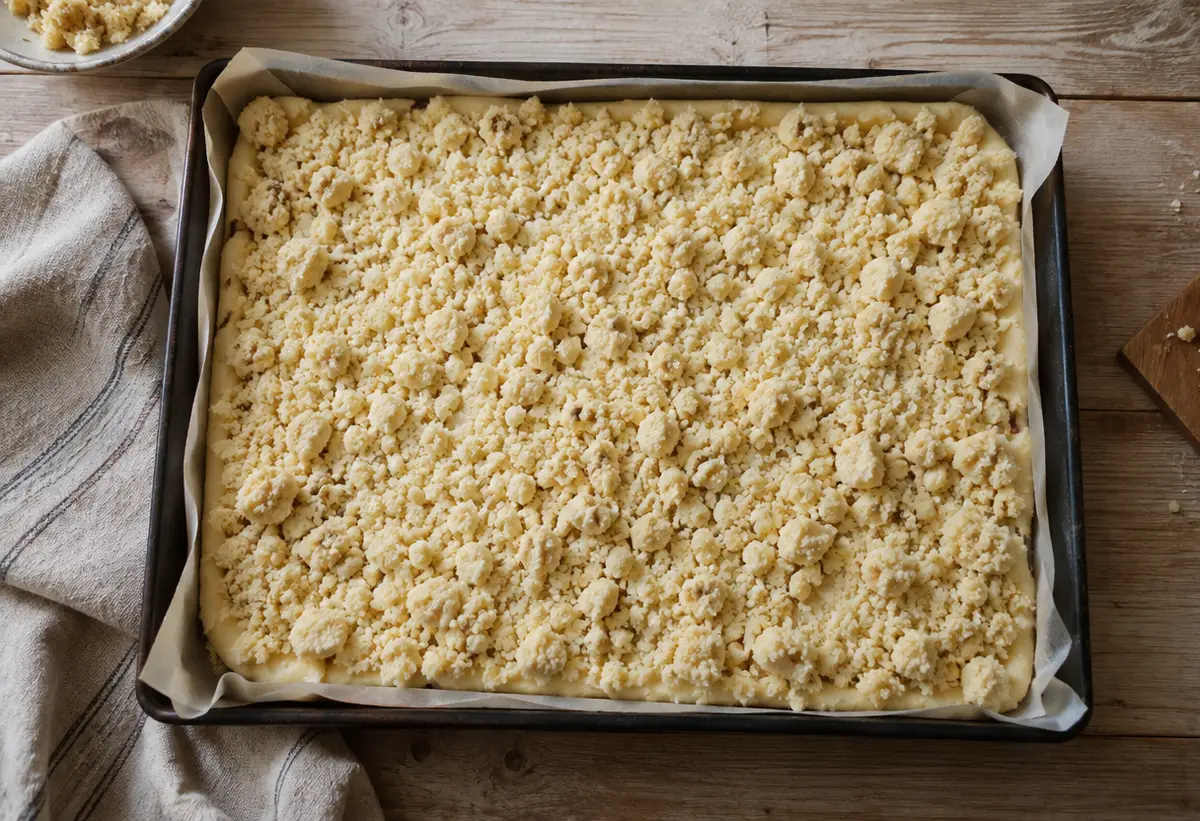
Into the tray and the second rise
Line the tray with paper. Turn the risen dough into the tray and stretch it evenly to the corners with your fingers; don't roll it. Scatter the streusel evenly on top. Cover and leave 30 minutes. Heat the oven to 180 °C.
Fingers to the corners, streusel, half an hour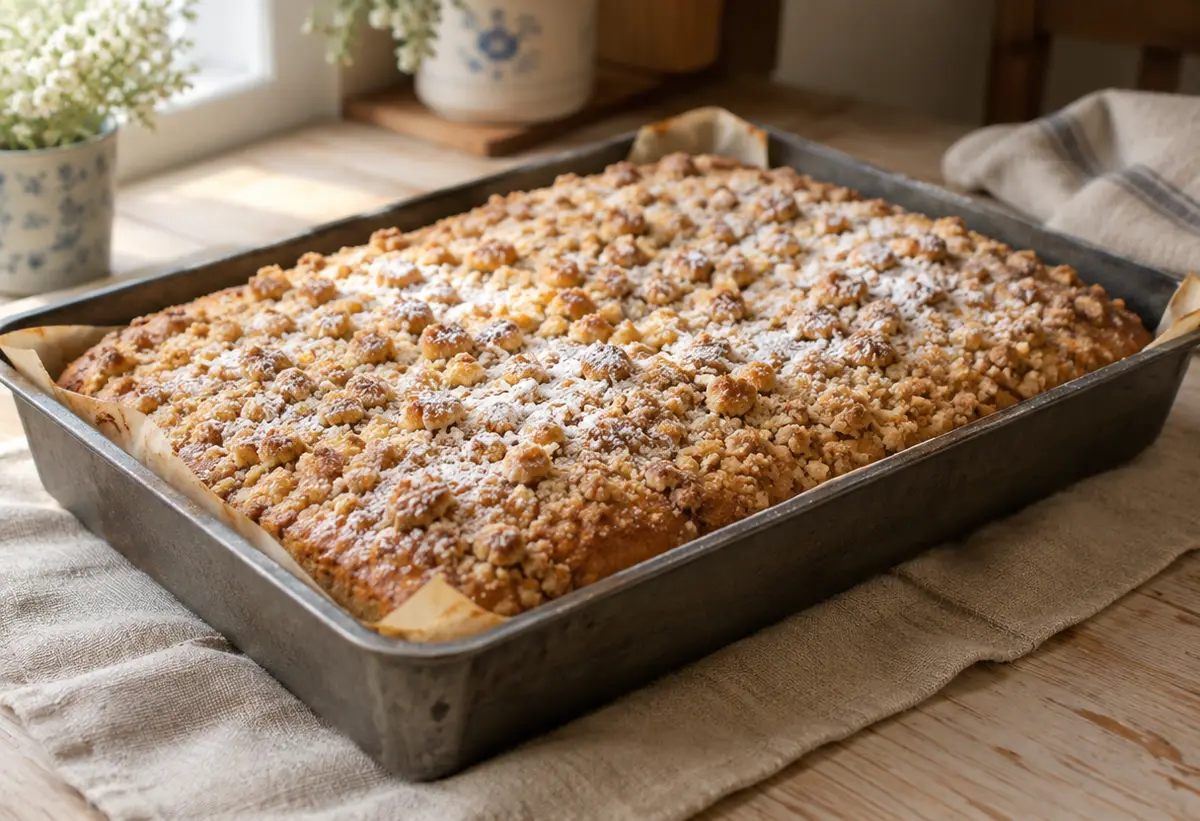
Bake
Bake 28–30 minutes on the middle shelf, until the streusel is golden and a skewer in the centre comes out dry. Cool in the tray 15 minutes, dust with icing sugar. Under a cloth or in a tin it stays soft for 2 days.
Golden streusel, a dry skewer
Before you start
With fruit
500 g halved plums, sliced apples or rhubarb pieces on the dough before the streusel: the same cake, the seasonal version.
Icing instead of streusel
Skip the streusel and after baking pour over an icing of icing sugar and lemon juice: smoother, more of a children's cake.
Dense and flat
Kneaded too briefly or risen too cold. Knead the full quarter hour and wait for the doubling, even if it takes two hours.
Nutrition
per 100 gStep photos are computer-generated from the recipe.


