Kotlet po parysku: egg batter instead of breadcrumbs
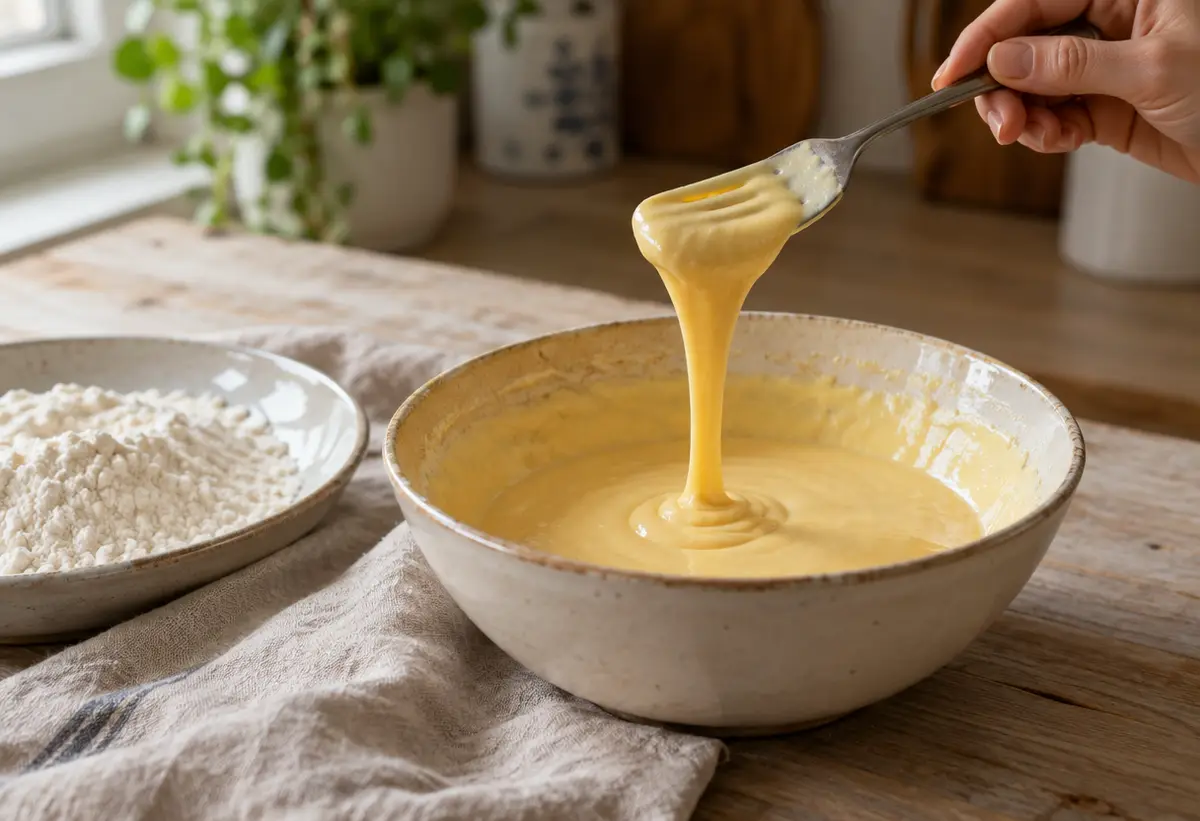
Despite its name it is a classic of Polish home cooking, not of French cuisine; Austrian cooking knows a very similar cutlet in egg batter as the Pariser Schnitzel. Instead of a crumb coating, the cutlet is dipped in a thick egg batter that puffs in the pan into a delicate, lacy jacket. The secret is the consistency of the batter: it must fall from the meat in a thick ribbon, not run off like milk. Too thin and it slides off in the pan, leaving bare meat.

Your own work in that: 40 min.
- Flattening the meat 15 min
- Meat resting, batter 15 min
- Coating and frying 25 min
Step by step
0 / 6 done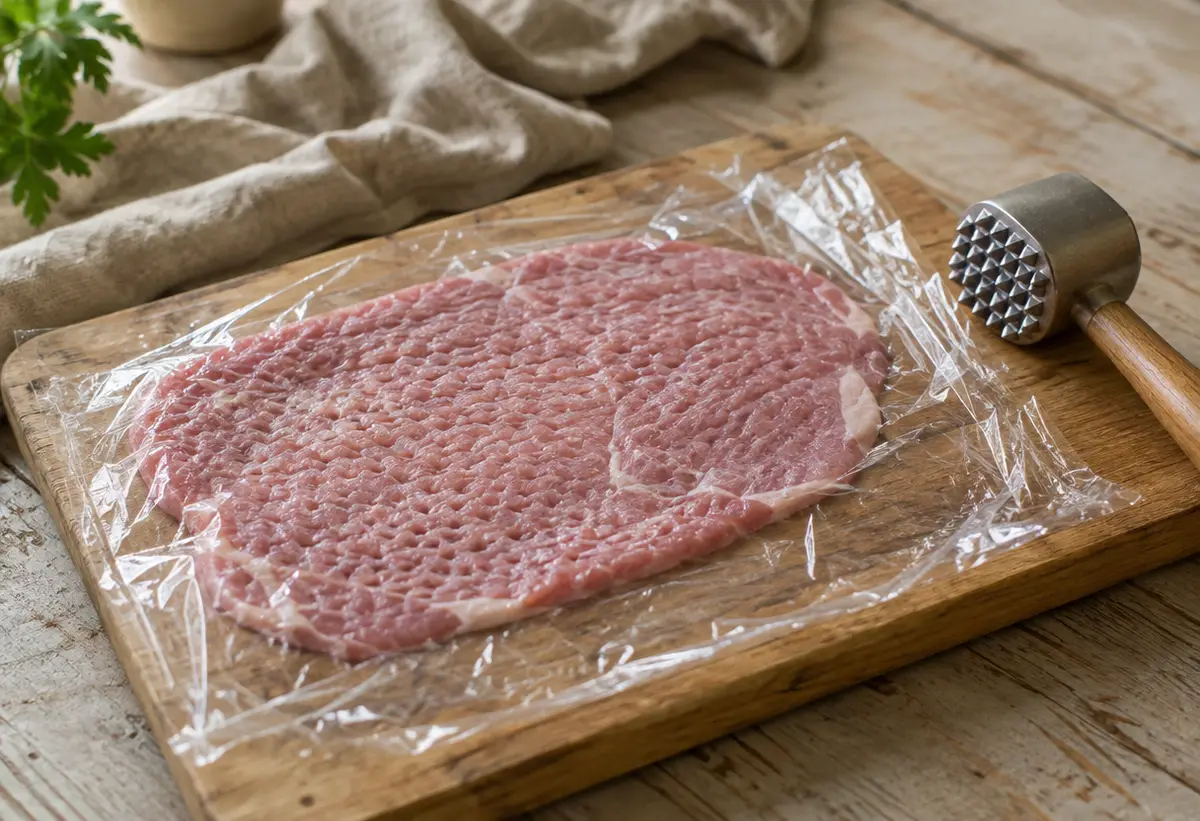
Flatten the meat evenly
Cut the loin into 1.5 cm slices across the grain. Put each between two sheets of cling film and beat it to 7–8 mm with a mallet, working from the centre outwards. Even thickness matters more than thinness: an uneven cutlet has one end dry and the other raw.
Ingredients: 700 g boneless pork loin · 1½ tsp salt · ½ tsp freshly ground pepper · 2 cloves garlic · 60 g plain flour
TipThe film protects the meat from tearing and keeps the board clean. Without it the mallet rips the fibres and the finished cutlet has holes for the juices to escape through.
Seven millimetres, evenly acrossSeason and rest
Salt and pepper each slice and, if you like, rub it with crushed garlic. Leave 15 minutes at room temperature. The salt has time to penetrate, and the meat comes to temperature so it cooks evenly instead of staying cold in the middle.
Get the batter right
While the meat rests, beat the eggs with a fork together with the flour, milk, salt and pepper until lump free. Check the consistency: it should fall from the fork in a thick, continuous ribbon, more slowly than cream. Too thin — add a spoon of flour; too thick — a spoon of milk.
Ingredients: 4 pcs eggs · 5 tbsp plain flour · 4 tbsp milk · ½ tsp salt · ¼ tsp pepper
TipBeat it with a fork, not a mixer. Aerated batter rises violently in the pan, then collapses and peels away from the meat in sheets.
A thick, continuous ribbon from the fork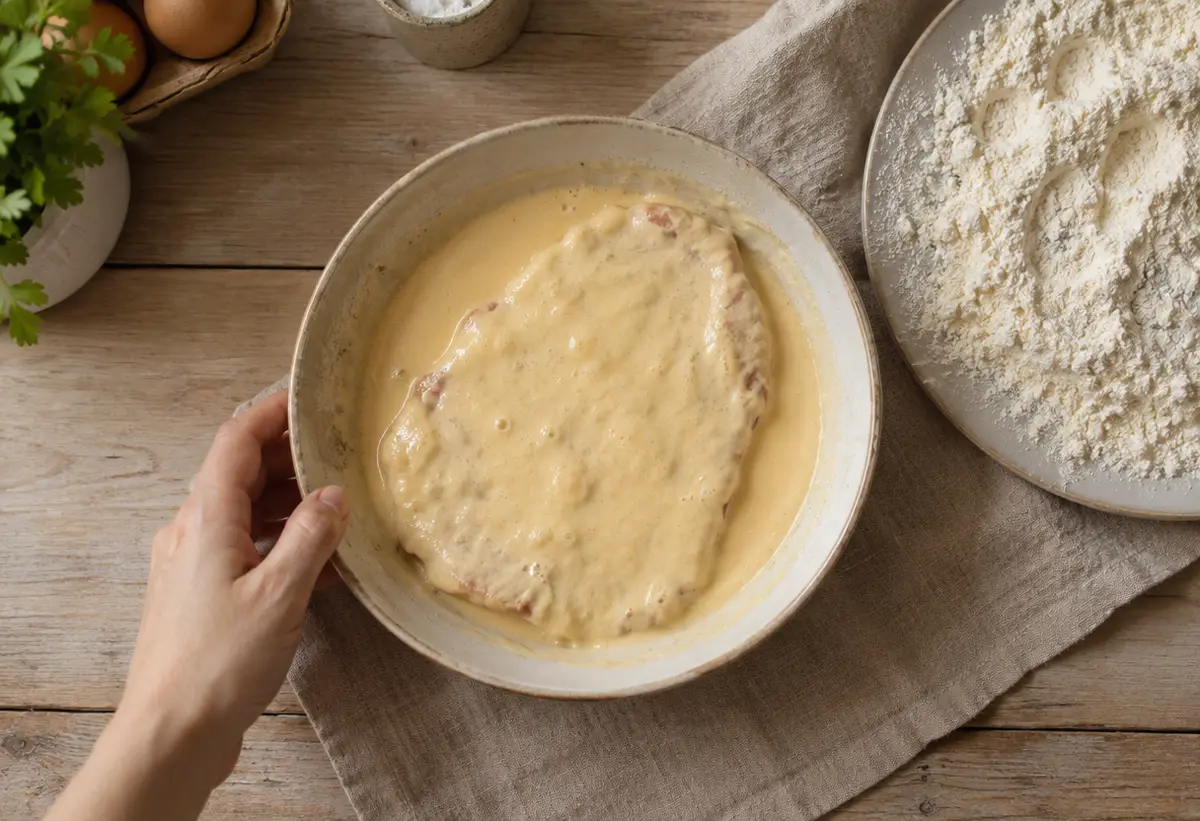
Flour first, then batter
Dust each cutlet in flour first, shaking off the excess, then dip it in the batter so it is completely coated. The flour is an intermediate layer: a smooth, moist meat surface will not hold batter, while a floured one grips it like glue.
Flour first, batter after, never the reverse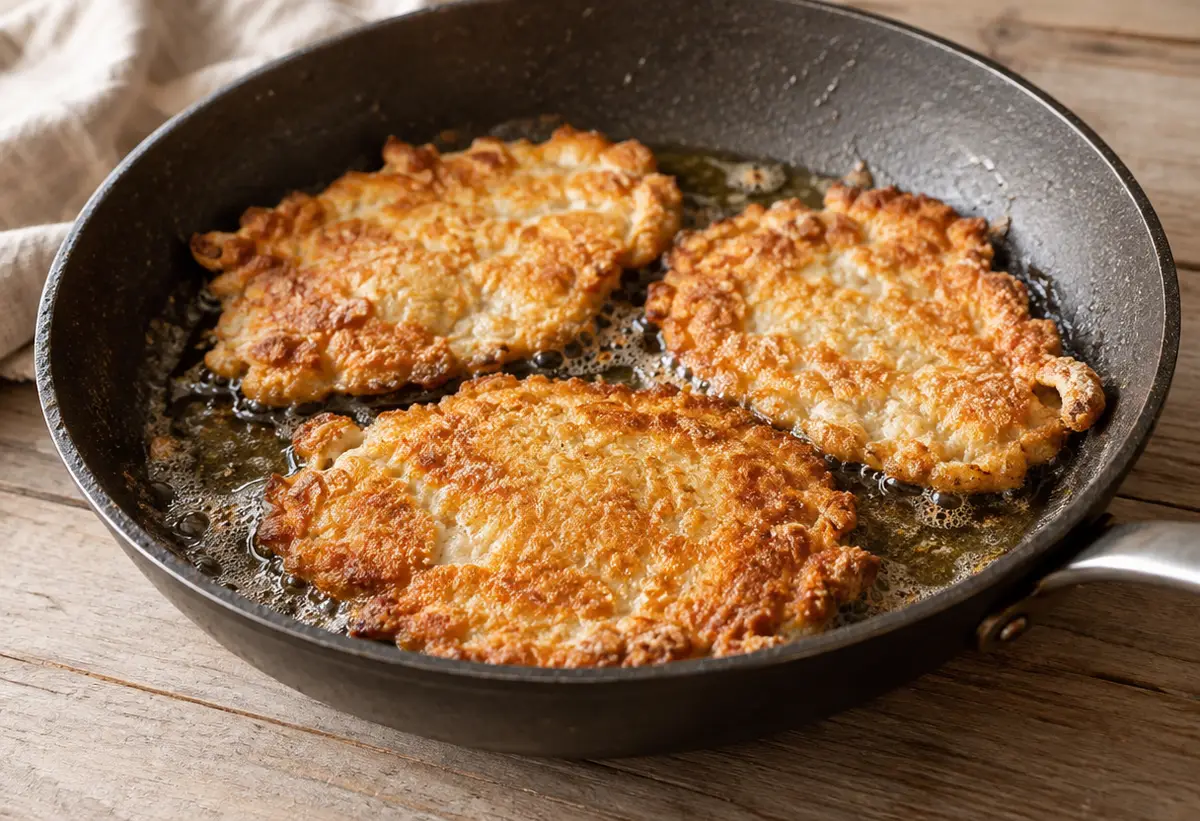
Fry over medium heat
In a wide pan heat the oil with the clarified butter, about 5 mm deep. A drop of batter should sizzle but not brown instantly. Fry in batches of 3–4 cutlets, 4 minutes a side over medium heat (about 16–18 minutes in all). The batter puffs and turns golden while the meat cooks through without drying.
Ingredients: 200 ml oil · 30 g clarified butter
TipOil that is too hot burns the batter in two minutes before the meat is done. Too cool and the cutlet drinks oil and comes out greasy. Medium is the only right answer.
Four minutes a side, medium heat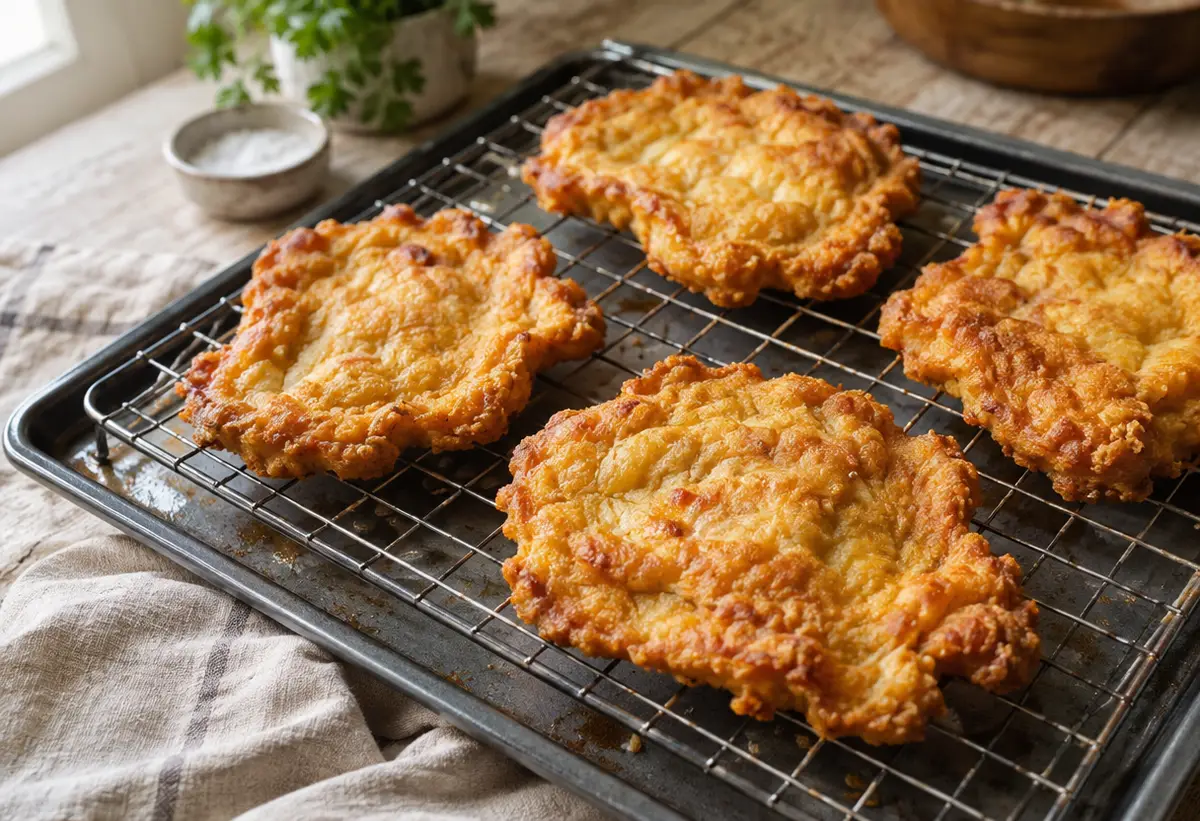
Drain on a rack
Lift the cutlets onto a rack set over a tray, never onto kitchen paper. On paper the underside steams and loses its crispness within minutes. Serve with potatoes and a beetroot or sauerkraut salad.
A rack, not paper: the base stays crisp
Before you start
With chicken
Chicken breast flattened to 7 mm fries one minute less a side. It is more delicate but also more prone to drying, so watch the timing closely.
With cheese inside
Beat the slices thinner, to about 4 mm, and sandwich a slice of cheese and ham between two of them, press the edges together and only then coat. The result is close to a cordon bleu, only in batter instead of breadcrumbs.
Why the batter falls off
Three causes: the meat was wet, the flour step was skipped, or the batter was too thin. All three are fixed before the pan — once frying has started it is too late.
Reheating
8 minutes at 180 °C on a rack, never in a microwave. Egg batter turns rubbery and damp in a microwave; in the oven it dries out again and the edges brown.
Nutrition
per 100 gStep photos are computer-generated from the recipe.


