Sernik: creamy Polish baked cheesecake on a biscuit base, no cracks
The classic sernik made from ground farmer's cheese, butter and eggs on a thin biscuit base. Eggs added one at a time on low speed and a slow bake at 160 °C give a dense, creamy filling with no holes and no cracks. Best the next day.

Your own work in that: 35 min.
- Base 15 min
- Cheese filling 20 min
- Baking 75 min
- Cooling in the oven 70 min
- Overnight in the fridge 480 min
Step by step
0 / 7 done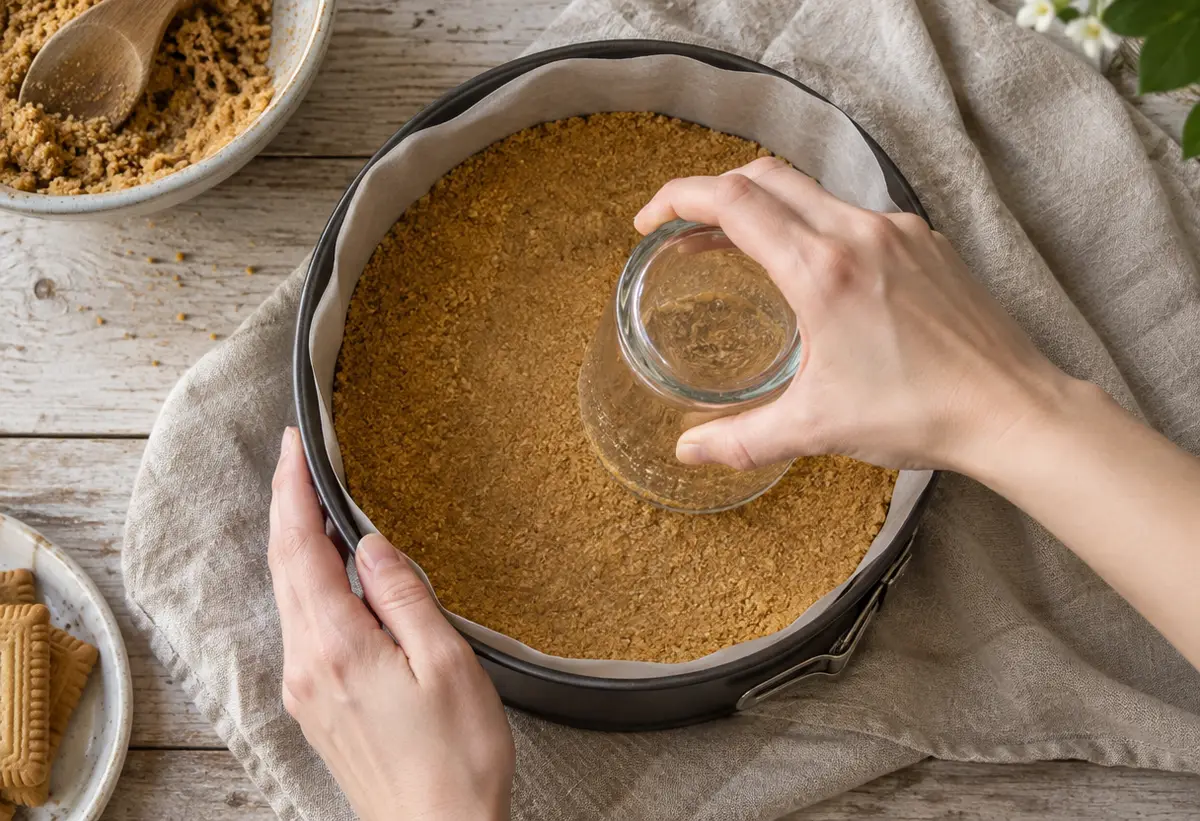
Make the base
Heat the oven to 160 °C. Grind the biscuits in a blender or crush them with a rolling pin in a bag, and mix with the melted butter. Line the bottom of a 24 cm springform with paper, tip in the crumbs and press into an even layer with the base of a glass. Refrigerate.
Ingredients: 200 g butter biscuits · 80 g butter
Buttered crumbs, pressed with a glass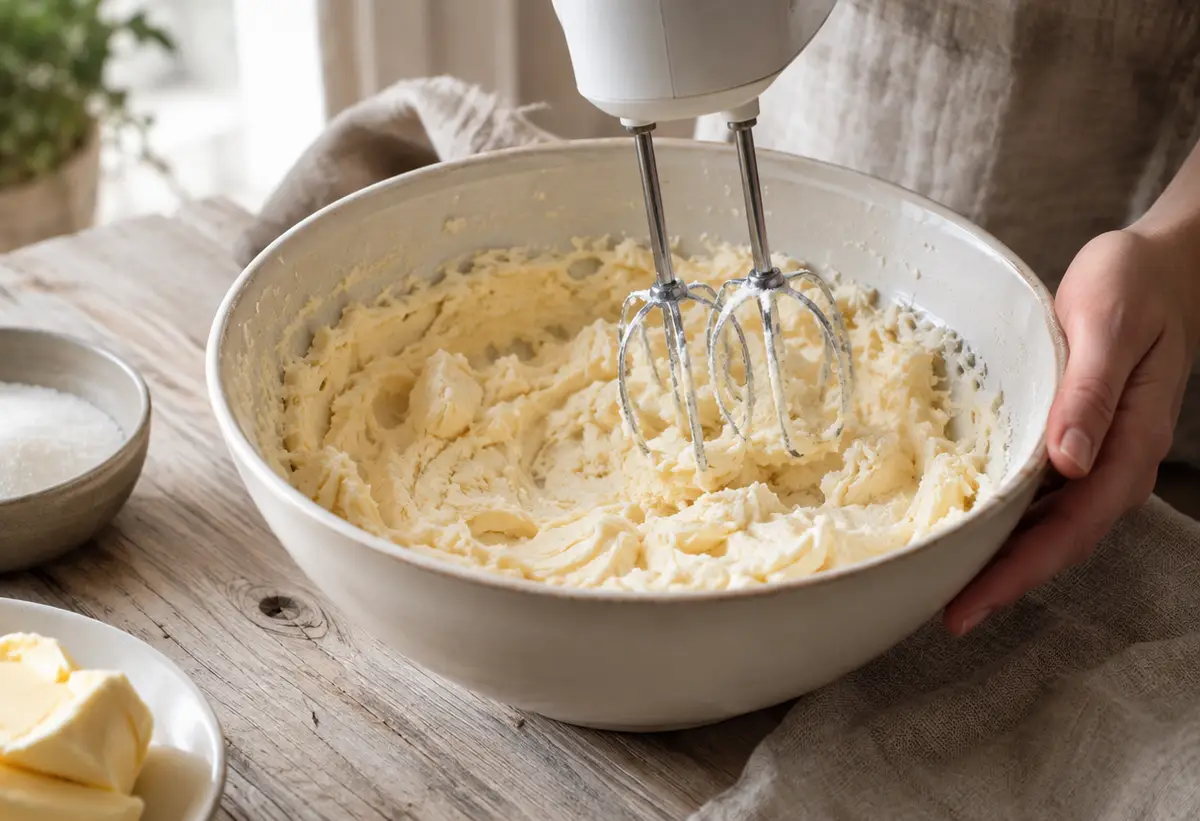
Cream the butter and sugar
Beat the soft butter with the sugar and vanilla sugar until pale and fluffy, 3–4 minutes.
TipThe butter must be properly soft. Cold butter leaves lumps that become greasy specks in the baked cake.
Pale, fluffy creamed butter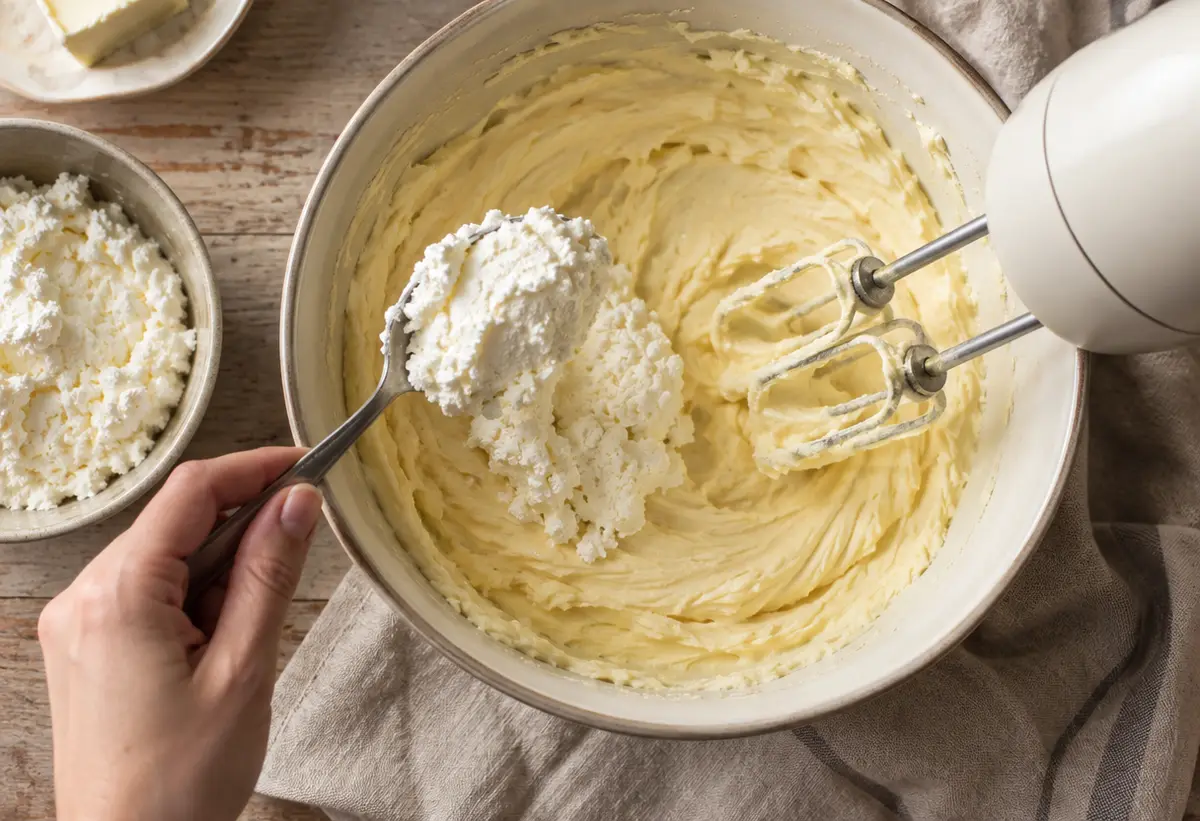
Add the cheese and eggs
Turn the mixer to its lowest speed. Add the cheese in batches, 2–3 spoonfuls at a time, then the eggs one by one, mixing each only until combined. The mass should be smooth and thick.
Ingredients: 1000 g ground farmer's cheese (twaróg sernikowy) · 200 g butter · 200 g sugar · 1 tbsp vanilla sugar · 5 pcs eggs · 3 tbsp potato starch · 1 pcs lemon, zest · 80 g raisins
TipHigh speed beats in air, and air expands in the oven and then collapses: that is where cracks and a sunken middle come from. Mix briefly and slowly.
Cheese and eggs on the lowest speed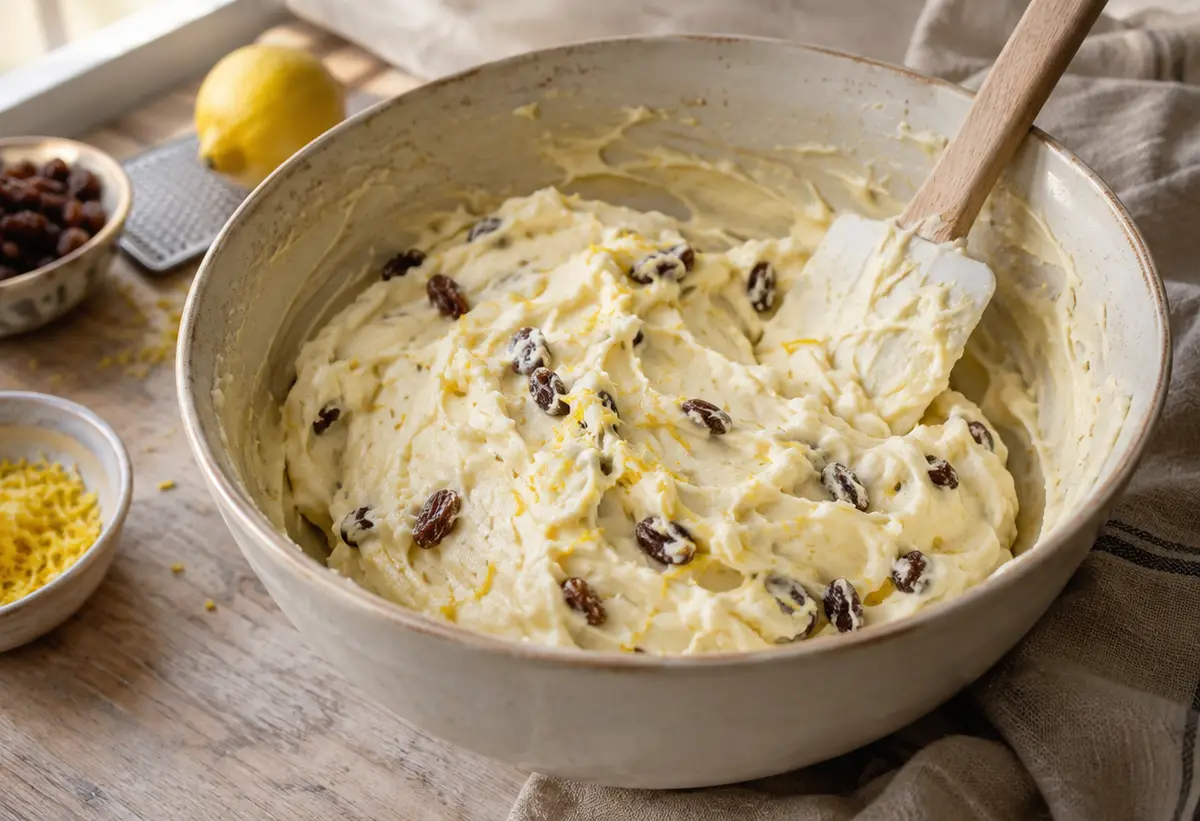
Starch, zest, raisins
Add the potato starch and the grated lemon zest, mix. Finally the raisins, scalded with boiling water beforehand and dried.
Thick, smooth filling with raisins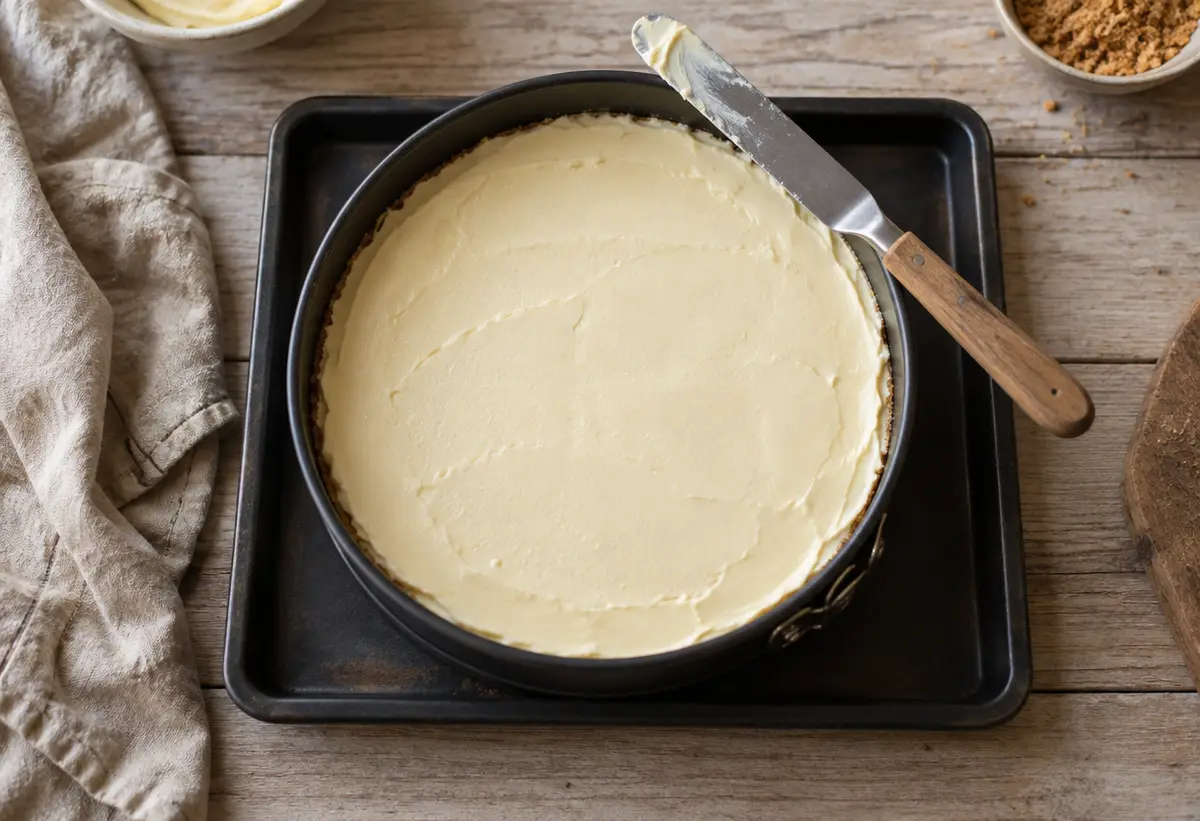
Into the pan
Pour the filling over the chilled base and level it. Set the pan on a baking sheet so any leaking butter doesn't drip onto the oven floor.
Filling levelled over the base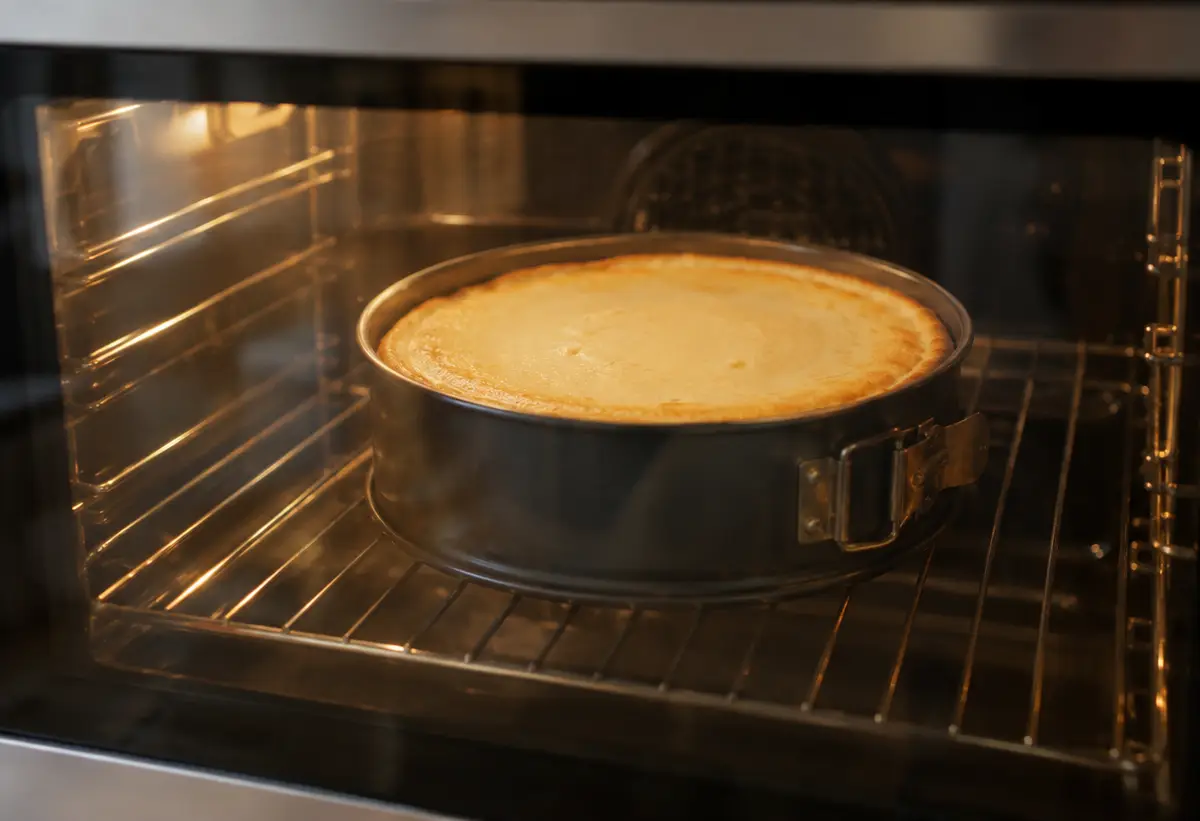
Bake slowly
160 °C, conventional, middle shelf, 70–75 minutes. It is done when the edges are set and the centre still wobbles slightly when you nudge the pan. The top should stay pale, at most lightly golden.
TipToo high a temperature is the main cause of cracking. If your oven runs hot, use 150 °C and add 10 minutes.
Pale top, set edges, wobbling centre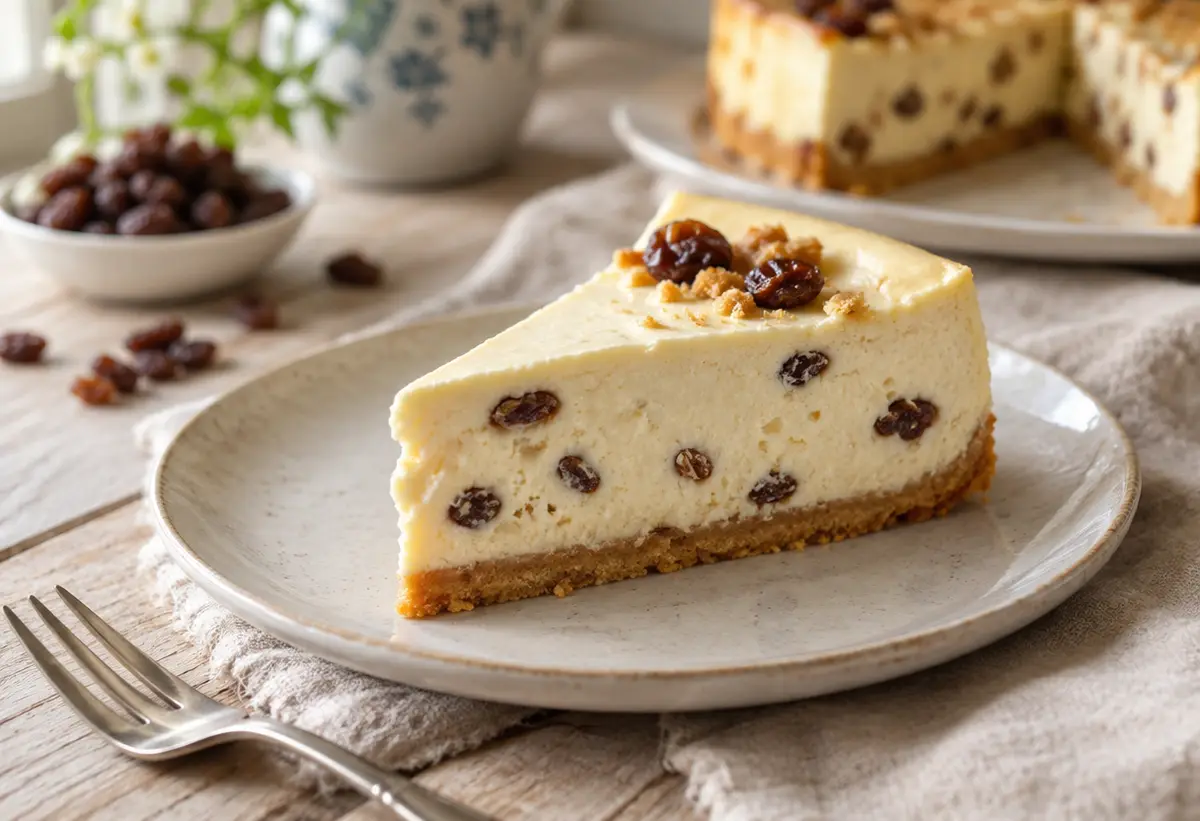
Cool in the oven
Switch the oven off, prop the door open with a wooden spoon and leave the cake for an hour. Then take it out, cool completely and refrigerate overnight. It slices cleanly only when cold.
After a night in the fridge: dense, creamy cross-section
Before you start
Which cheese?
Tub twaróg sernikowy is already ground and has the right moisture. Ordinary full-fat twaróg should be minced three times or blended; semi-fat gives a drier cake. Outside Poland, dry-curd farmer's cheese or ricotta drained overnight is the closest.
It cracked
Still delicious. Cover the top with whipped cream, chocolate glaze or fruit and nobody will know.
Storing
Covered in the fridge, 5 days. Freezes in slices; thaw overnight in the fridge.
Nutrition
per 100 gStep photos are computer-generated from the recipe.


