Sernik krakowski: shortcrust base, airy curd filling and a lattice of the same pastry
The cheesecake you recognise by its lattice: the same shortcrust goes on the bottom and over the top, and between them sits a thick layer of curd cheese creamed with butter and lifted with whipped egg whites. The whites go in last and only with a spatula, because they are what makes the filling light. The lattice is cut from dough straight out of the fridge, or the strips melt into the filling.

Your own work in that: 50 min.
- Shortcrust 20 min
- Dough chilling 30 min
- Cheese filling 20 min
- Lattice 10 min
- Baking 60 min
- Cooling 60 min
Step by step
0 / 7 done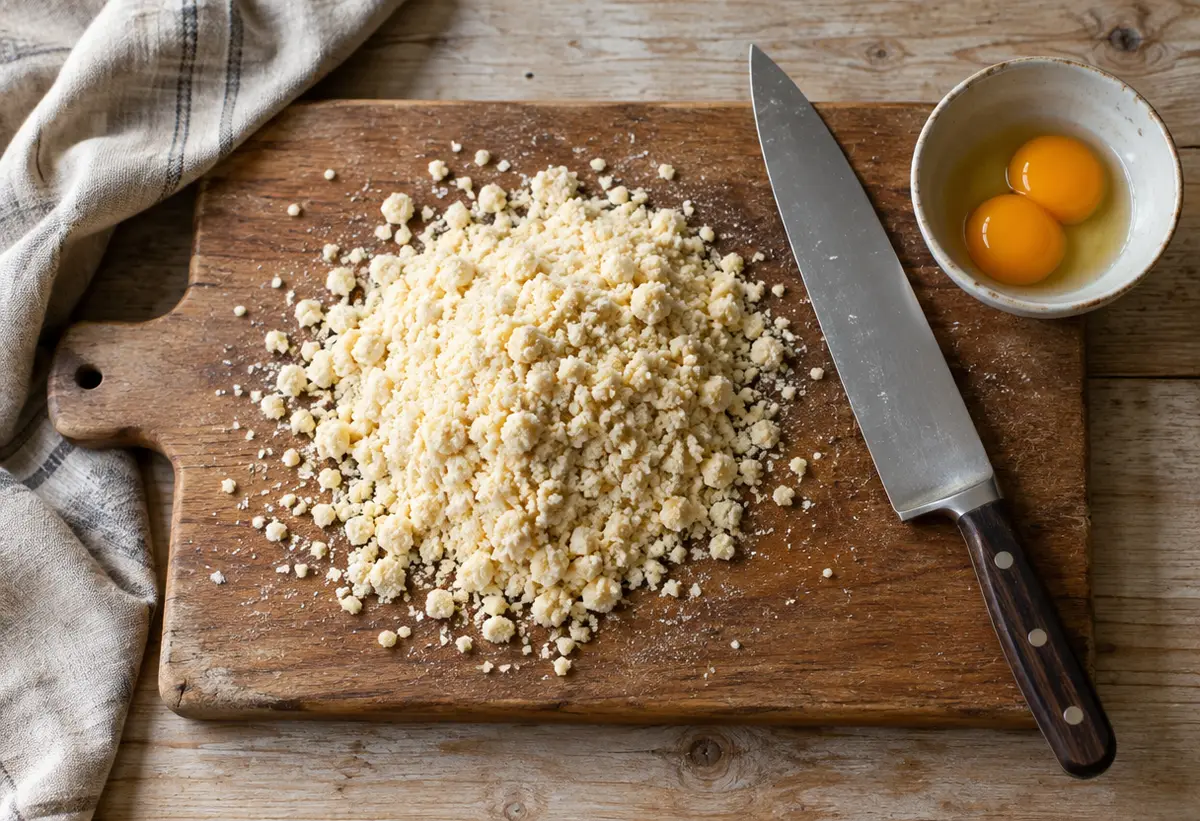
Make the shortcrust
Mix the flour with the icing sugar, baking powder and salt. Cube the cold butter and cut it into the flour with a knife until you have pea-sized crumbs. Add the yolks and bring together quickly, in 30–40 seconds, into a single ball. Divide it: two thirds for the base, one third for the lattice. Flatten both, wrap in film and chill 30 minutes.
Ingredients: 300 g plain flour · 180 g butter · 90 g icing sugar · 2 pcs egg yolks · ½ tsp baking powder · 1 pinch salt
TipThe short texture comes from flakes of cold butter trapped in flour. Long kneading melts them and develops gluten, and the pastry turns hard and dense like a biscuit.
Pea-sized crumbs, then quickly into a ball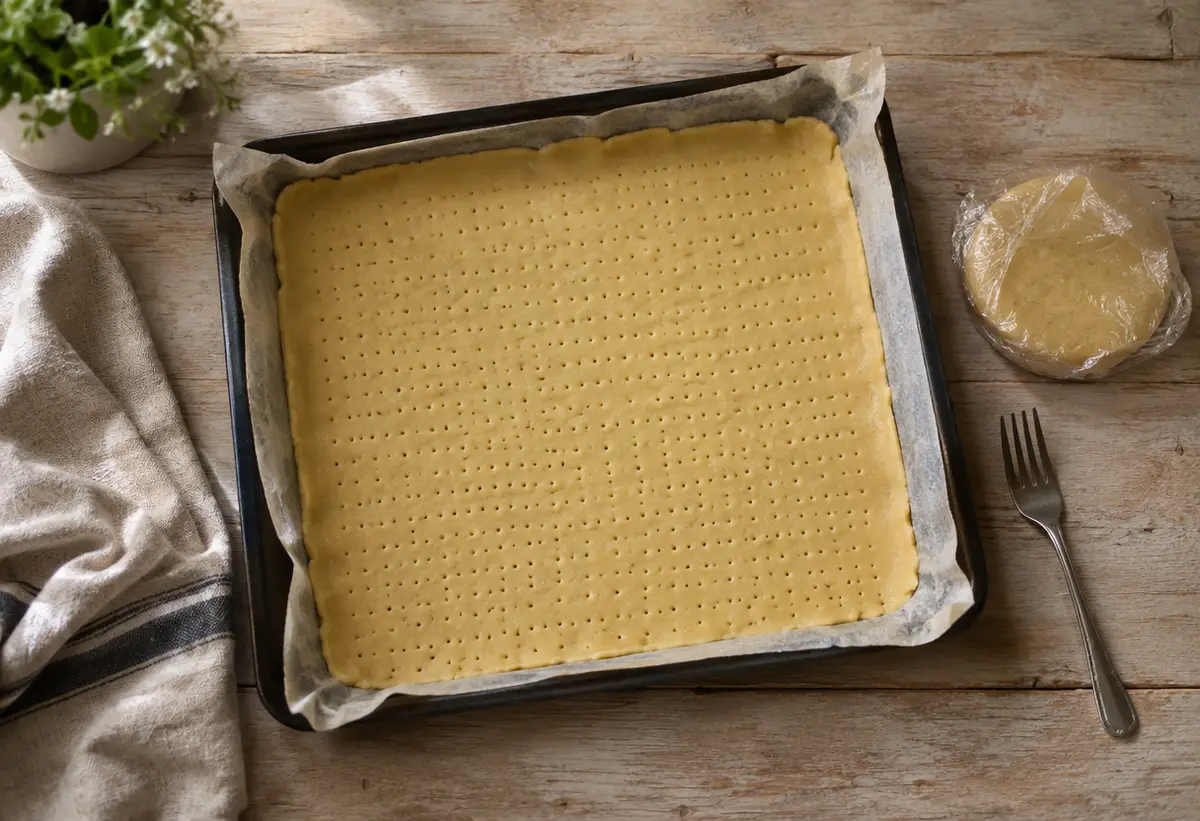
Line the tray
Line a 25 × 35 cm tray with paper. Press the larger piece of dough evenly across the bottom, 4–5 mm thick, and prick it all over with a fork. Keep the smaller piece in the fridge. Heat the oven to 170 °C.
Base 5 mm thick, pricked, the rest back in the fridge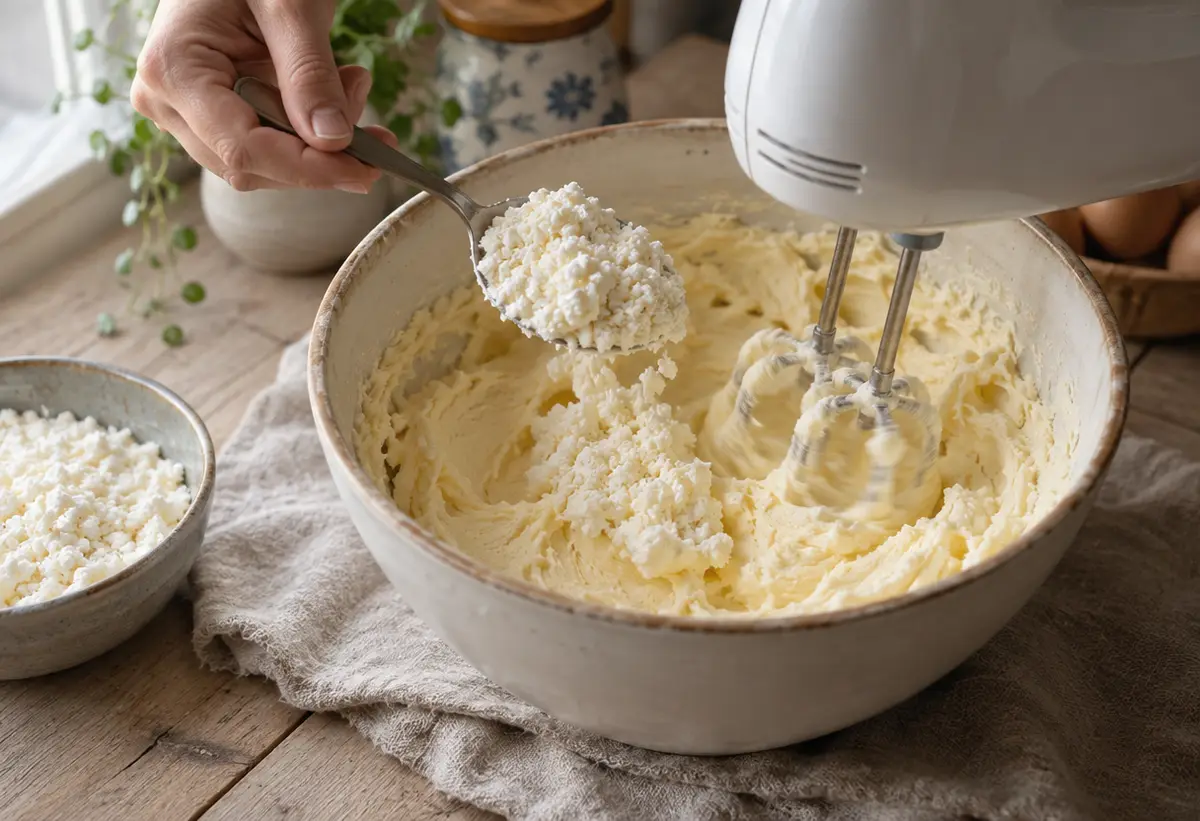
Cream the filling
Cover the raisins with boiling water for 5 minutes, drain and dry. Separate the eggs and put the whites in the fridge. Cream the soft butter with the sugar and vanilla sugar 4 minutes into a pale cream. Add the yolks one at a time, then the curd cheese in batches of 2–3 spoonfuls, on the lowest speed, only until combined. Fold in the lemon zest, potato starch and raisins.
Ingredients: 1000 g curd cheese for cheesecake, ground three times · 100 g butter · 180 g sugar · 4 pcs eggs · 3 tbsp potato starch · 1 tbsp vanilla sugar · 1 pcs lemon, zest · 100 g raisins
TipCurd cheese added in batches and mixed slowly stays smooth. Tipped in all at once and beaten fast it separates into water and grains, and nothing will bring it back together.
Butter with sugar, yolks, curd in batches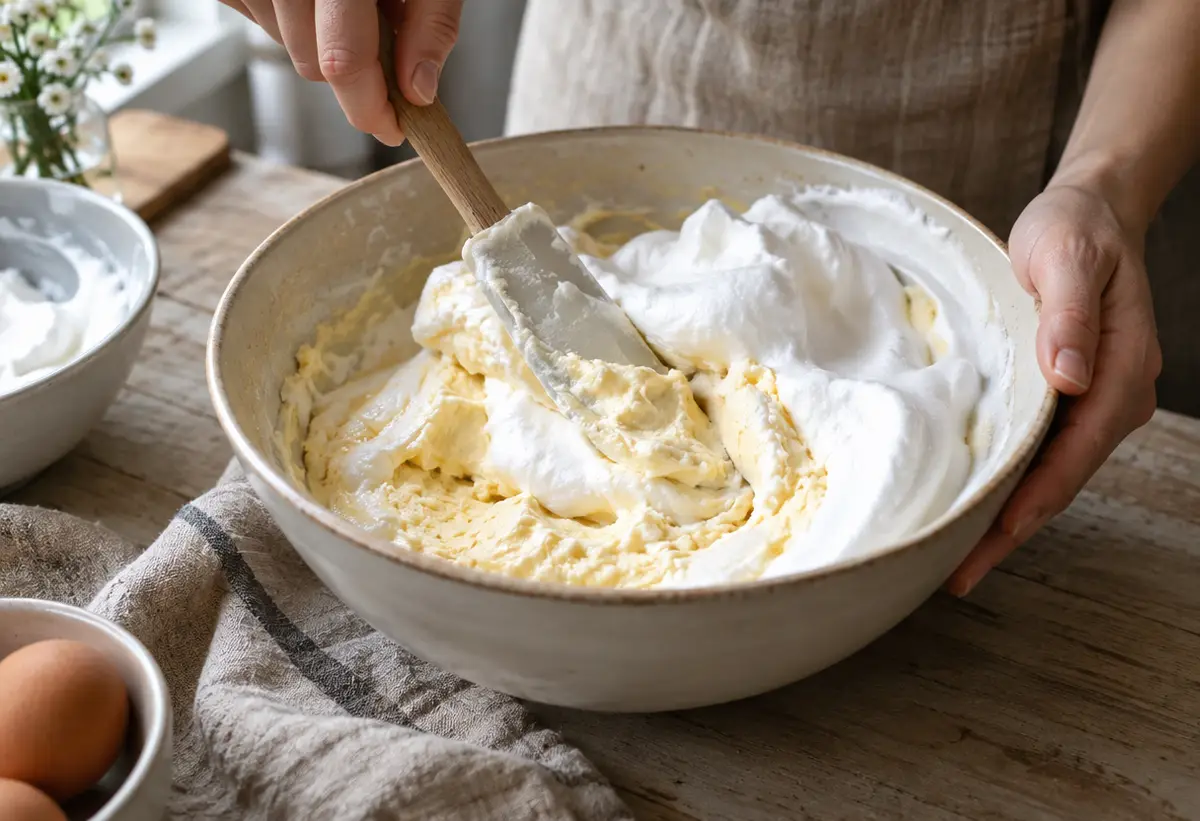
Whip the whites and fold them in last
Whip the cold whites to stiff but not dry peaks: the tips should just droop at the end. Stir a third of the foam into the filling to loosen it, then add the rest and fold it in with a spatula, bottom over top, in a dozen or so strokes. Spread the filling over the base and level it.
TipThe whites go in at the very end because their air bubbles are the only thing lifting the heavy curd. Beaten in with a mixer, or folded too long, they simply vanish and the cheesecake bakes dense and rubbery.
A third of the foam first, then the rest by spatula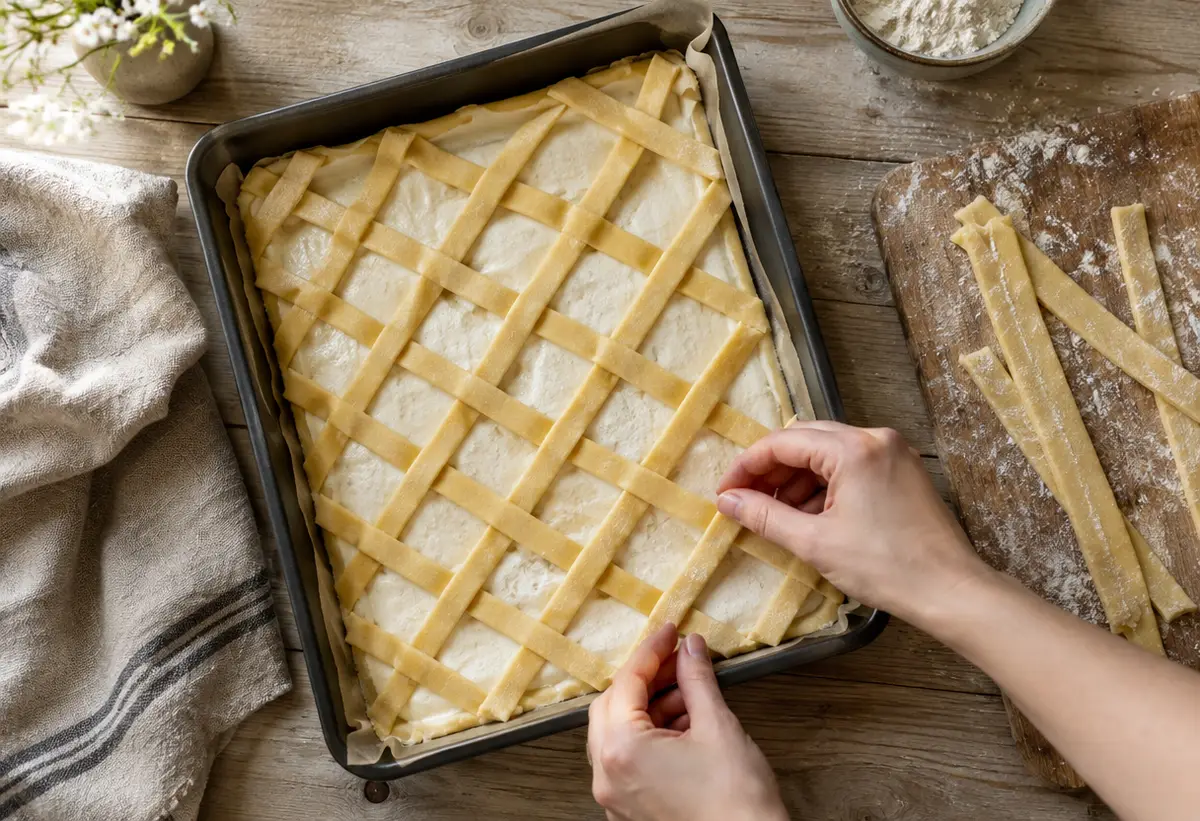
Make the lattice from cold dough
Take the reserved dough from the fridge and either grate it on the coarse holes straight over the filling, or roll it 3 mm thick and cut 1.5 cm strips and lay them in a lattice. Work fast, with dough straight from the fridge.
TipCold strips hold their shape and bake into a visible lattice on top. Dough warmed in your hands softens and sinks into the filling: after baking there is no trace of it.
Grated or in strips, always straight from the fridge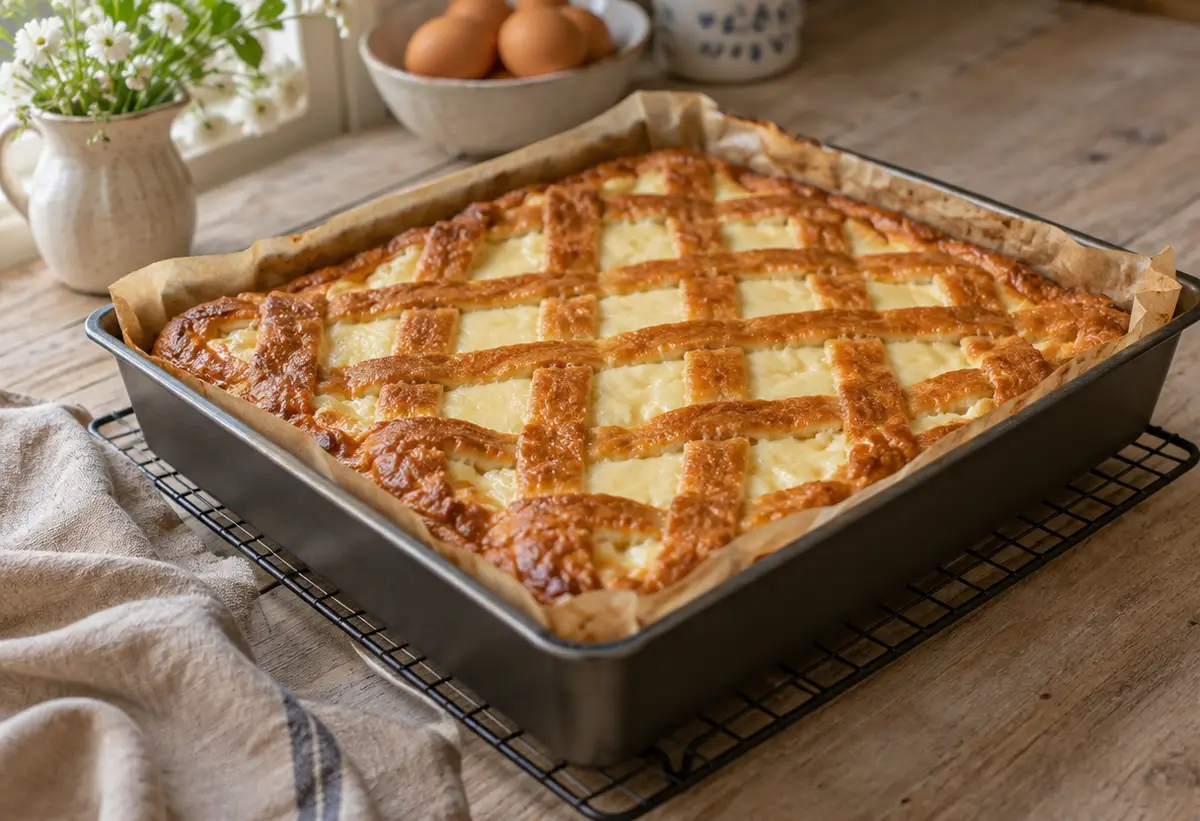
Bake for an hour
Bake 60 minutes at 170 °C on the middle shelf, until the lattice is golden and the filling is set at the edges and just wobbles in the centre. Don't open the oven for the first 40 minutes: the sudden drop in temperature collapses the foam and splits the cheesecake down the middle.
An hour, golden lattice, a slight wobbleCool in the oven ajar
Switch the oven off, prop the door open and leave the cheesecake 60 minutes. Then cool completely and chill, ideally overnight. Dust with icing sugar before serving. Cut with a knife dipped in hot water and wiped between slices.
An hour in the oven ajar, then the fridge
Before you start
With peaches
Six well-drained tinned peach halves pressed into the filling before the lattice: juicier, and the version children ask for.
It cracked
Oven too hot, or the door opened. Bake at 170 °C and don't peek for 40 minutes; in any case the crack disappears under the lattice, so it is a cosmetic fault.
Tub curd cheese
Ready-ground cheesecake curd from a tub has an even, predictable moisture. If you use a block, grind it three times; if it is very wet, squeeze it in muslin first, or the filling will be loose.
Nutrition
per 100 gStep photos are computer-generated from the recipe.


