Vegetable stock: the recipe that retires the stock cube for good
A stock cube is mostly salt, flavour enhancer and palm fat. Homemade stock is made from vegetables you already have — even from peelings. Two things separate a good stock from lukewarm vegetable water: browning the vegetables before adding water, which builds depth through caramelisation, and cooking it unsalted — stock is usually reduced later, and salted at the start it becomes too salty at that point.

Your own work in that: 55 min.
- Browning 25 min
- Simmering 60 min
- Straining 30 min
Step by step
0 / 6 done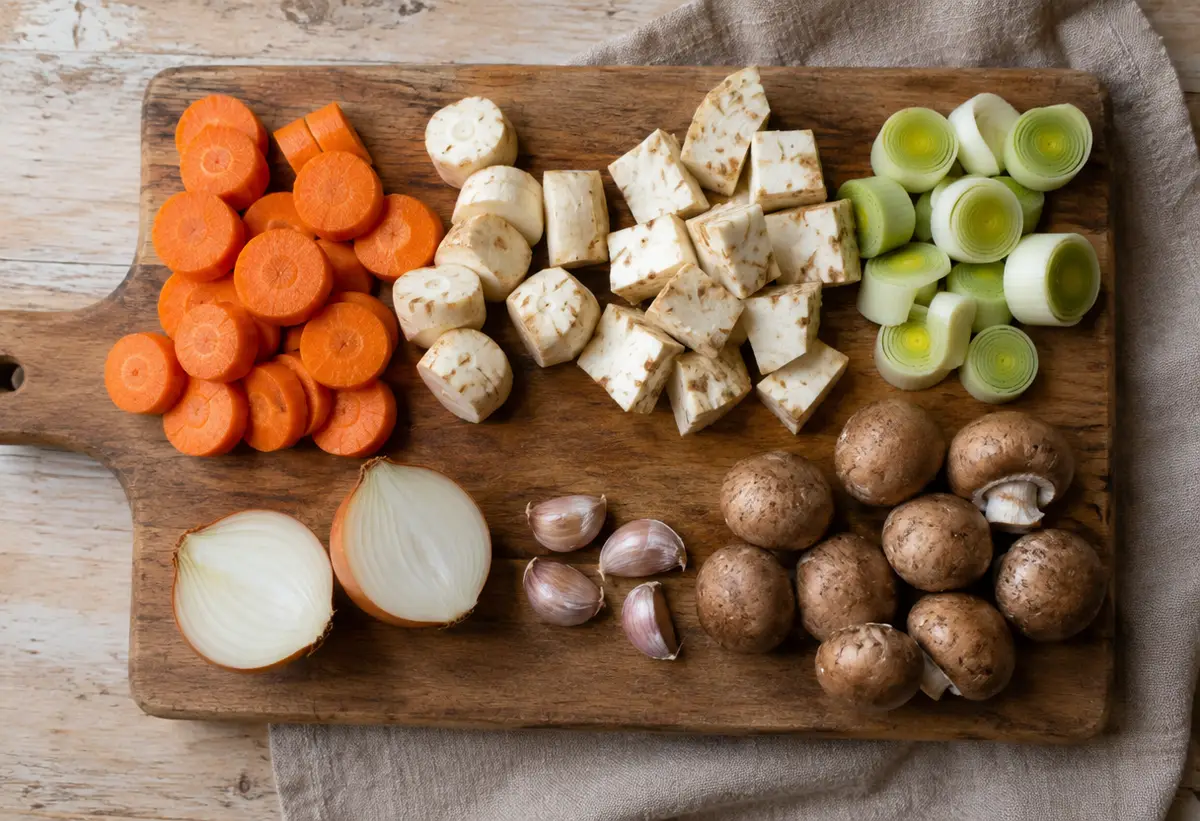
Cut the vegetables into large pieces
Scrub well but don't peel the vegetables — the skins hold plenty of flavour and colour, and the stock gets strained anyway. Cut everything into large 3–4 cm pieces. Finely chopped vegetables fall apart quickly, cloud the stock and can turn it bitter over 45 minutes of simmering.
Ingredients: 3 pcs carrots · 2 pcs parsley root · 200 g celeriac · 1 pcs leek · 2 pcs onions
TipLeave the onions <b>in their skins</b> — they contain pigments that give stock a golden colour. It is the simplest way to make homemade stock look like a restaurant's.
Large pieces, onions with their skins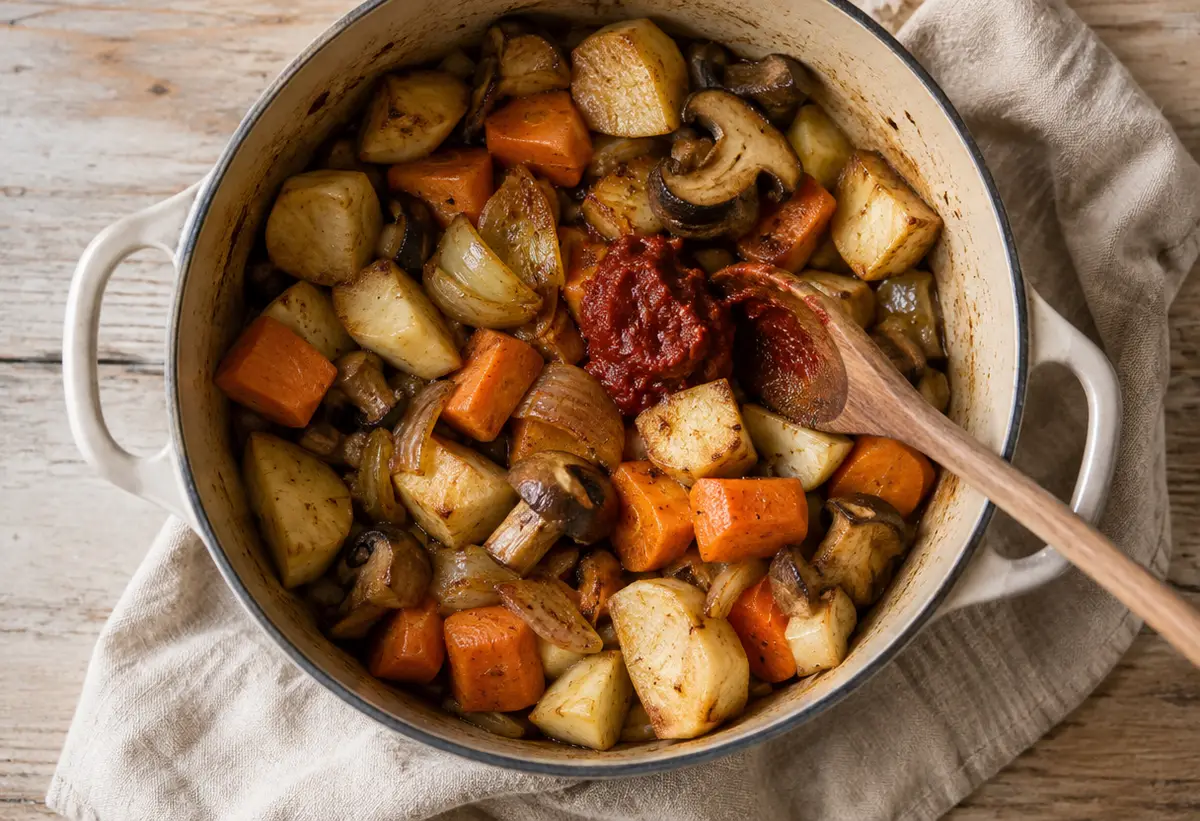
Brown the vegetables and the paste
Heat the oil in a large pot and fry the vegetables 10 minutes over high heat, stirring rarely, until they brown at the edges. Add the tomato paste and fry another 2 minutes. That paste supplies colour and savour.
Ingredients: 150 g mushrooms · 1 tbsp tomato paste · 4 cloves garlic · 2 tbsp oil
TipThis step is the difference between stock and vegetable water. Browning creates flavour compounds that simmering in water alone will never produce, however long you leave it.
Ten minutes, until browned at the edgesCover with cold water
Add cold water — cold, not boiling: slow heating lets the vegetables release their flavour gradually. Add the aromatics, bay leaves, parsley stalks and lovage. Bring to the boil — 3 litres of water take about 15 minutes — then reduce the heat immediately.
Ingredients: 3000 ml cold water · 3 pcs bay leaves · 6 pcs allspice berries · 1 tsp peppercorns · ½ bunch parsley · 2 pcs lovage
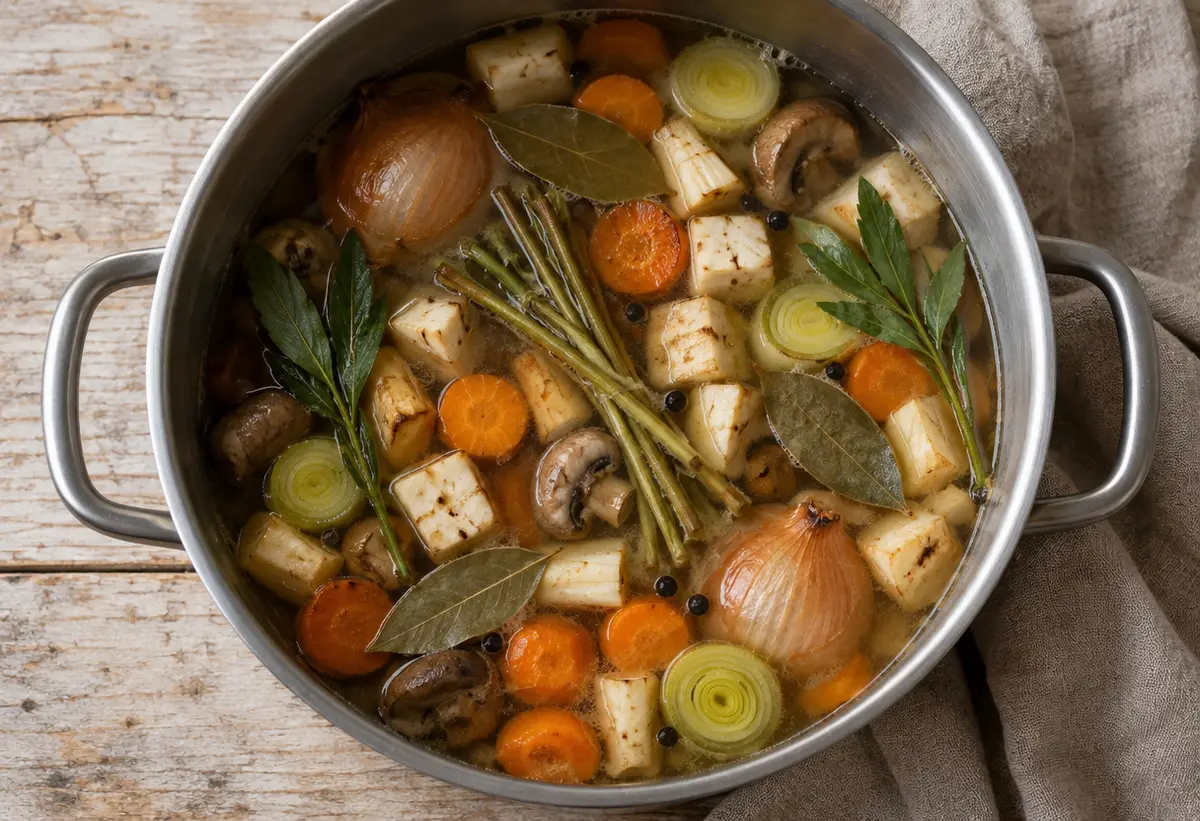
Simmer forty-five minutes
Simmer uncovered, at a bare tremble, 45 minutes. Add no salt. The stock must not bubble: hard boiling breaks the vegetables up, clouds the liquid and draws bitterness out of them.
TipBeyond an hour is pointless. After about 45 minutes the vegetables have given most of their flavour; longer cooking adds little and can bring bitterness — unlike bones, which need many hours.
Forty-five minutes, unsalted, never bubbling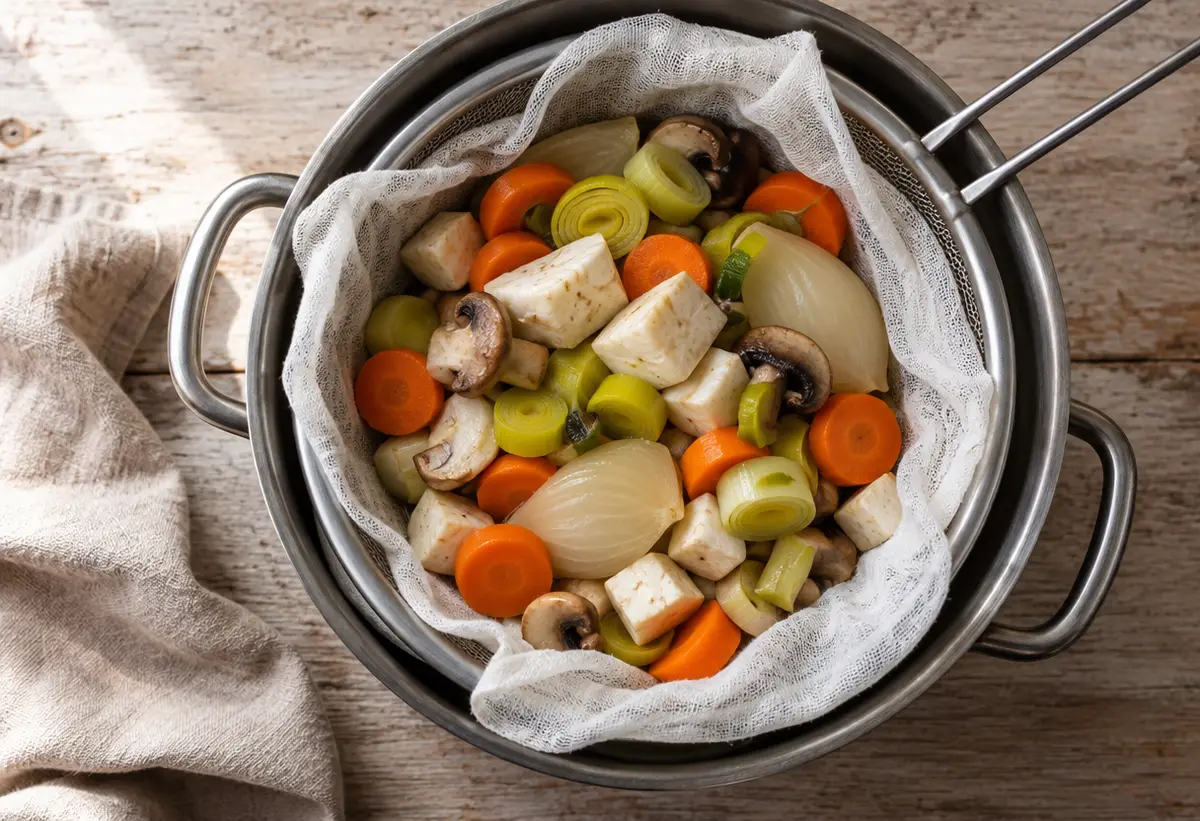
Strain without pressing
Strain through a fine sieve lined with muslin. Don't press the vegetables — squeezed particles cloud the stock and give it a floury taste. Discard the vegetables afterwards: they have given everything they had.
Through muslin, with no pressing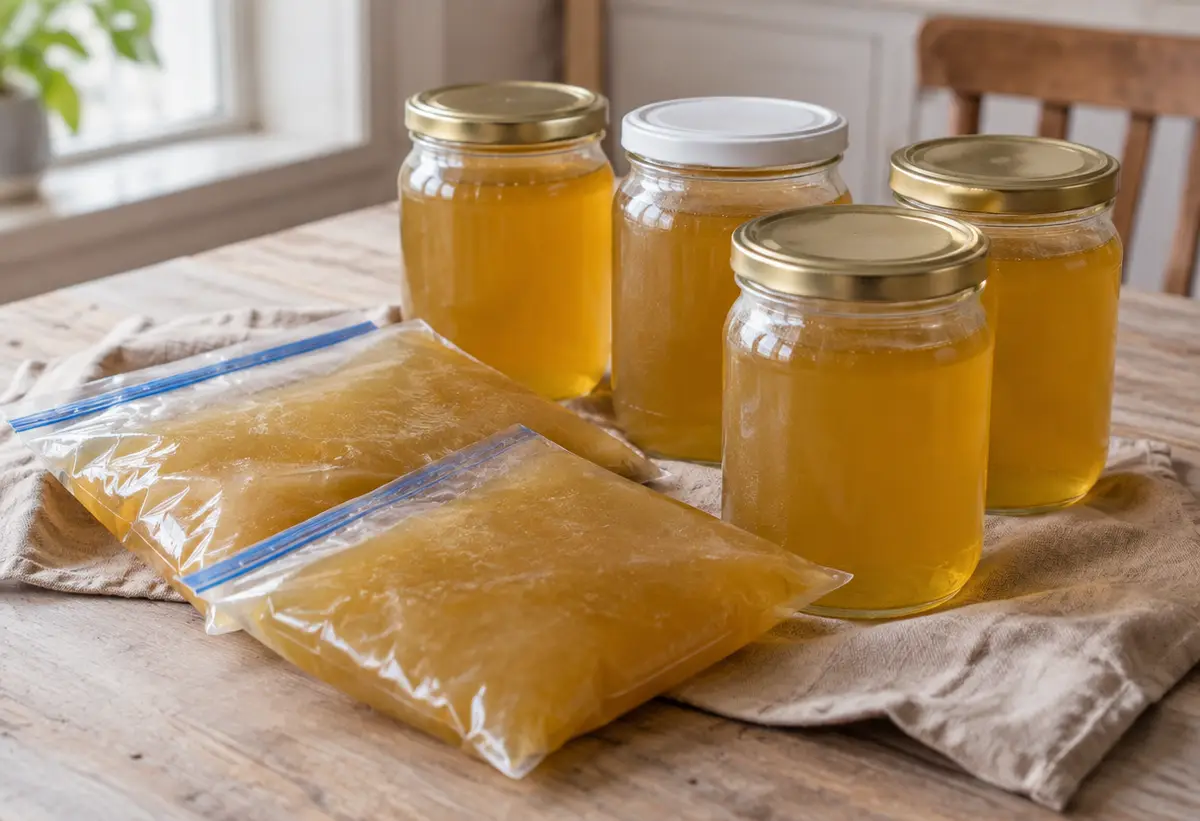
Cool and portion it
Cool it quickly by standing the pot in a sink of cold water — it takes about 20 minutes. Divide into 500 ml jars or freezer bags. It keeps 3–4 days in the fridge and six months in the freezer.
500 ml portions, fridge or freezer
Before you start
Stock from scraps
Keep a bag in the freezer for peelings, leek tops, parsley stalks and mushroom stems. When it is full you have a free stock. Avoid only cabbage, broccoli and cauliflower — they give a sulphurous smell.
Reinforced stock
A handful of dried mushrooms or a piece of kombu seaweed adds the umami vegetables lack on their own. It is the simplest way to bring a vegetable stock closer to the fullness of a chicken one.
Frozen in cubes
Reduce some of the stock by half and freeze it in an ice cube tray. One cube is a concentrate for a sauce or risotto — and takes a fraction of the freezer space a jar does.
Why unsalted
Stock almost always ends up in a dish where it will be reduced — a sauce, a risotto, a braise. Salted at the start it becomes intolerably salty on reduction, and there is no unsalting it.
Nutrition
per 100 gStep photos are computer-generated from the recipe.


